Ringworm keeps coming back for two main reasons: steroid creams hide the rash while the fungus spreads, and stopping treatment when the itch fades leaves live fungus behind. The fix is a plain antifungal, used for the full course and for 1 to 2 weeks after your skin looks normal. If a plain antifungal hasn’t helped after two weeks of proper use, see the best doctor for fungal infections in Indore instead of switching creams again.
Here is what actually goes wrong, how to tell if a steroid cream has masked your rash, and what a proper plan looks like.
The Two Mistakes Behind Most Stubborn Ringworm
Ringworm, known as daad in Hindi, is a fungal infection, not a worm, and it is very treatable. When it will not clear, the cause is almost always one of these:
| What you did | What it does | What works instead |
| Used a steroid or “combination” cream | Calms the itch fast, but weakens the skin’s local defence so the fungus spreads | A plain antifungal cream, nothing else |
| Stopped when the itch faded | The rash clears before the fungus does, so it grows back | Keep going for 1 to 2 weeks after the skin looks normal |
| Switched creams every few days | No cream gets long enough to work | One antifungal, used for the full course |
| Guessed it was ringworm | Eczema, psoriasis and allergy can look the same | Get the rash checked first |
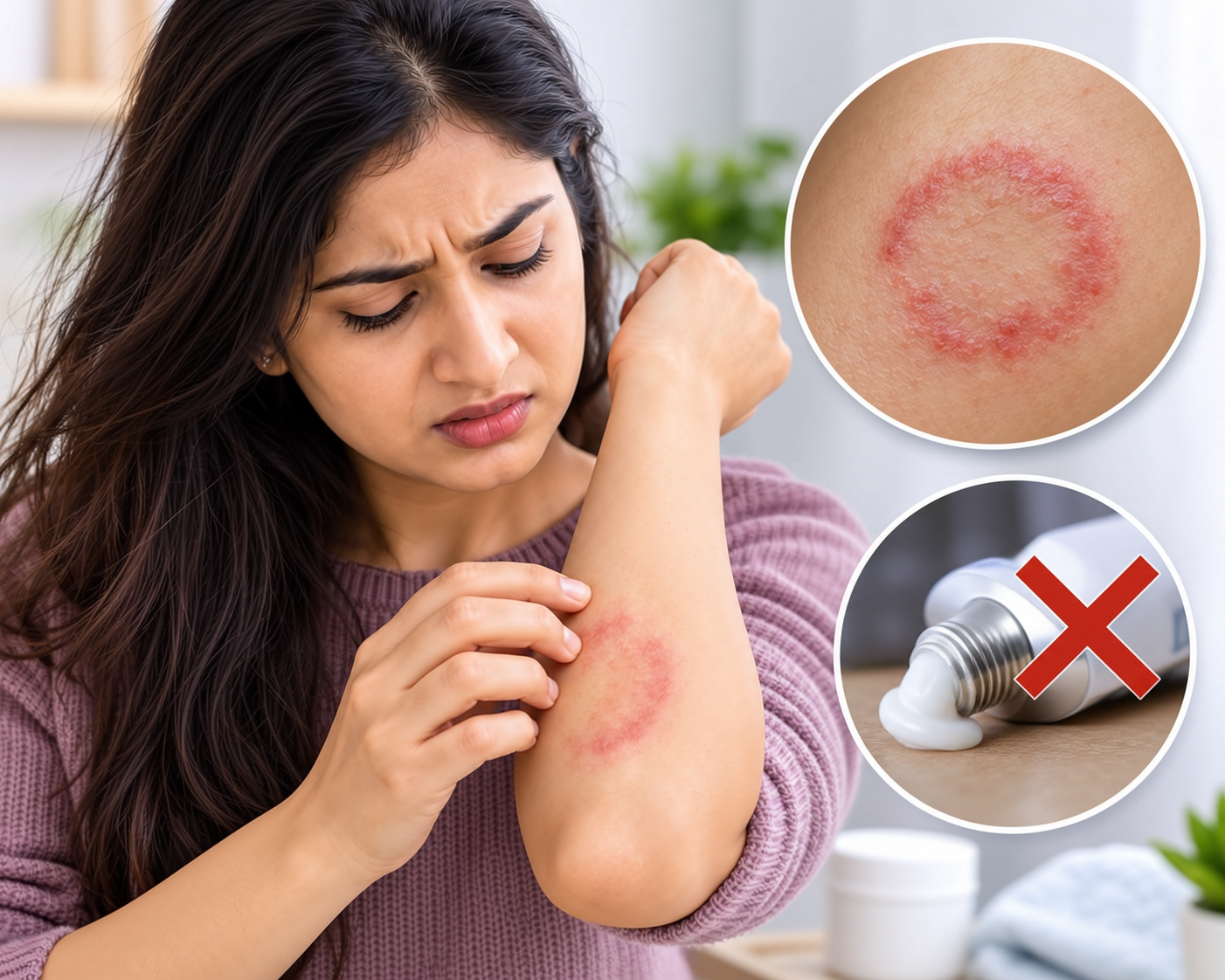
The steroid trap is common in India, because these creams are easy to buy over the counter and they do work for a few days. Itch and redness drop, so it feels like the right tube. Underneath, the fungus keeps spreading. Check the label: names like clobetasol or betamethasone, or a “triple” cream that mixes a steroid, an antifungal, and an antibiotic, are not meant for ringworm.
Stopping early is the quieter mistake. The fungus lives in the top layer of skin, and the visible rash fades before it is gone. Most patches take 2 to 4 weeks to clear, and treatment should continue for 1 to 2 weeks after your skin looks normal.
Signs a Steroid Cream Has Masked Your Ringworm
Doctors call this tinea incognito, which simply means a fungal infection in disguise. Suspect it if:
- The itch eased, but the rash keeps spreading
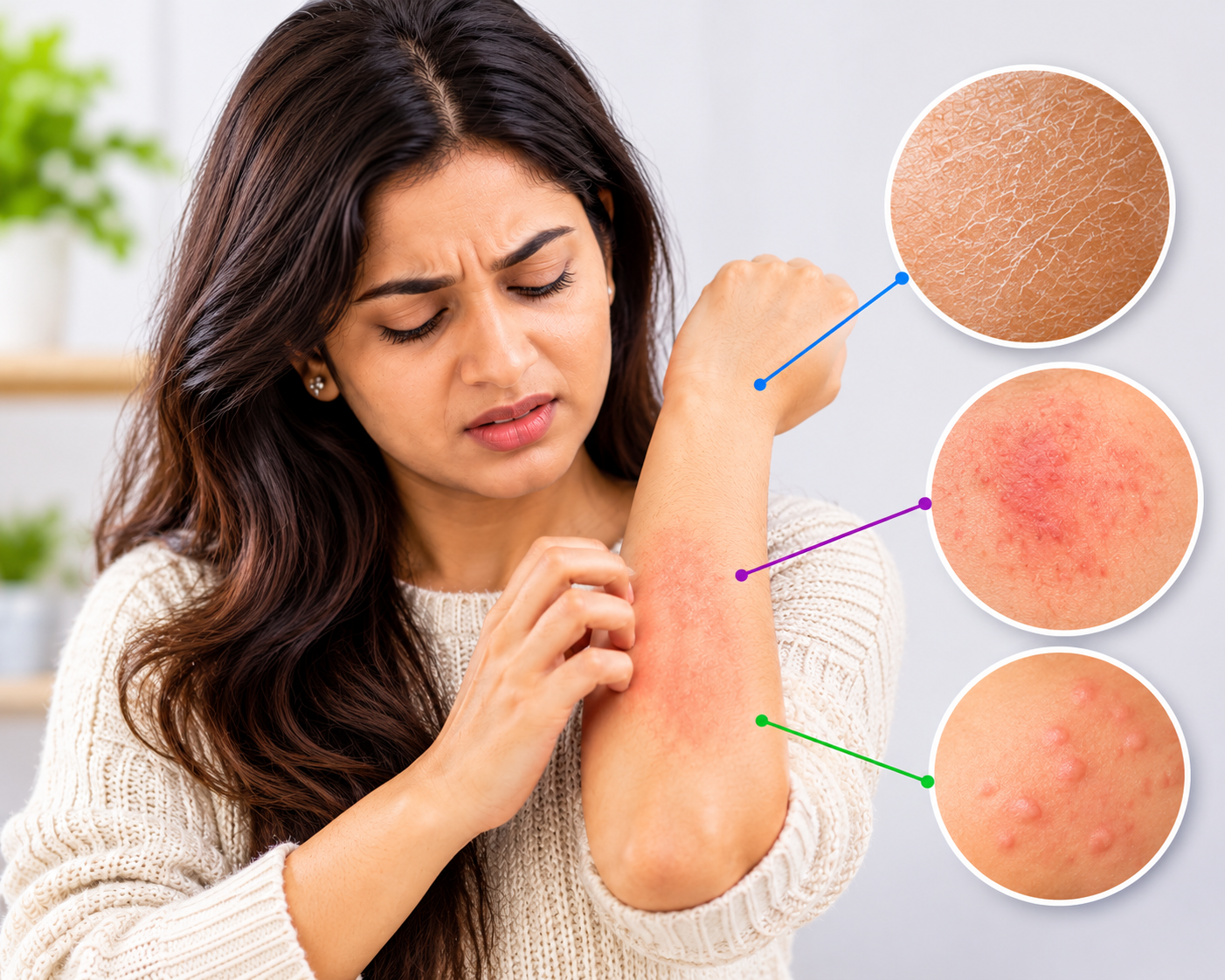
- The classic ring is gone, replaced by redness with small bumps or pimple-like spots
- The rash returns within days of stopping the cream
- The skin looks thin or shiny, or has fine stretch marks or tiny visible blood vessels
- New patches appear on the groin, thighs, trunk or face
Not sure it is fungal in the first place? Our guide to skin allergy vs fungal infection explains how to tell them apart.
Already used a steroid cream? Do not add another tube.
A quick skin check, with a simple lab test if needed, shows whether it is fungal and what will actually clear it.
What Proper Treatment Looks Like
Stubborn ringworm gets simple once the treatment is right. This is what the best skin infection doctor in Indore should walk you through:
- Confirm it is fungal, often with a quick test of skin scrapings, since eczema, psoriasis, and allergy can look similar
- Stop steroid-containing creams, and if you have used one for weeks or months, ask a doctor how to taper so the skin does not flare
- Use a plain antifungal cream as directed, covering the rash and a little of the healthy skin around it
- Keep going for 1 to 2 weeks after the skin looks normal
- Add prescription tablets when needed, since large, long-standing or steroid-damaged infections often will not clear with cream alone
- Be patient with the dark mark, which can linger after the fungus is gone and fades slowly

If a steroid cream was used for a long time, expect a longer course. In India, some ringworm strains are also becoming harder to treat, which is one more reason repeated self-treatment fails.
Stop It Coming Back
Reinfection from your own towels and clothes is a quiet reason ringworm returns:
- Wash towels, bedsheets and innerwear in hot water and dry them fully in the sun
- Keep skin dry, especially skin folds, groin and between the toes, and wear loose cotton
- Do not share towels, combs or clothes
- Treat athlete’s foot too, since it can reinfect other areas
- Check pets with patchy fur, because cats and dogs can carry ringworm
When to See a Doctor
Do not wait it out if:
- There is no improvement after 2 weeks of proper antifungal treatment
- You have used a steroid or combination cream on the rash at any point
- The rash is spreading or covers a large area
- It is on the scalp, nails, face, groin or beard area
- It keeps returning every few months
- You have diabetes or low immunity, or the patient is a young child
If you have already searched for a chamdi ka doctor near you in Indore, you are past the stage of home remedies. A visit now is usually faster than a few more months of tubes.
What a Visit Actually Involves
A proper visit starts with one unglamorous request: bring every cream you have used. At Skinology, Dr. Ginni Chhabria, a dermatologist with 13+ years of experience, reviews what you applied and for how long. She examines the rash and confirms the diagnosis with a lab test of skin scrapings when needed. Then you get a plain plan: which antifungal, for how long, and whether tablets are needed.
Both clinics treat fungal infections the same way. If you want a doctor for a fungal infection in Palasia, the Old Palasia clinic is easy to reach, and the Vijay Nagar clinic offers the same care.
Frequently Asked Questions
1. Why is my ringworm not going away?
Usually because a steroid or combination cream hid the rash while the fungus spread, or because treatment stopped as soon as the itch faded. A wrong diagnosis is the third reason, since eczema or psoriasis can look like ringworm. If two weeks of proper antifungal treatment has not helped, get it checked.
2. Can a steroid cream make ringworm worse?
Yes. Steroids calm itch and redness but weaken the skin’s local defence, so the fungus spreads and the rash changes shape, which delays the right diagnosis.
3. How long should I use antifungal cream for ringworm?
Until the skin looks normal, plus another 1 to 2 weeks. Most patches take 2 to 4 weeks to clear, and longer if a steroid cream was used before.
4. Why does ringworm keep coming back?
Treatment stopped too early, steroid creams were used, or the fungus is being picked up again from towels, clothes, damp skin folds, untreated athlete’s foot or pets. Fixing the course and the habits usually ends the cycle.
5. Can ringworm go away on its own?
Rarely, and not reliably. It usually keeps spreading and can pass to others, so proper treatment is faster and safer.
6. How do I know if it is ringworm or an allergy?
Ringworm typically spreads outward as a scaly red patch with a clearer centre and a raised edge, and it itches. Allergy rashes follow contact with a trigger and do not usually grow in a ring. Because they can look alike, a doctor’s check saves time.
7. Is ringworm contagious?
Yes. It spreads through skin contact, shared towels and clothes, and from pets. Keep towels separate and keep treating until the skin has cleared.
8. Do I need tablets for ringworm?
Not always. Small patches often clear with a plain antifungal cream. Large, widespread, long-standing or steroid-damaged infections often need prescription tablets, which should only be taken under a doctor’s supervision.
9. Where can I find a skin infection doctor in Palasia or Vijay Nagar?
Skinology runs clinics in both Old Palasia and Vijay Nagar, led by Dr. Ginni Chhabria, so you can pick whichever is closer.
The Bottom Line
Stubborn ringworm is most often a wrong-cream or stopped-too-soon problem, and both are fixable. Stop the steroid cream, get the diagnosis confirmed, and finish a full antifungal course. If it still has not cleared, see a skin specialist in Indore who checks before prescribing, instead of buying the next tube.
Book a consultation with Dr. Ginni Chhabria at Skinology and get a plan that clears it for good.