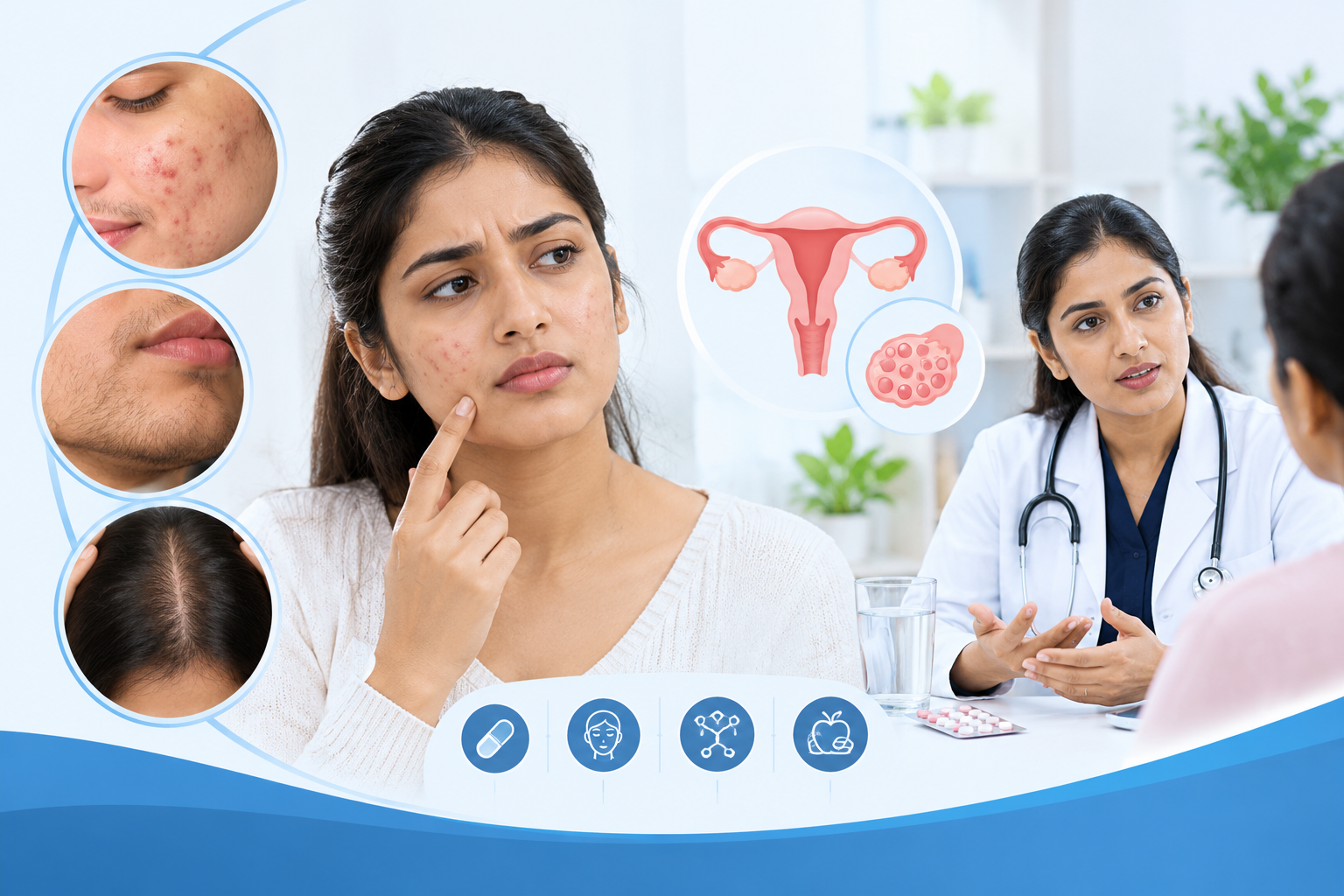
PCOS raises androgens, the hormones that drive oil, hair growth, and scalp hair thinning, which is why it often causes jawline acne, coarse facial hair, and thinning hair together. A dermatologist treats the skin and hair signs with a plan matched to your pattern, while a gynaecologist or endocrinologist confirms PCOS and manages the hormones, so the two work best side by side. Most women improve with consistent treatment, but it takes months, not weeks.
Here is how each problem is treated, what to expect, and when to see a doctor instead of trying another product.
| Concern | Typical sign in PCOS | Main options |
| Acne | Deep, painful spots on the jawline, chin and lower cheeks, often before periods | Topical retinoids and benzoyl peroxide, medicines prescribed after assessment, hormone-targeted therapy with a gynaecologist |
| Facial hair | Coarse, dark hair on the chin, upper lip and sideburns | Laser hair removal for long-term reduction, plus hormone treatment when needed |
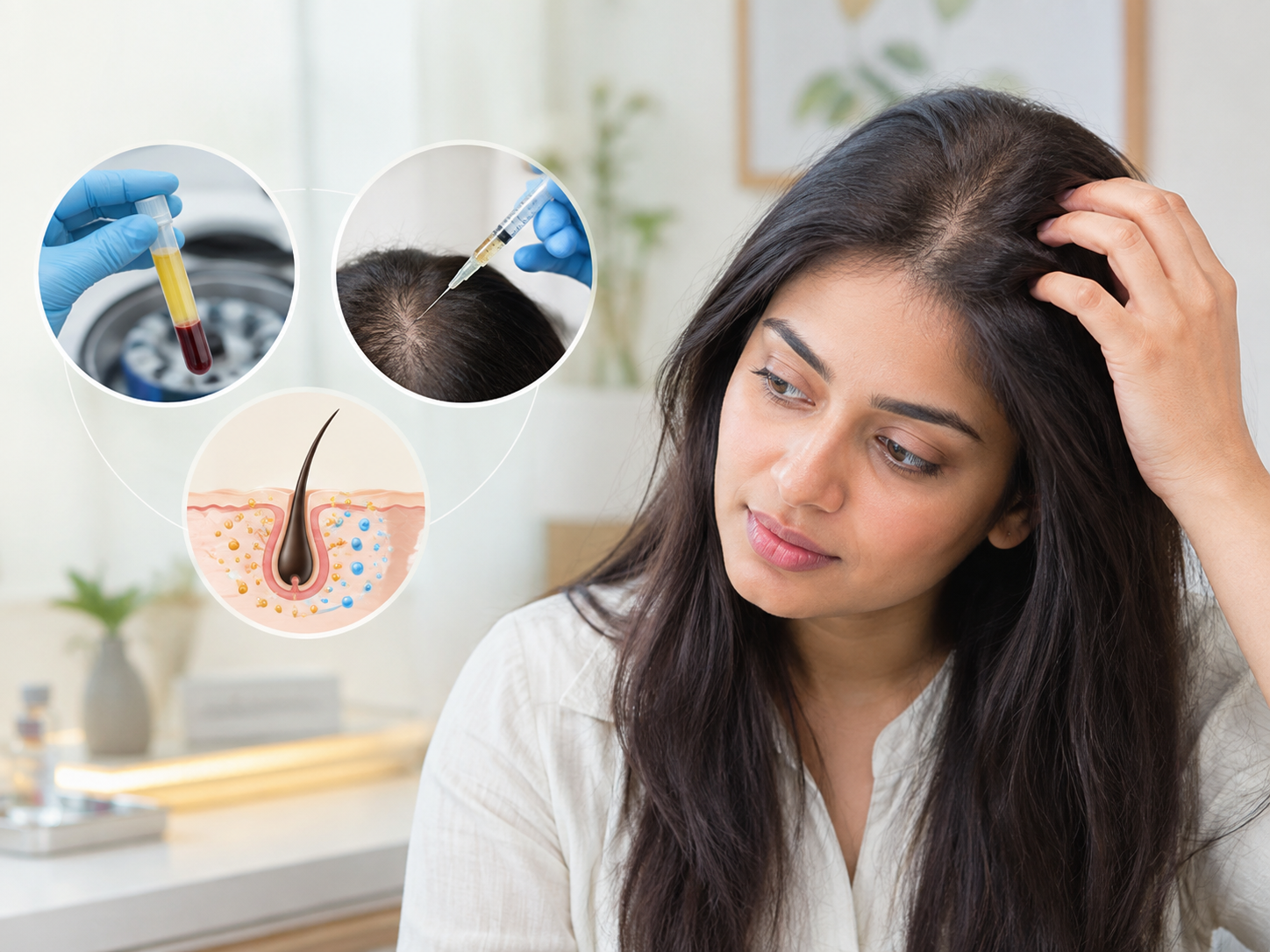
| Hair thinning | Wider parting and thinner crown, hairline mostly kept | Topical minoxidil, fixing iron or thyroid gaps, PRP or similar options in selected cases |
Why Does PCOS Affect Your Skin and Hair?
In PCOS, the ovaries and adrenal glands can make more androgens than usual, and insulin resistance can push levels higher. Androgens make oil glands produce more sebum, turn fine facial hair coarse, and slowly shrink scalp hair follicles. That is why the three problems often arrive together.
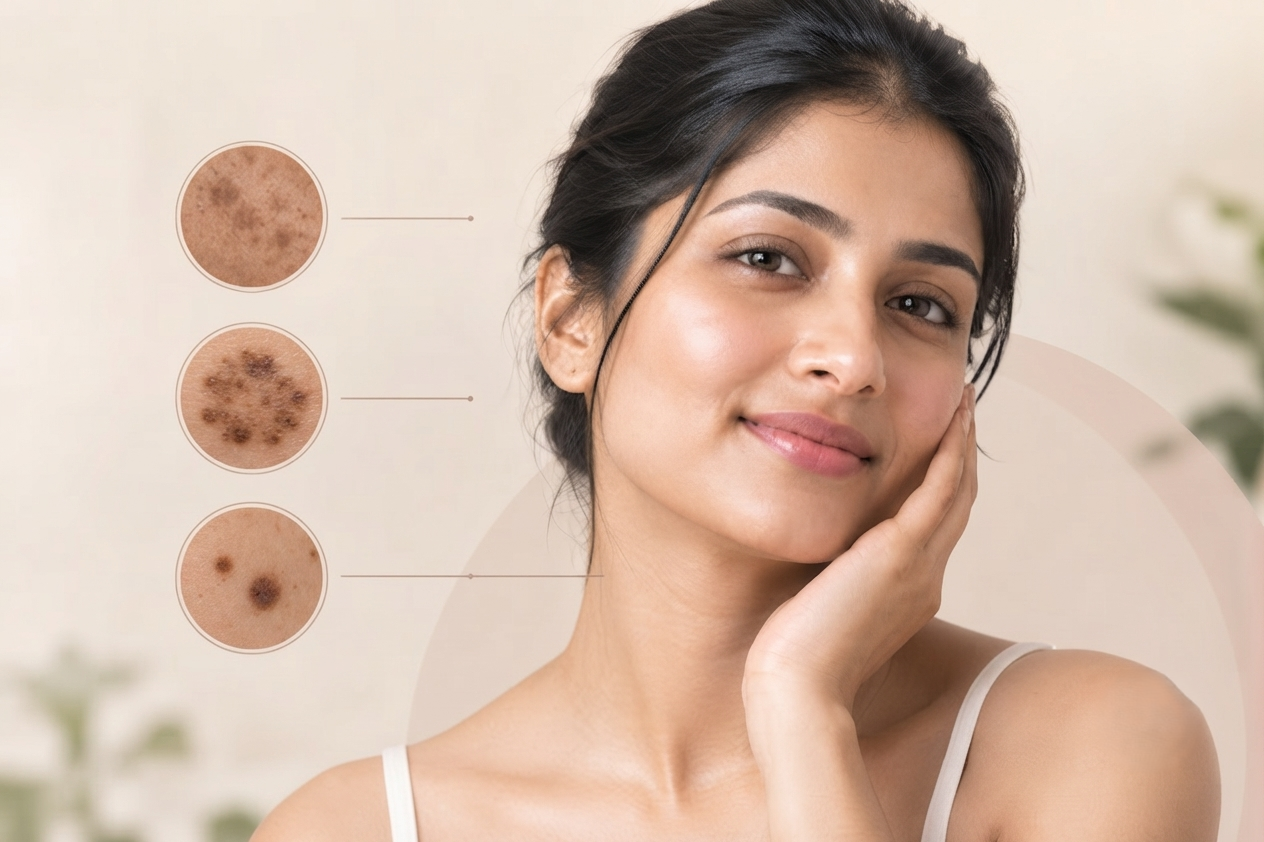
Not every woman with PCOS gets all three, and some get none. Other signs to watch for are irregular periods, dark velvety patches on the neck or underarms, and weight gain around the waist. A dermatologist plans acne care in Indore around this hormone pattern, not just the pimples you can see.
PCOS Acne: What It Looks Like and How It Is Treated
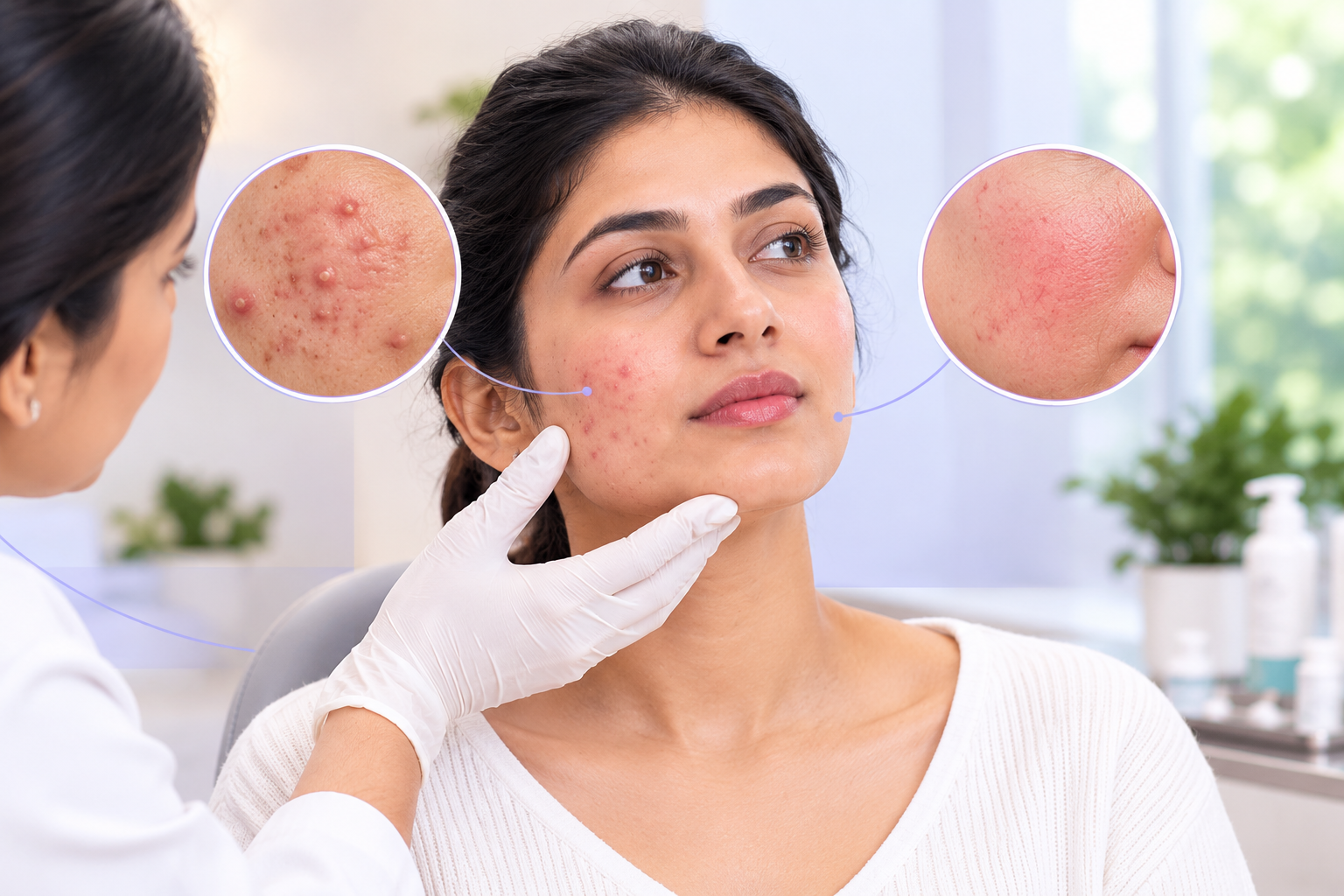
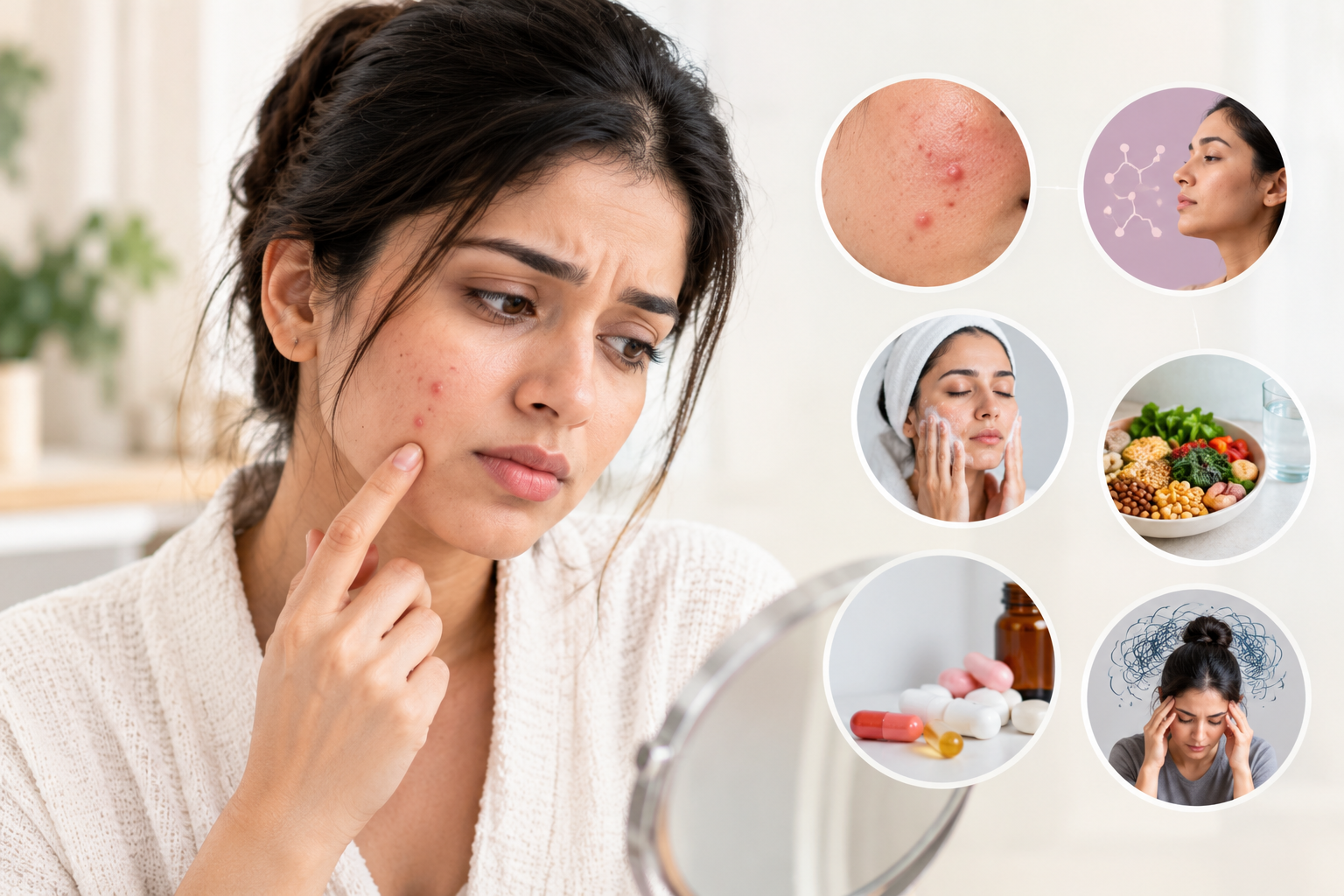
PCOS acne is usually deep, tender and slow to heal. It sits along the jawline, chin and lower cheeks, flares before periods, and returns when you stop treatment because the hormone trigger is still there. Location alone cannot confirm PCOS, so it needs a proper assessment.
Effective acne treatment in Indore for PCOS usually combines:
- Retinoids and benzoyl peroxide to unclog pores and reduce bacteria
- Short courses of antibiotics for inflamed spots, when needed
- Hormone-targeted medicines, prescribed after assessment and usually with your gynaecologist, because some cannot be used in pregnancy
- Peels or laser-based treatment for stubborn spots and the marks they leave
Do not pick cysts, and do not stop treatment early. PCOS acne needs steady control for months. Never start prescription hormonal or oral acne medicines on your own.
PCOS Facial Hair: What Works for the Long Term
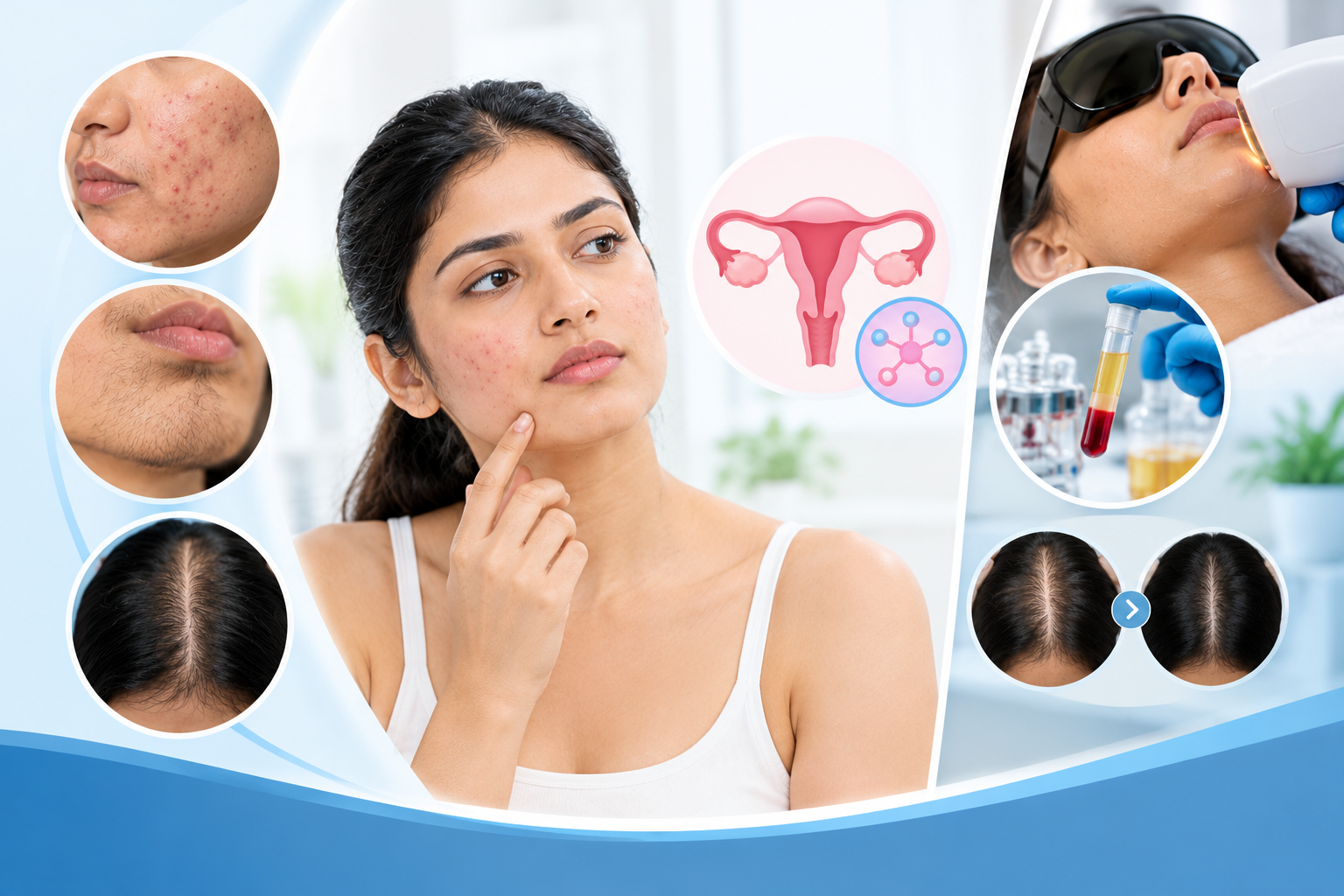
Excess facial hair in PCOS is called hirsutism. Shaving, threading and waxing remove it for a few weeks but do not slow growth.
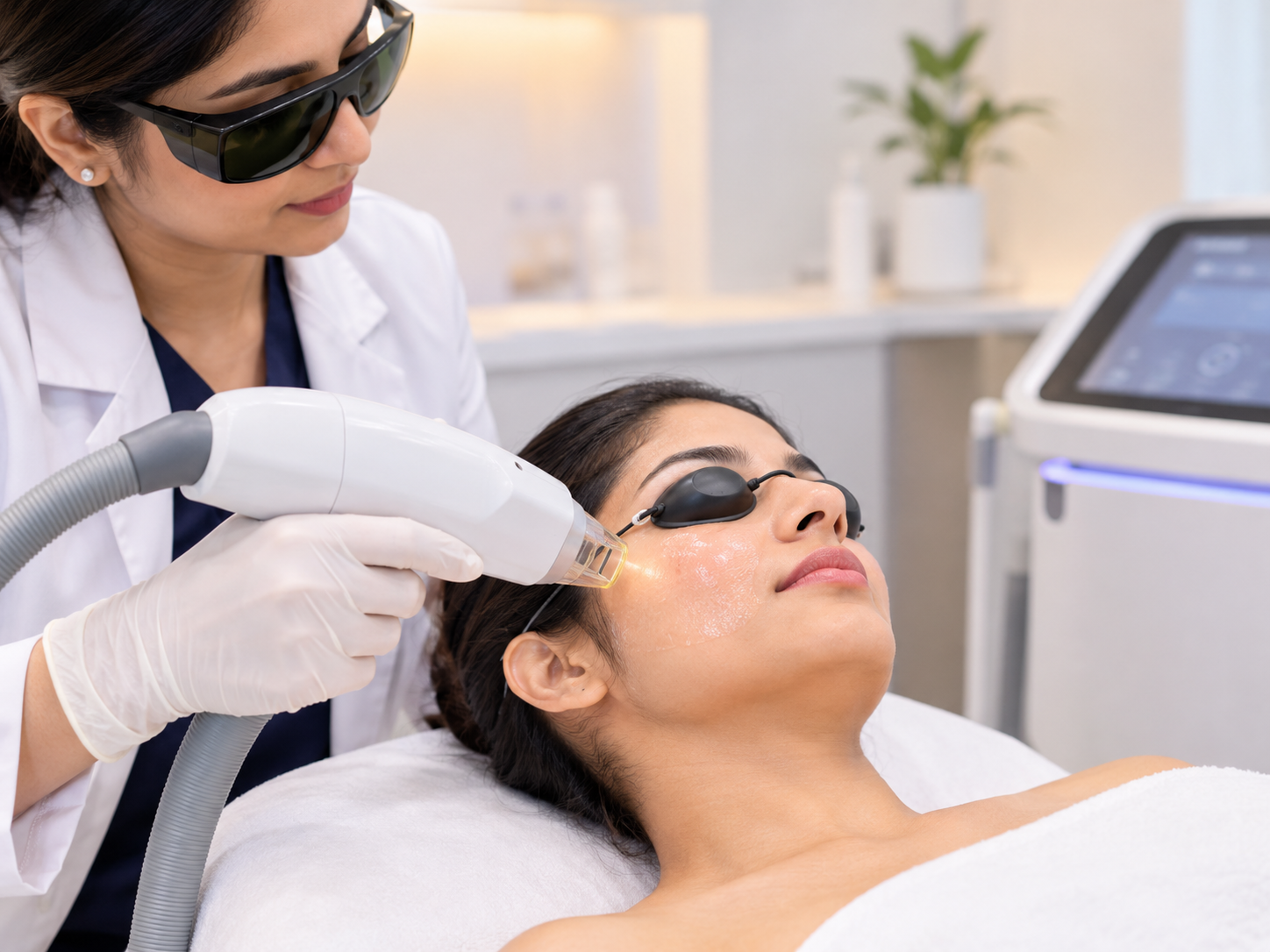
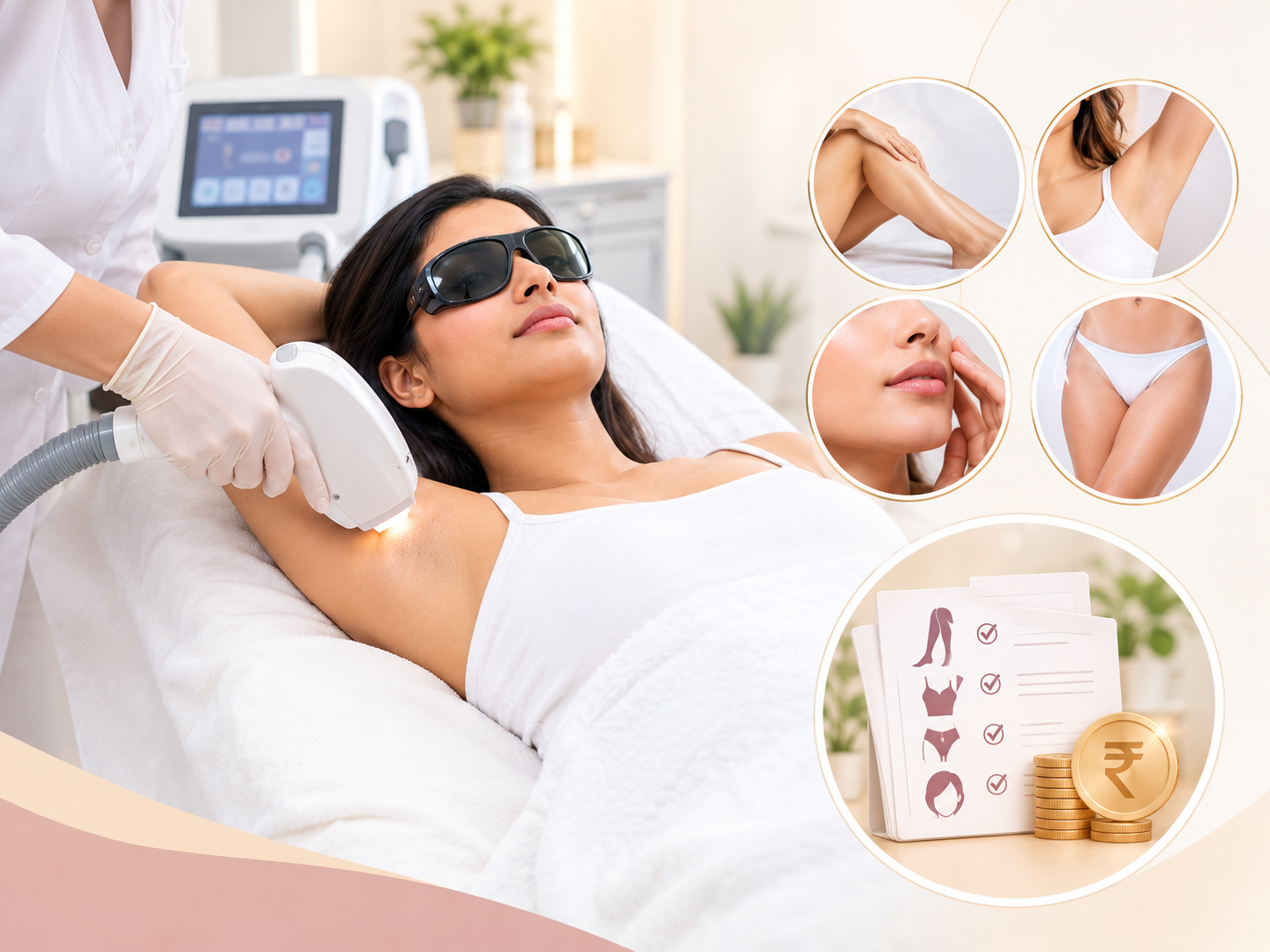
For long-term facial hair removal, laser is the most effective option for most women. It damages the follicle and reduces regrowth over a course of sessions. In PCOS, hormones keep stimulating new hair, so expect a few extra sessions and occasional maintenance. Laser works best on dark hair, with settings matched to your skin tone. It reduces hair but does not treat PCOS itself, so the hormones need attention alongside it.
Wondering what a session involves? Our guide on what to expect from laser hair removal covers it step by step.
Tired of managing PCOS skin and hair one product at a time? Get one clear plan for acne, facial hair and thinning.
PCOS Hair Thinning: Signs and Treatment Options
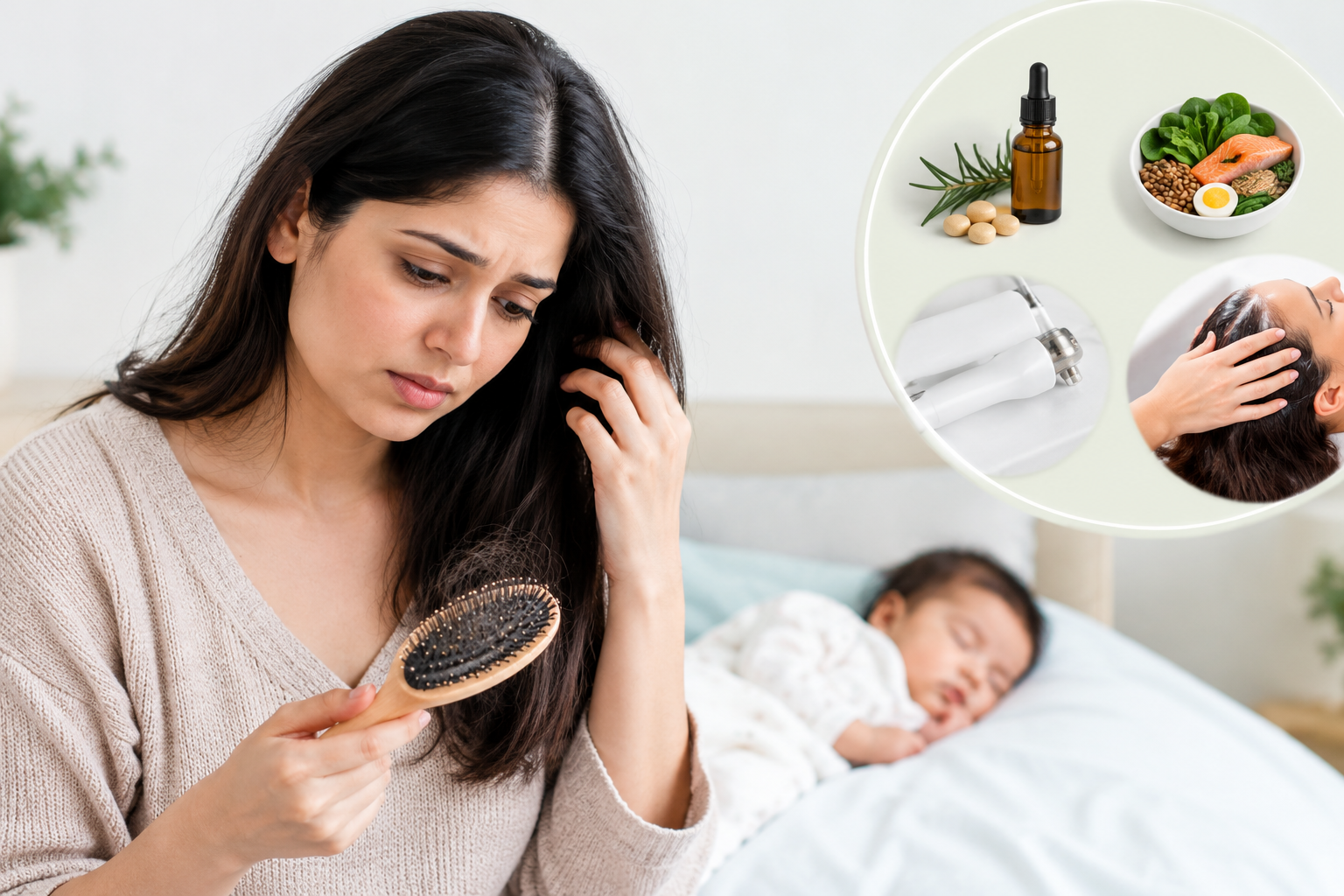
PCOS hair thinning looks different from postpartum or stress shedding. The parting widens, the crown thins and the hairline is mostly kept. It is gradual, not sudden.
Before treating it, a dermatologist rules out other causes such as low iron, thyroid problems and vitamin gaps, which are common alongside PCOS. The best hair loss treatment in Indore for PCOS starts with this step and then builds a plan:
- Topical minoxidil to slow thinning and thicken existing hair (ask first if you are pregnant or planning pregnancy)
- Correcting iron, thyroid or vitamin gaps once a test confirms them
- Hormone-targeted medicines, with your gynaecologist
- PRP, GFC or exosome therapy in selected cases, after assessment
Hair regrowth is slow. Most women need three to six months of steady treatment before they see a clear difference, and results vary.
Dermatologist or Gynaecologist: Who Should You See?
- Gynaecologist or endocrinologist: Confirms PCOS from your periods and hormone tests, with an ultrasound only when needed. They manage ovulation, insulin resistance and hormones.
- Dermatologist: Treats the acne, facial hair and hair loss, checks for other causes, and works alongside your hormone doctor.
- Both: See both if you have irregular periods plus acne, extra hair growth or thinning.
Get checked soon if facial or body hair grows rapidly, your hair loss progresses suddenly, or your voice deepens. These can point to a cause other than typical PCOS.
Lifestyle matters too. Regular movement, good sleep and balanced meals with fewer refined carbs support hormones and skin, and in women who are overweight, even modest weight loss can help. There is no single PCOS diet and no food that cures hormonal acne. These habits support treatment but do not replace it.
How We Care for PCOS Skin and Hair
At Skinology, Dr. Ginni Chhabria, Owner and Medical Director, holds an MBBS, a postgraduate diploma in Dermatology (DDV) from Mumbai, and a Fellowship in Lasers and Skin Surgery from Singapore.
We treat the skin and hair signs of PCOS in one plan: we examine your skin and scalp, check for iron or thyroid problems when needed, and set up hair loss treatment in Indore that fits your cycle, goals, and any pregnancy plans. If hormone treatment is needed, we coordinate with your gynaecologist.
PCOS Skin and Hair FAQs
1. Can PCOS acne be cured?
PCOS cannot be cured, but its symptoms can be managed. With the right acne treatment and hormone care when needed, breakouts often improve, though maintenance treatment may be necessary.
2. Why does PCOS cause unwanted facial hair?
PCOS can increase androgen activity, which makes fine facial hair thicker and darker. It commonly affects the chin, upper lip and sideburns, though the pattern varies.
3. Is laser hair removal effective for PCOS facial hair?
Yes, it gives long-term hair reduction. Hormones may stimulate new growth, so extra sessions and occasional maintenance may be needed.
4. Can PCOS hair thinning grow back?
It may improve with early treatment, but full regrowth is not guaranteed. Results depend on the cause and extent of the loss, and visible change often takes several months.
5. Which tests are needed for PCOS skin and hair problems?
PCOS assessment can include your menstrual history, an examination, selected hormone tests and metabolic screening. An ultrasound is not always needed. A dermatologist may also test for thyroid problems, iron deficiency or other causes of hair loss.
6. Can diet and weight loss clear PCOS acne and hair problems?
Balanced food, regular activity and healthy weight management support overall PCOS care. They do not reliably clear acne or facial hair on their own, so medical treatment may still be needed.
7. Where can I see a female dermatologist in Indore for PCOS skin and hair problems?
You can consult Dr. Ginni Chhabria at Skinology. Read more about our female dermatologist in Indore and our clinics at Vijay Nagar, near Bombay Hospital, and Old Palasia, behind Rafael Tower.
Final Thoughts
PCOS acne, facial hair and thinning share hormonal roots, but each needs its own treatment. With the right assessment and steady care, they can usually be managed well.
Ready for one clear plan? Book a consultation with Dr. Ginni Chhabria at Skinology to discuss your skin and hair concerns and a treatment plan that fits you.