If your anti-dandruff shampoo has stopped working, there’s a good chance you’re not treating dandruff at all. Scalp psoriasis looks almost identical to dandruff on the surface flakes, itching, a tight or irritated scalp but it’s an entirely different condition that anti-fungal shampoos were never built to fix. The two need different treatments, and using the wrong one for months is exactly why nothing has changed.
This mix-up is more common than people realize. Both conditions flake, both itch, and both get worse with stress. But one is a fungal and oil imbalance issue, and the other is an autoimmune condition that speeds up skin cell turnover on the scalp. Telling them apart is the first real step toward getting rid of the problem instead of just managing it, and it’s exactly the kind of call a trained hair specialist in Indore is positioned to make correctly, rather than another shampoo swap based on guesswork.
Why Your Shampoo Might Be the Wrong Tool
Most anti-dandruff shampoos are built around one job: controlling Malassezia, the yeast-like fungus behind ordinary dandruff. They work by reducing fungal overgrowth and rebalancing scalp oil.
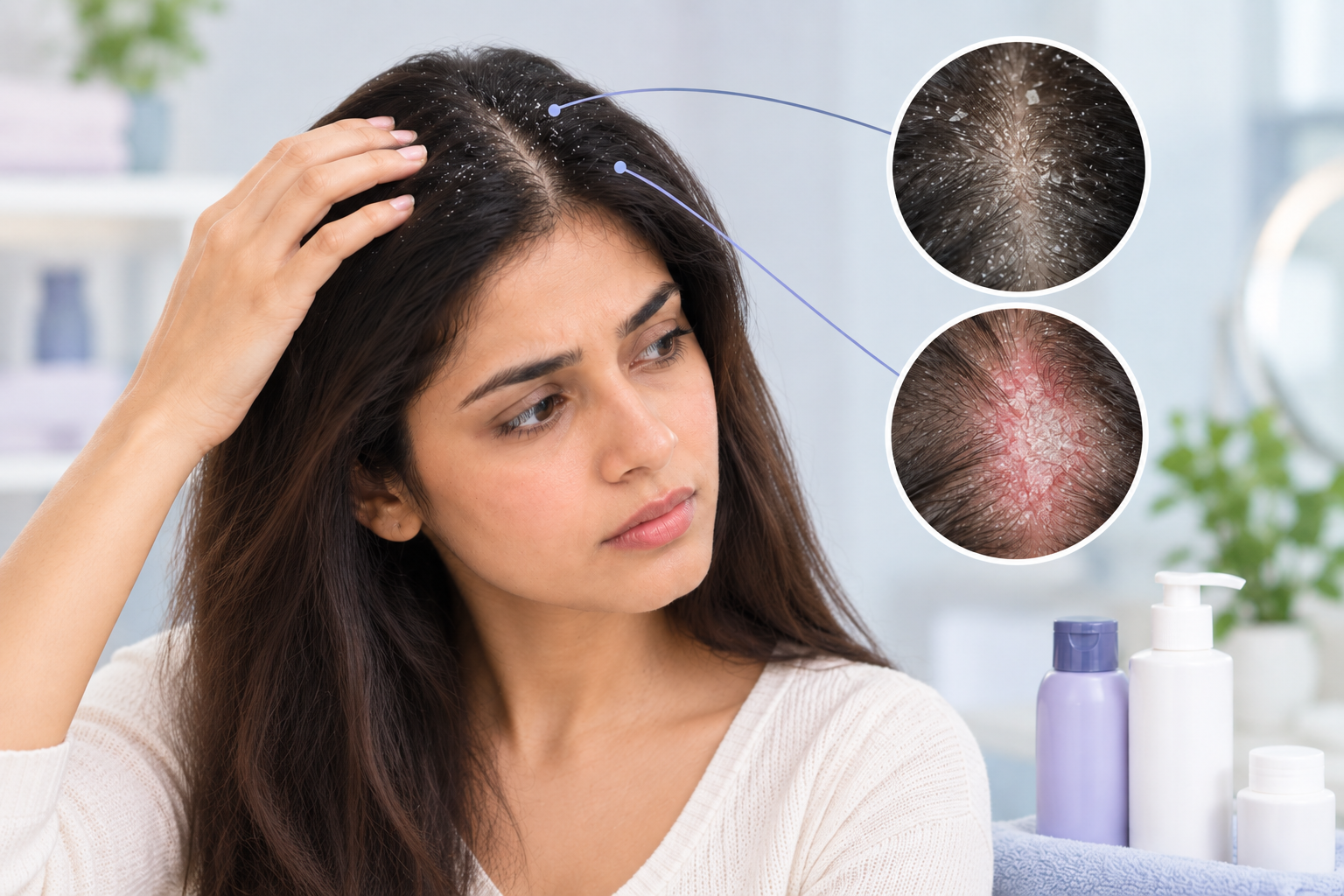
Scalp psoriasis doesn’t respond to that mechanism at all. It’s driven by an overactive immune response that makes skin cells build up faster than they can shed, forming thick, silvery-white patches instead of loose white flakes. No amount of ketoconazole or zinc pyrithione touches that process, which is why some people cycle through five different shampoos over a year with zero improvement, sometimes noticing thinning hair long before anyone points them toward proper hair loss treatment in Indore.
A few signs the pattern doesn’t add up:
- You’ve tried more than two medicated shampoos with little to no change
- Flakes come back within days, not weeks, of washing
- The itching feels more like burning or tightness than an itch
- Patches feel raised or thick, not just flaky
Dandruff vs Scalp Psoriasis: Spotting the Difference
Here’s how the two typically show up, side by side:
| Feature | Dandruff | Scalp Psoriasis |
| Flake appearance | Loose, white, oily flakes | Thick, silvery, tightly attached scales |
| Scalp skin | Mildly red or oily | Raised, red patches with clear borders |
| Itch type | Mild, comes and goes | Persistent, sometimes with burning |
| Spread | Stays on the scalp | Can extend to hairline, ears, or neck |
| Response to shampoo | Usually improves in 1 to 2 weeks | Little to no change |
| Family history | Not typically relevant | Often runs in families |
If the border between “affected” and “normal” scalp is sharp and well-defined, that’s a stronger sign of scalp psoriasis. Dandruff patches tend to blend into surrounding skin without a clear edge.
Not sure which side of this table describes you? A scalp exam settles it in minutes.
Why a Proper Diagnosis Actually Matters
Treating scalp psoriasis like dandruff doesn’t just waste time, it can make things worse. Harsh anti-dandruff shampoos used daily on already-inflamed psoriasis patches can increase irritation and trigger more flare-ups. On the flip side, using a steroid-based psoriasis treatment on ordinary dandruff offers no real benefit and isn’t meant for long-term daily use.
A proper scalp treatment in Indore starts with figuring out which of the two you actually have, since the entire treatment path branches from there. This usually involves:
- A close visual examination of the scalp and flake pattern
- Checking for psoriasis elsewhere on the body, such as elbows, knees, or nails
- Asking about family history, since psoriasis has a genetic link
- In unclear cases, a small skin scraping or biopsy to confirm the diagnosis
This is the exact reason a hair scalp specialist in Indore is worth seeing before buying another bottle of shampoo. What looks obvious in the mirror often isn’t obvious enough for a confident diagnosis.
How Scalp Psoriasis Is Actually Treated
Once confirmed, scalp psoriasis treatment looks quite different from dandruff care:
- Medicated topical treatments – corticosteroid or vitamin D-analogue solutions to calm inflammation and slow cell turnover
- Coal tar or salicylic acid formulations – to soften and lift thick scales before other treatments can penetrate
- Light-based therapy – for cases that don’t respond well to topical treatment alone
- Scalp-specific dandruff treatment in Indore – used alongside psoriasis care when a mild fungal component is also present, since the two conditions can coexist
That last point catches people off guard. It’s entirely possible to have both dandruff and scalp psoriasis at once, which is exactly why self-diagnosing from a shampoo aisle rarely works out.
Tired of switching shampoos with nothing to show for it?
What This Means for Your Hair, Too
Left untreated, both conditions can quietly affect hair health. Constant scratching, inflammation, and scale buildup around the follicles can weaken hair over time, and psoriasis patches in particular can lead to temporary shedding in the affected area. If you’ve noticed flaking alongside thinning, this overlap is worth mentioning at your appointment, since it often calls for combined hair fall treatment in Indore rather than treating the scalp and the hair loss as separate issues.
A qualified hair specialist in Indore will usually check both angles together rather than treating flaking in isolation, since scalp health and hair strength are more connected than most people assume. If hair thinning is your main concern right now, our guide on why hair keeps falling excessively breaks down the other common triggers worth ruling out.
Getting the Right Care Locally
If you’re in Indore and searching for a scalp psoriasis doctor near Palasia, look for a clinic that examines the scalp directly under proper lighting rather than diagnosing from a description over the phone. Psoriasis and dandruff genuinely look similar in early stages, and a rushed assessment is how the mix-up happens in the first place.
At Skinology, scalp evaluations at both the Palasia and Vijay Nagar clinics start with identifying the actual cause before any product or prescription is suggested, whether that turns out to be fungal, autoimmune, or a combination of both.
Frequently Asked Questions
1. How do I know if it’s dandruff or scalp psoriasis?
Dandruff usually shows up as loose, oily white flakes with mild itching that improves with medicated shampoo. Scalp psoriasis shows thicker, silvery scales with well-defined red patches that don’t respond to regular anti-dandruff products. A scalp exam is the most reliable way to tell them apart.
2. Can scalp psoriasis be mistaken for severe dandruff?
Yes, this happens often, especially in mild cases. Both cause flaking and itching, which is why so many people treat psoriasis with dandruff shampoo for months without improvement before seeking a proper diagnosis.
3. Why isn’t my anti-dandruff shampoo working anymore?
If flakes persist despite consistent use over several weeks, the underlying cause may not be fungal dandruff at all. Scalp psoriasis, seborrheic dermatitis, or product buildup can all mimic dandruff while needing a completely different treatment.
4. Is scalp psoriasis contagious?
No. Scalp psoriasis is an autoimmune condition, not an infection, and cannot spread to another person through contact.
5. Can you have both dandruff and scalp psoriasis at the same time?
Yes, it’s fairly common for both to occur together, particularly in cases of seborrheic-type psoriasis. This is one reason self-treatment often falls short and a professional evaluation gets better results faster.
6. Does scalp psoriasis cause hair loss?
Scalp psoriasis itself doesn’t usually destroy hair follicles permanently, but scratching, inflammation, and scale removal can cause temporary shedding in affected areas. Hair typically regrows once the flare-up is under control.
The Bottom Line
Flaking that won’t respond to shampoo after several weeks is your scalp telling you the diagnosis might be wrong, not that you need a stronger product. Dandruff and scalp psoriasis look alike from a distance but need very different treatment plans to actually clear up.
If you’ve been stuck in the same cycle of flakes, itching, and shampoo swaps with nothing to show for it, it’s worth getting an actual answer. Book a scalp consultation with Dr. Ginni Chhabria at Skinology and find out what’s really going on.