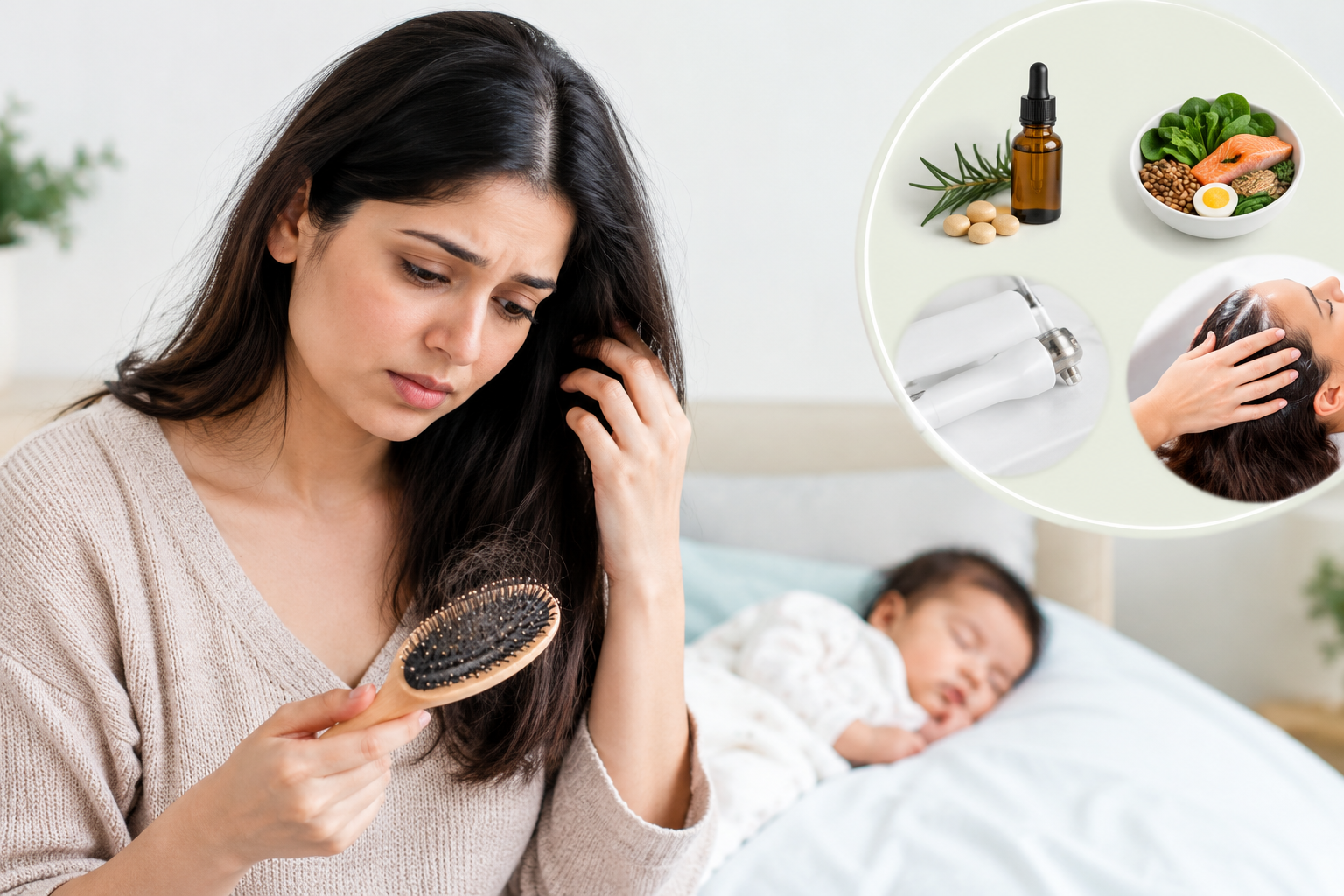
Postpartum hair loss usually starts 2 to 4 months after delivery, peaks around month 4, and settles by 6 to 12 months as hormones rebalance. It is temporary shedding, not true balding, so gentle hair care, steady nutrition and patience help most. See a dermatologist if it lasts beyond 12 months, leaves visible thin patches, or comes with tiredness, weight change or a very itchy scalp.
If you are wondering whether this is normal or whether you need hair regrowth treatment in Indore, here is how to tell the difference, what actually helps, and when professional care makes sense.
Why Does Hair Fall After Delivery?
During pregnancy, high estrogen keeps many hairs in the growth phase, which is why hair often looks thicker. After delivery, estrogen drops fast, and a large batch of hairs moves into the shedding phase together. Doctors call this telogen effluvium. A large multicentre Indian study of close to 24,600 hair loss patients found it was the most common diagnosis.
Three things usually stack up after birth:
- The sudden hormone drop
- Broken sleep and the stress of caring for a newborn
- Lower iron and protein stores after delivery and during breastfeeding
The follicles are not damaged. They are only resting, which is why most of this hair comes back.
Postpartum Hair Loss Timeline: What to Expect
- 0 to 2 months after delivery: Hair often still looks full as hormones settle.
- 2 to 4 months: Shedding begins. You notice more hair in the shower, on the pillow and on your brush.
- Around 4 months: Shedding peaks. This is the stage that worries most mothers.
- 6 to 12 months: Shedding slows, and short new hairs appear along the hairline.
- About 12 months: Density is back to normal for most women. Some take a little longer.
What Helps Postpartum Hair Loss at Home
Nothing stops the shedding phase completely, but these steps protect the hair you have and support regrowth:
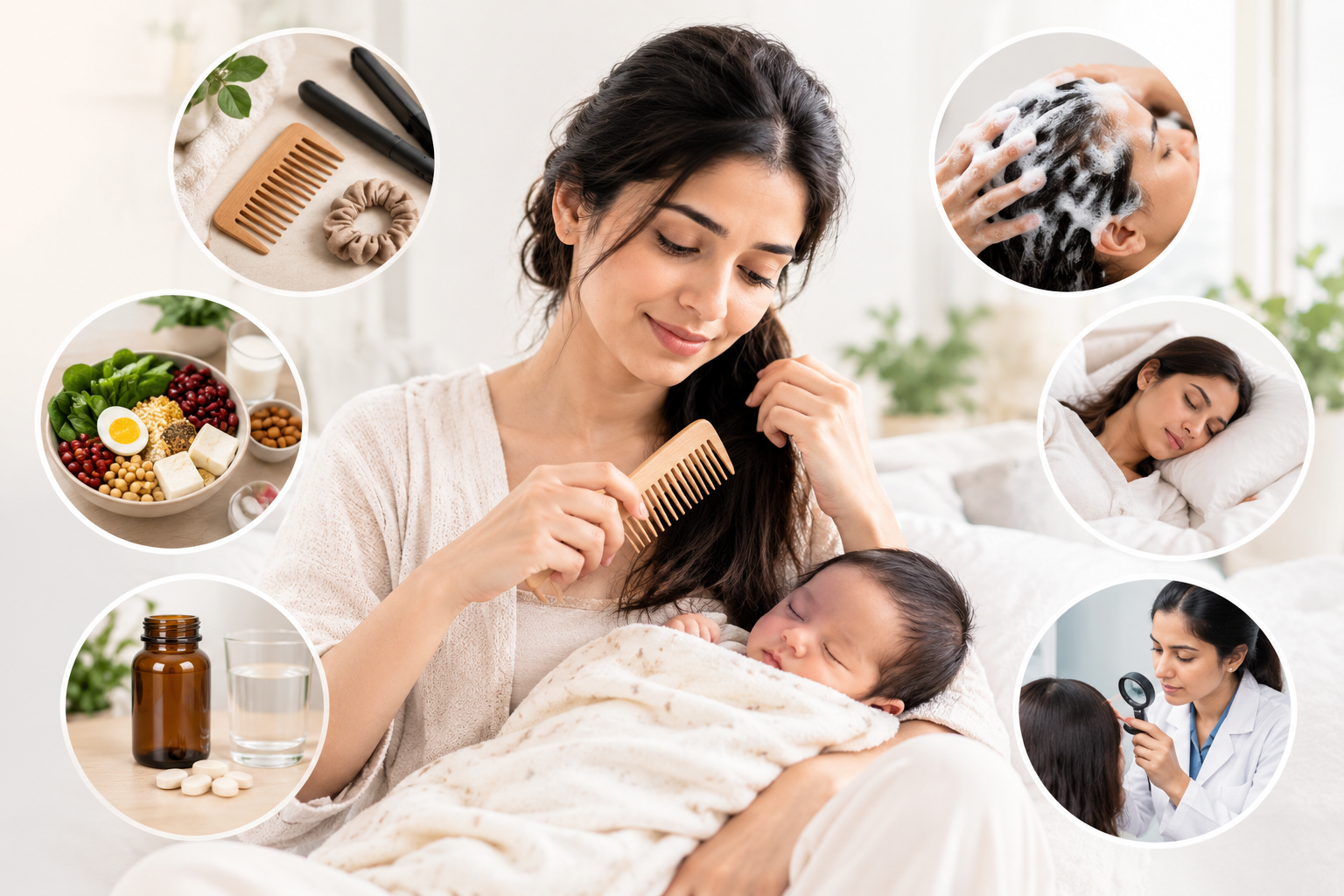
- Be gentle: Use a wide-tooth comb, skip tight ponytails and buns, and keep heat styling low.
- Eat enough protein and iron: Dal, rajma, eggs, paneer and spinach all help. Do not crash-diet, because fast weight loss can trigger a second wave of shedding.
- Keep taking your prenatal vitamins as advised: Do not add extra supplements without a blood test, especially if you are breastfeeding.
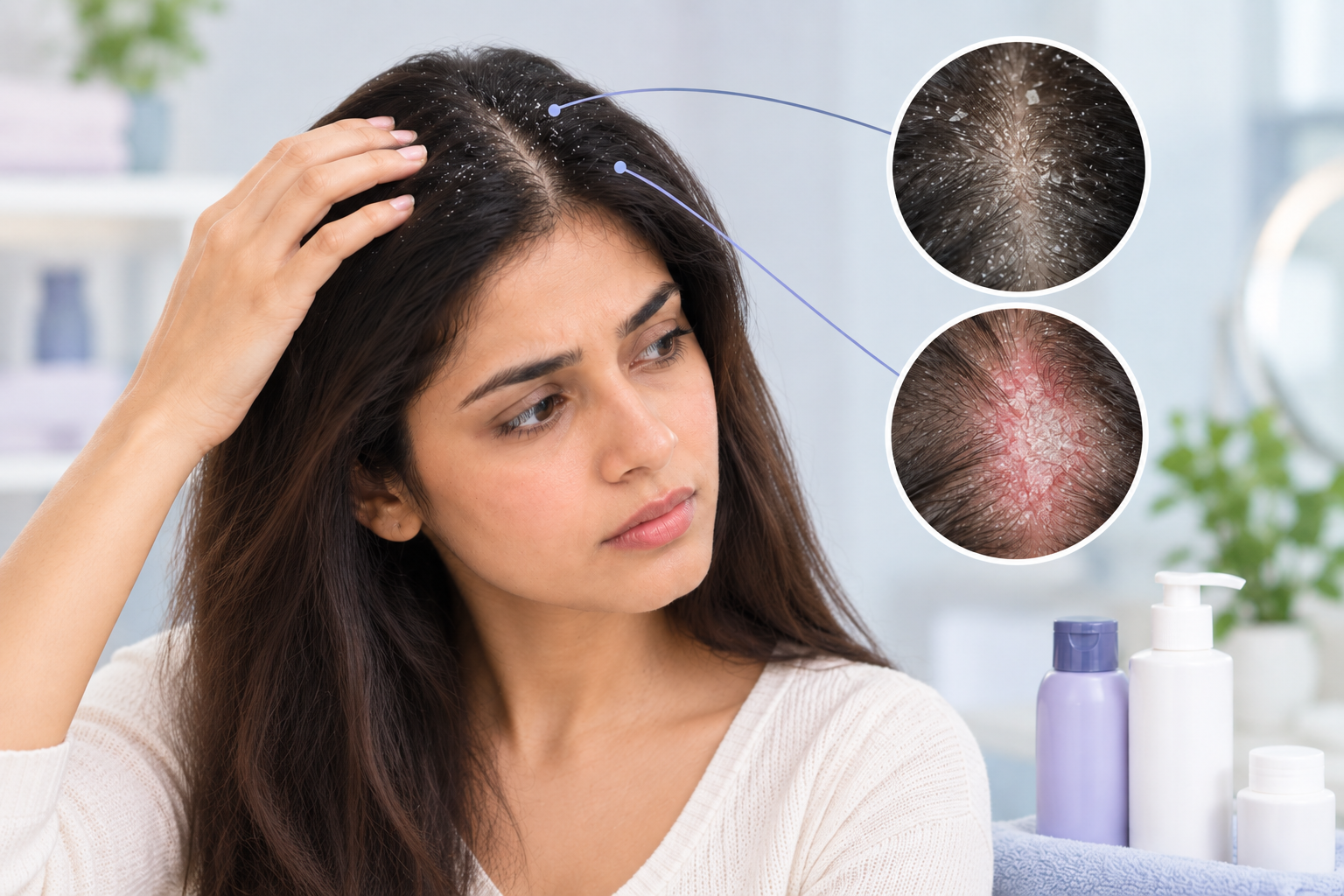
- Look after your scalp: Wash regularly with a mild shampoo. Itching or flaking needs attention, because it can add to hair fall.
- Rest when you can: Poor sleep and stress keep shedding going, so ask for help at home.
If the shedding is heavy or lasts longer than expected, add professional hair fall treatment in Indore guided by a dermatologist, rather than trying product after product.
Hair falling more than you expected after delivery? Find out if it is normal shedding or something that needs treatment.
When to See a Dermatologist for Hair Loss After Pregnancy
Book a visit if you notice any of these:
- Shedding that is still heavy after 12 months
- Thin patches, a widening part or a receding hairline
- An itchy, red or flaky scalp
- Tiredness, feeling cold, weight change or palpitations, which can point to a thyroid problem after delivery
- Hair that is not regrowing after the shedding phase has passed
A good dermatologist for hair treatment in Indore will examine your scalp, ask about your pregnancy, delivery and feeding, and order blood tests only when needed. Common ones check thyroid function, iron stores (ferritin), vitamin D and vitamin B12. Our guide on what dermatologists check when you see them for hair loss explains the process step by step.
Treatment Options a Dermatologist May Suggest
Treatment depends on what the scalp and blood tests show:
- Fixing the cause first: Treating low iron, vitamin deficiencies or a thyroid problem often settles the shedding.
- A plan that suits breastfeeding: Some hair medicines, including minoxidil, are usually avoided while nursing, so never start one on your own.
- Scalp treatment: Dandruff, dermatitis or infection is treated so the scalp can support regrowth.
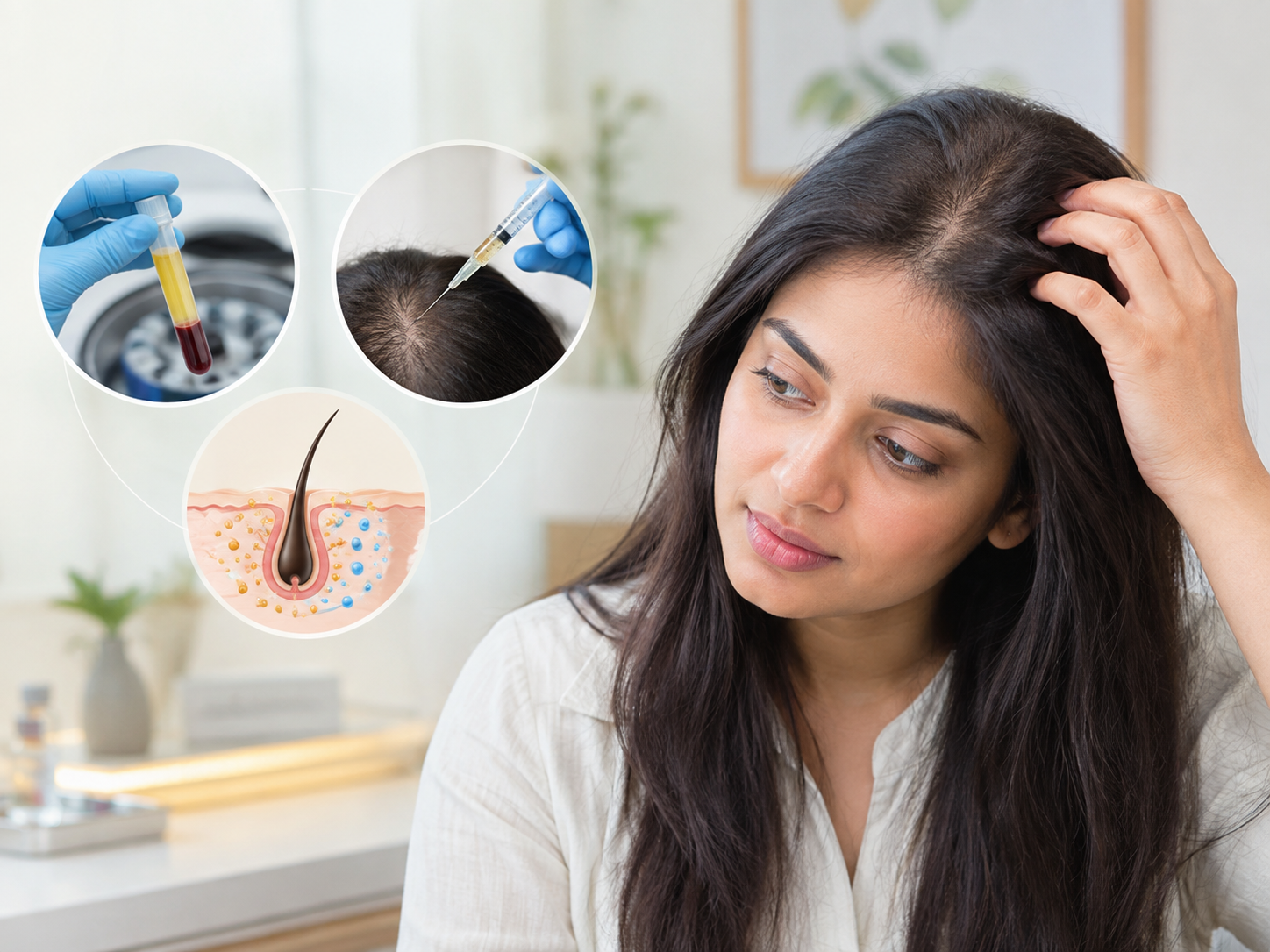
- PRP, GFC or exosome therapy: These may be considered when follicles are slow to restart after the shedding phase, not for normal postpartum shedding. Your dermatologist decides whether and when they suit you.
How We Care for Postpartum Hair Loss
Most mothers do not need strong treatment. They need a clear answer on whether this is normal, and a plan if it is not. Choosing a hair specialist in Indore who explains the cause before prescribing anything makes a real difference.
At Skinology, Dr. Ginni Chhabria holds an MBBS and a postgraduate diploma in Dermatology (DDV) from Mumbai, plus a Fellowship in Lasers and Skin Surgery from Singapore. Every visit starts with a scalp examination and a history of your pregnancy, delivery and feeding. If a test or treatment is needed, we keep it safe for a nursing mother and explain each step.
Postpartum Hair Loss FAQs
1. How long does postpartum hair loss last?
Shedding usually begins 2 to 4 months after delivery, peaks around month 4 and settles by 6 to 12 months. Hair density often looks normal again by about a year, though some women take longer.
2. Will my hair grow back after postpartum hair loss?
Yes, in most cases. The follicles are only resting, so new hair returns, often as short, fine hairs along the hairline first.
3. Does breastfeeding cause hair loss?
Not directly. Hormone shifts and nutrition gaps during this phase can add to shedding, and some mothers notice more shedding after weaning. Eat well and ask your doctor about supplements.
4. Which vitamins help postpartum hair loss?
No single vitamin fixes it. Low iron, vitamin D and vitamin B12 can worsen shedding, so get a blood test first and take supplements only as your doctor advises, especially while breastfeeding.
5. Can I use minoxidil or get PRP while breastfeeding?
Some hair medicines, including minoxidil, are usually avoided while breastfeeding. PRP uses your own blood, but a dermatologist should assess you and choose the safest option and timing.
6. When should I see a doctor for hair loss after pregnancy?
See one if shedding lasts beyond 12 months, you notice thin patches or a widening part, or you also feel very tired, cold or notice weight change. These can point to thyroid problems or low iron.
7. Where can I find a dermatologist for postpartum hair loss in Indore?
If you are looking for a dermatologist in Indore for hair care, our Vijay Nagar clinic is near Bombay Hospital and our Old Palasia clinic is behind Rafael Tower. Both are run by Dr. Ginni Chhabria.
Final Thoughts
Postpartum hair loss is common, temporary and usually settles without treatment. Be gentle with your hair, feed yourself well, and get checked if it lasts beyond a year or comes with other symptoms.
Ready for a clear answer on your hair fall? Book a consultation with Dr. Ginni Chhabria at Skinology for a scalp check and a plan that is safe for new mothers.