| Hair loss in men and women is caused by genetic factors (androgenetic alopecia), hormonal imbalances, nutritional deficiencies, chronic stress, scalp infections, and autoimmune conditions. Effective solutions include FDA-approved medications like minoxidil and finasteride, PRP therapy, mesotherapy, hair transplant surgery, and targeted nutritional support. A dermatologist for hair loss in Indore can identify the root cause through trichoscopy and blood tests, then design a personalised hair fall treatment plan. |
| 85% of men experience hair loss by age 50 | 50% of women are affected by age 65 | 100 hairs shed daily is considered normal | 95% of cases are treatable with early diagnosis |
Understanding Hair Loss Causes and Solutions for Men and Women
Hair loss causes and solutions for men and women are among the most searched health topics in India today and for good reason. Losing hair is not just a cosmetic concern; it often signals an underlying health imbalance that deserves expert attention. At Skinology, our team of experienced dermatologists in Indore sees hundreds of patients each month who are dealing with everything from mild seasonal shedding to advanced androgenetic alopecia. The good news: when the cause is identified early, hair regrowth therapy is highly effective. This guide walks you through the science-backed causes, proven treatments, and the right time to seek a hair loss specialist so you can make informed decisions about your scalp health.
What Causes Hair Loss? The Most Common Triggers in Men and Women
Hair loss medically called alopecia does not have a single cause. It is a symptom with multiple roots. Understanding the cause of hair fall specific to your body is the first and most important step toward recovery.
| 1. Androgenetic Alopecia (Genetic Hair Loss) This is the most common form of hair loss in both men and women. In men, it presents as a receding hairline or crown thinning. In women, it causes diffuse thinning at the top of the scalp. A hormone called DHT (dihydrotestosterone) shrinks hair follicles over time, shortening the growth cycle. If you have a family history of baldness, seeing a hair doctor early can slow progression significantly. |
| 2. Hormonal Imbalances Hormones play a central role in hair regrowth and shedding. Conditions like hypothyroidism, PCOS (polycystic ovary syndrome), post-pregnancy estrogen dips, and menopause all disrupt the hair cycle. A qualified dermatologist for hair loss will run targeted blood panels to detect these imbalances before recommending treatment. |
Other proven triggers of hair loss in men and women include:
→ Nutritional deficiencies Low iron, ferritin, Vitamin D, Vitamin B12, and zinc are among the most frequent culprits behind diffuse hair fall.
→ Chronic stress (Telogen Effluvium) Intense physical or emotional stress pushes hair follicles into the resting phase prematurely, leading to sudden, diffuse shedding 2–3 months later.
→ Scalp conditions Dandruff, seborrheic dermatitis, and fungal infections (tinea capitis) weaken follicles and accelerate hair fall.
→ Autoimmune conditions (Alopecia Areata) The immune system mistakenly attacks hair follicles, causing patchy, unpredictable hair loss that requires specialist care.
→ Medications and medical treatments Chemotherapy, blood thinners, antidepressants, and some blood pressure medications are known to cause drug-induced hair loss.
→ Poor hair care practices Excessive heat styling, tight hairstyles (traction alopecia), and harsh chemical treatments damage the shaft and follicle over time.
Hair Loss Solutions for Men: What Actually Works
Men experiencing hair loss have more clinically validated options today than ever before. The key is matching the right treatment to the right diagnosis something our hair specialist at Skinology does through advanced trichoscopic evaluation.
TREATMENT OPTIONS FOR MEN
| Minoxidil (Topical) | FDA-approved and clinically proven to slow loss and stimulate regrowth in male pattern baldness. Available as 2% and 5% solutions or foam. |
| Finasteride (Oral) | Blocks DHT conversion, the hormone responsible for follicle miniaturisation. Requires a prescription and regular monitoring by a dermatologist. |
| PRP Therapy | Platelet-Rich Plasma injections concentrate your blood’s growth factors and inject them into thinning areas, naturally triggering follicle regeneration. |
| Hair Transplant (FUT/FUE) | The most permanent solution for advanced loss. Uses minimally invasive FUE for natural, scar-free results. |
Low-Level Laser Therapy (LLLT) and mesotherapy for hair regrowth are also gaining clinical traction as non-invasive options. When combined with nutritional support and scalp care, they form a comprehensive approach to hair loss treatment.
Effective Hair Fall Solutions for Women: A Nuanced Approach
Hair fall treatment in indore for women requires a more nuanced approach because female hair loss is rarely a single-cause issue. Hormonal shifts, nutritional gaps, stress, and scalp health often interact simultaneously.
The best hair fall doctor will not rely on a one-size-fits-all protocol. At Skinology, we assess each woman’s hormonal profile, dietary patterns, and hair cycle stage before designing a treatment plan.
→ Minoxidil 2% (for women) The gold standard first-line topical treatment for female pattern hair loss, prescribed by a dermatologist.
→ Anti-androgen therapy Spironolactone or flutamide may be used in women with elevated androgens causing thinning along the parting line.
→ Nutritional infusions IV micronutrient therapy and oral supplementation with biotin, iron, and Vitamin D correct underlying deficiency-driven hair fall.
→ PRP and GFC therapy Growth Factor Concentrate (GFC) is an advanced, next-generation alternative to PRP with a higher platelet concentration for superior results.
→ Hormonal management Treating the root cause (PCOS, thyroid issues) is often the most impactful step a woman can take for sustainable hair regrowth.
→ Scalp micropigmentation A cosmetic option for women with stable, diffuse thinning who wish to create the visual appearance of density while undergoing treatment.
When Should You See a Dermatologist for Hair Loss?
Many people wait too long before consulting a dermatologist. Early intervention produces dramatically better outcomes. You should book an appointment at a hair regrowth clinic if you notice any of the following:
| → Hair shedding more than 100–150 strands per day consistently → Visible thinning at the crown, temples, or parting line → Patchy bald spots appearing suddenly → Scalp itching, redness, or flaking accompanying hair loss → Hair loss following a major illness, surgery, or childbirth → No improvement after 3 months of self-care attempts |
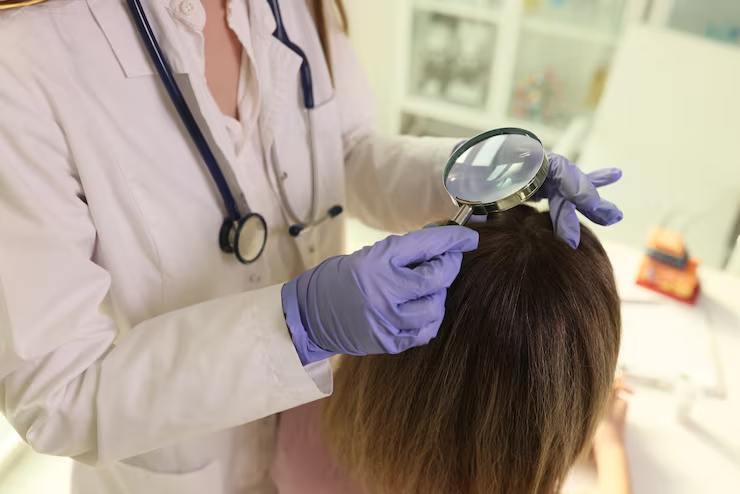
At Skinology, our hair loss specialist uses trichoscopy a non-invasive, magnified scalp analysis to assess follicle density and hair cycle stages with precision. This ensures you receive the most targeted hair fall treatment possible, not a generic protocol.
Lifestyle Changes That Support Hair Regrowth Therapy
Medical treatments work best when combined with supportive lifestyle habits. Our team at Skinology recommends these daily practices alongside any hair regrowth therapy plan.
→ Eat for your follicles Include iron-rich foods (lentils, spinach), protein (eggs, legumes), omega-3 fatty acids (flaxseed, walnuts), and biotin (sweet potato, almonds) in every meal.
→ Manage stress actively Yoga, meditation, and adequate sleep (7–9 hours) reduce cortisol, which is one of the most damaging hormones for follicle health.
→ Handle hair gently Avoid tight ponytails, limit heat styling, and use a wide-tooth comb on wet hair. These small habits prevent mechanical hair fall.
→ Hydrate consistently The scalp, like all skin, performs better when the body is well-hydrated. Aim for 2.5–3 litres of water daily.
→ Follow prescribed scalp care Use medicated shampoos only as directed by your dermatologist. Over-washing or under-washing both worsen scalp conditions.
FAQs About Hair Loss Causes and Solutions
Q: What’s the most effective hair fall treatment?
Depends on the cause minoxidil/finasteride for genetic loss, supplements for deficiencies, hormone treatment for PCOS/thyroid. Diagnosis first, then treatment.
Q: How much daily hair loss is normal?
50–100 strands/day is normal. See a specialist if you exceed 100–150 consistently, or notice visible thinning or bald patches.
Q: Can stress cause hair loss? Is it reversible?
Yes it’s called Telogen Effluvium. Shedding appears 2–3 months after the stressor. Fully reversible in most cases; regrowth within 6–9 months once stress resolves.
Q: Is PRP safe? How many sessions?
Safe uses your own blood, no allergy risk. Typically 3 sessions (4 weeks apart), then maintenance every 4–6 months.
Q: What should I look for in a hair doctor?
Board-certified dermatologist with trichology training, trichoscopy diagnostics, multiple treatment options, and documented results.
Q: Where can I find a hair loss specialist near me in Indore?
Skinology is located in Indore, MP. Board-certified dermatologists, walk-ins welcome.
| Ready to Stop Hair Loss and Start Regrowing? Book a trichoscopy-based hair analysis with Skinology the trusted hair regrowth clinic in Indore. Our dermatologists will identify your exact cause and build a treatment plan that works for your biology. Book Your Consultation |