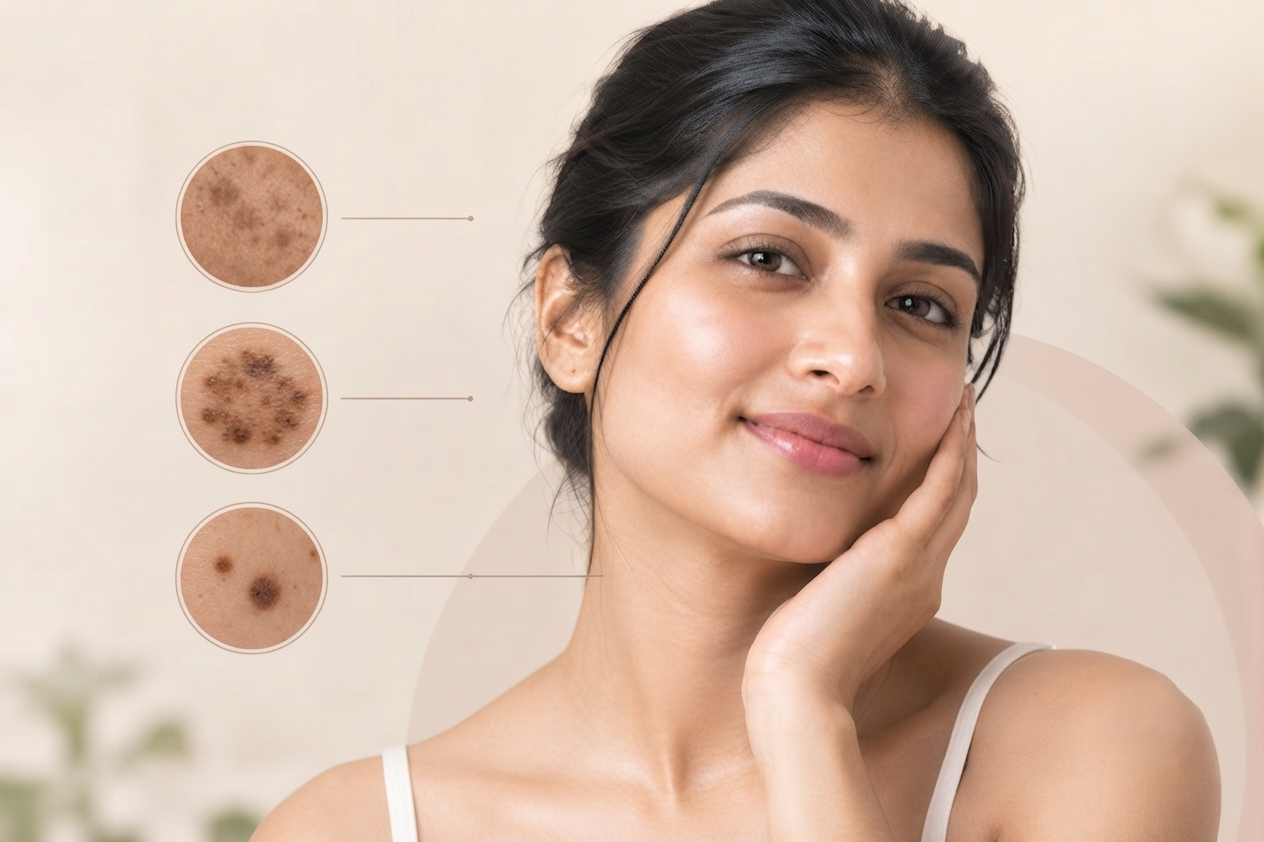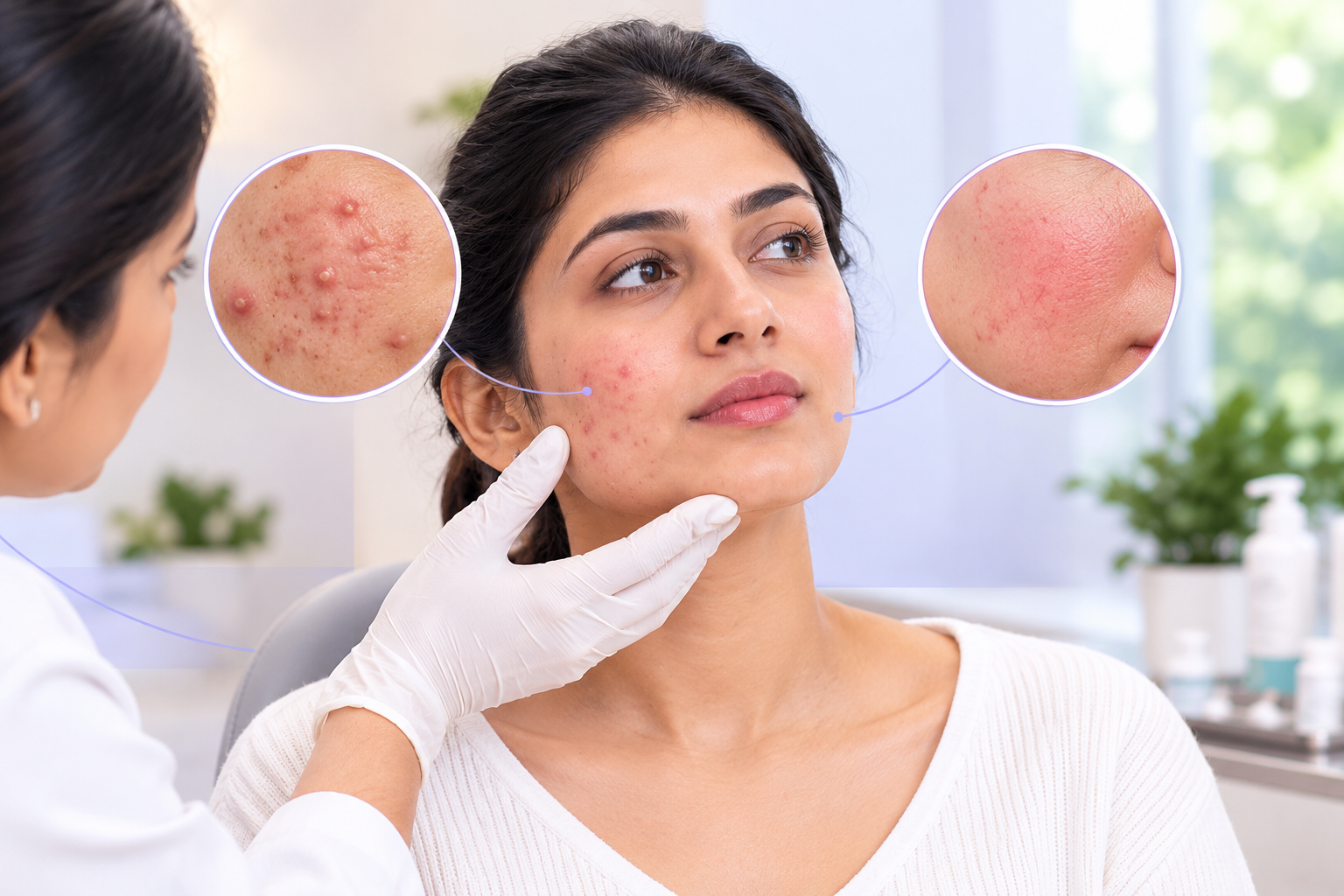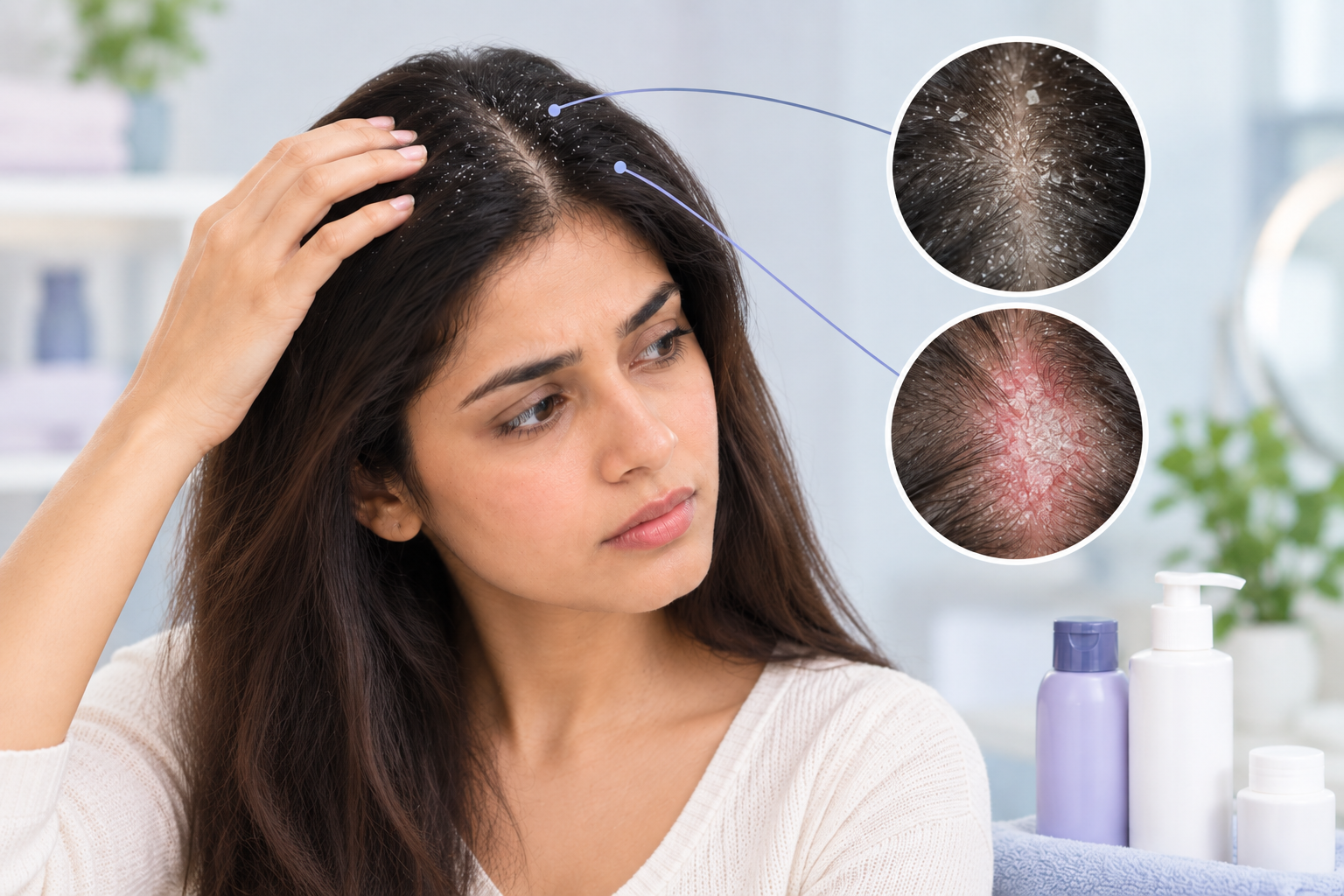
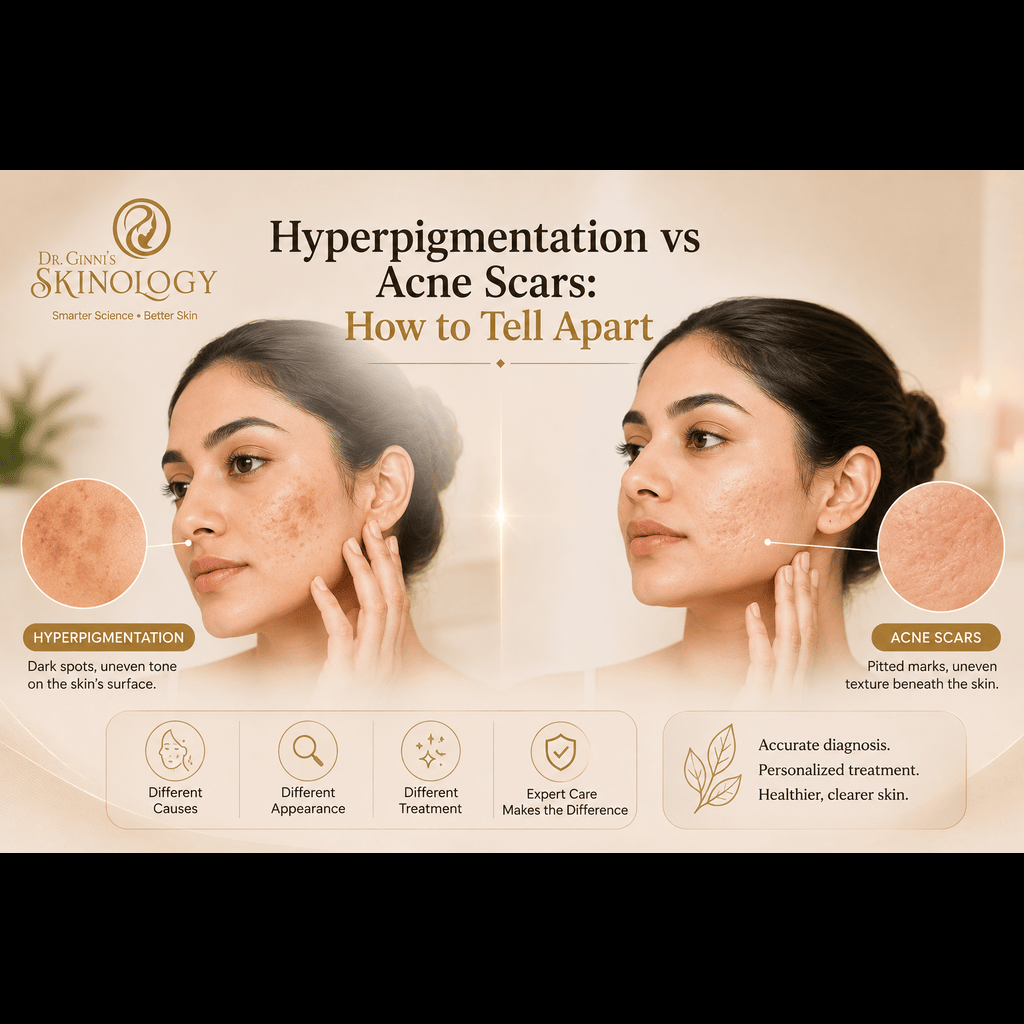
Hyperpigmentation vs acne scars comes down to texture. Hyperpigmentation is flat discoloration that sits on the skin’s surface and usually fades on its own within weeks to months. Acne scars are textural, indentations or raised tissue caused by collagen damage, and they do not fade without treatment. Run your finger over the mark, if you feel a dip or bump, it is a scar, not pigmentation.
Why Does This Distinction Actually Matter?
Treating the wrong condition wastes both time and money. Pigmentation responds to brightening ingredients, chemical peels, and sun protection. Scars need collagen-rebuilding treatments like laser or microneedling. Applying a brightening serum to a textural scar will not fix the indentation, no matter how long you use it.
This mix-up is extremely common, which is exactly why so many people feel like “nothing is working” on old acne marks. They are often using the correct product for the wrong condition entirely, which means the frustration has less to do with the product failing and more to do with a mismatched diagnosis from the start.
How Do You Tell Which One You Have?
Signs it’s likely hyperpigmentation:
- The mark is flat when you run a finger over it
- Color ranges from pink to brown to dark brown
- It tends to darken further with sun exposure
- It gradually lightens over weeks to months without intervention
- It appeared shortly after a breakout healed, without any dip or texture change
Signs it’s likely a scar:
- You can feel a dip, ridge, or raised texture
- It has persisted for 6 months or longer with no change
- It becomes more visible under certain lighting or when skin is stretched
- Sunscreen and brightening creams have made little visible difference
- It looks more pronounced without makeup or under harsh overhead light
It is also common to have both at once, since active acne often leaves pigmentation immediately, while the deeper collagen damage that becomes a scar takes longer to reveal itself. In many cases, the pigmentation fades on its own over a few months, and what remains underneath turns out to be the true scar.
Why Does Acne Leave Both Marks and Scars in the First Place?
Inflammation is the common thread behind both outcomes, but the depth of that inflammation determines which one you end up with. Surface-level inflammation triggers excess melanin production, which shows up as pigmentation. Deeper inflammation that reaches the dermis damages the collagen and elastin fibers that give skin its structure, and that is what creates a lasting scar.
This is also why picking at breakouts or extracting them incorrectly tends to worsen scarring specifically, since it drives inflammation deeper into the skin than the original breakout would have on its own.
What Treats Each Condition?
| Condition | Effective Treatments |
| Hyperpigmentation | Chemical peels, Vitamin C, sunscreen, brightening actives |
| Acne scars | Laser resurfacing, microneedling, subcision, PRP |
For pigmentation-focused concerns, a chemical peel treatment is often the first step, while textural scarring generally needs a more structured, multi-session approach.
If you have already confirmed textural scarring, our complete guide to acne scar treatment breaks down which procedure suits which scar depth.
What Should Your Daily Routine Look Like Either Way?
Regardless of which condition you are dealing with, a few habits genuinely help both:
- Daily sunscreen, since UV exposure worsens pigmentation and can also delay scar healing
- Avoiding picking or squeezing active breakouts, which reduces the risk of new scarring
- Gentle, non-irritating cleansers that do not disrupt the skin barrier
- Consistent use of any prescribed actives, since inconsistent use is a common reason results stall
Common Myths That Delay Proper Treatment
A few misconceptions keep people stuck using the wrong approach for months at a time:
- “All dark marks from acne are the same.” They are not, and treating a scar like pigmentation, or the reverse, simply wastes time.
- “If a cream worked for a friend’s mark, it will work for mine.” Two marks that look similar on the surface can be entirely different underneath, one flat, one textural.
- “Natural remedies fade everything eventually.” Pigmentation may fade naturally, but a true scar generally will not, regardless of how long you wait or what you apply.
- “Sunscreen only matters for pigmentation.” Sun exposure can also interfere with how well skin heals after any collagen-targeted procedure, so it matters for scars too.
Clearing up these assumptions early usually saves months of using the wrong product on the wrong problem.
When Should You See a Dermatologist Instead of Guessing?
If a mark has not changed in 6 months despite consistent skincare, self-diagnosis has likely run its course. This is where a proper evaluation from a top skin specialist in Indore becomes useful, since pigmentation and early-stage scarring can look deceptively similar to the untrained eye, especially under everyday lighting.
A dermatologist can also examine the mark under better lighting and, if needed, use tools that reveal texture changes not obvious to the naked eye, which removes the guesswork entirely.
Skinology’s dermatologists examine both texture and pigment pattern before recommending treatment, which prevents the common mistake of spending months on the wrong protocol.
FAQs
1. Can hyperpigmentation turn into a scar if untreated?
Not directly, but the same acne inflammation that causes pigmentation can also damage collagen, so both can appear from the same breakout.
2. Do brightening creams help with acne scars?
They help with surface discoloration around a scar but cannot fill in textural indentations, since that requires collagen rebuilding.
3. How long does hyperpigmentation usually take to fade?
Typically a few weeks to several months, depending on severity, skin tone, and consistent sun protection.
4. Is it possible to have both pigmentation and scarring in the same spot?
Yes, this is common. Treatment usually addresses pigmentation first, then reassesses the underlying texture.
5. Does picking at acne make scarring worse?
Yes, picking or squeezing breakouts pushes inflammation deeper into the skin, which increases the likelihood of lasting textural scarring.
6. Can sunscreen alone prevent hyperpigmentation from acne?
Sunscreen significantly reduces the risk of pigmentation worsening or lasting longer, though it works best alongside other brightening care during the healing period.
Conclusion
Knowing whether you are dealing with hyperpigmentation or an actual scar changes everything about your treatment plan, and getting it wrong just delays real results. If you are unsure which one you have, a skin consultation in Indore with Skinology will clear it up quickly.
Book your skin assessment with Skinology and stop guessing at what your skin actually needs.