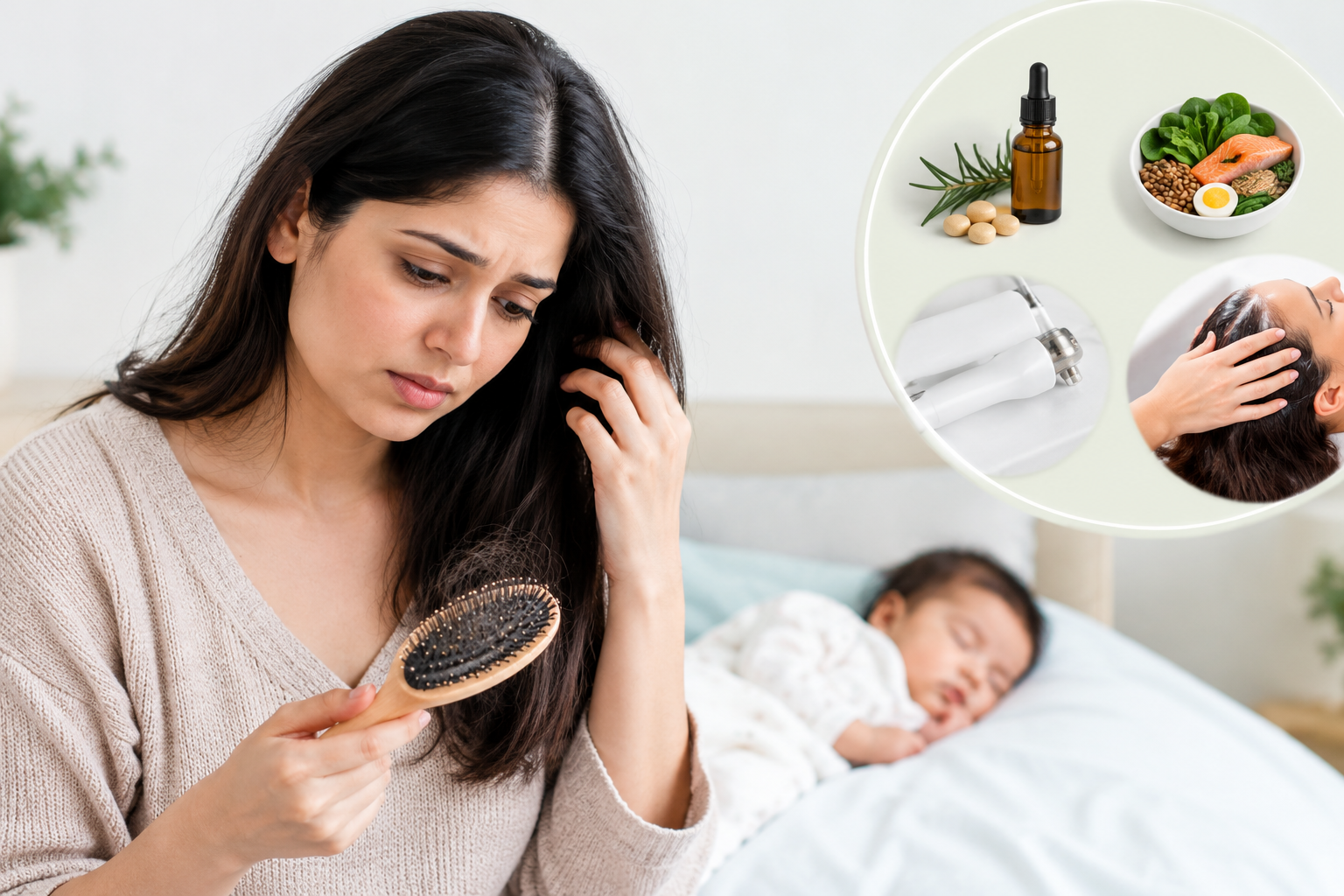
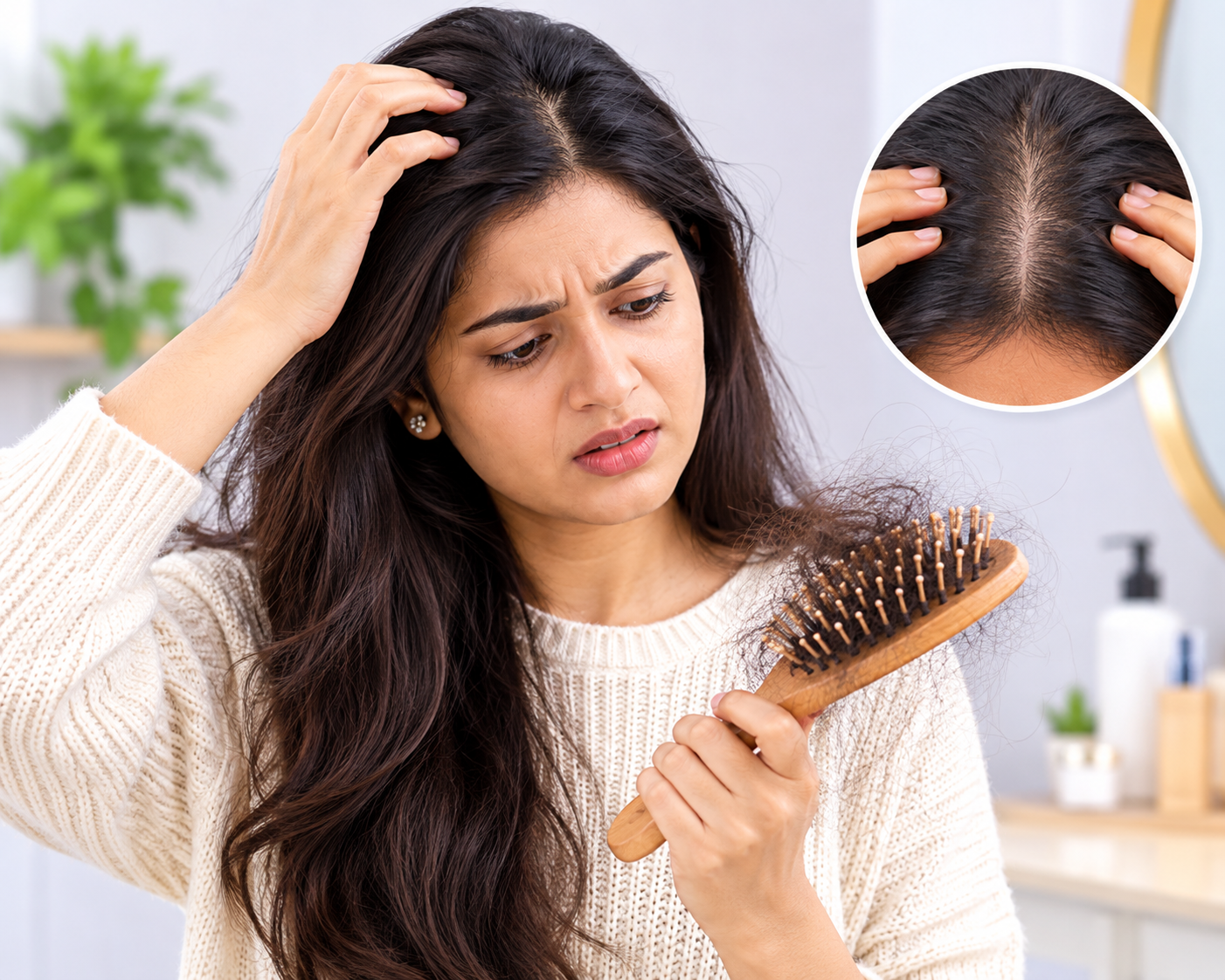
Winter hair fall is usually temporary shed, or breakage from a dry scalp and brittle hair, and it settles within about 6 to 8 weeks without leaving your hair any thinner. Real hair loss looks different: a widening parting, receding temples or shorter, finer hairs that keep getting worse across seasons. If your shedding has gone on past two months, a hair fall treatment check can confirm which one you have.
Here is the simple way to tell them apart, why winter makes hair look worse than it is, and the signs that mean it is time to stop waiting.
Seasonal Shedding or Real Hair Loss: How to Tell
| Seasonal shedding or breakage | Real hair loss | |
| How much | A bit more in the brush or drain for a few weeks | Steadily more over months, not settling |
| Parting and hairline | Look the same as last year | Wider parting, receding temples, thinning crown |
| The hairs themselves | Full-length hairs with a tiny white bulb, or snapped short pieces | Short, fine, wispy hairs in the same area |
| Over the years | Settles, then returns around the same time | Gets worse, season after season |
| Timeline | Eases in about 6 to 8 weeks | Keeps going beyond 2 to 3 months |
Losing 50 to 100 hairs a day is normal. A quick check: compare your parting and temples in a selfie from last year with one today. If they look the same, take a breath.
Why Winter Makes Hair Fall Look Worse Than It Is
Here is the part most hair fall articles get wrong. Cold weather itself has not been shown to cause a winter surge in shedding. Studies in Europe found that shedding peaks in late summer and early autumn, and is lowest in late winter. Because hair takes weeks to fall after it enters its resting phase, what you see in November or December is often the tail end of an earlier shed. Those studies are not from India, so treat the timing as a guide, not a rule.
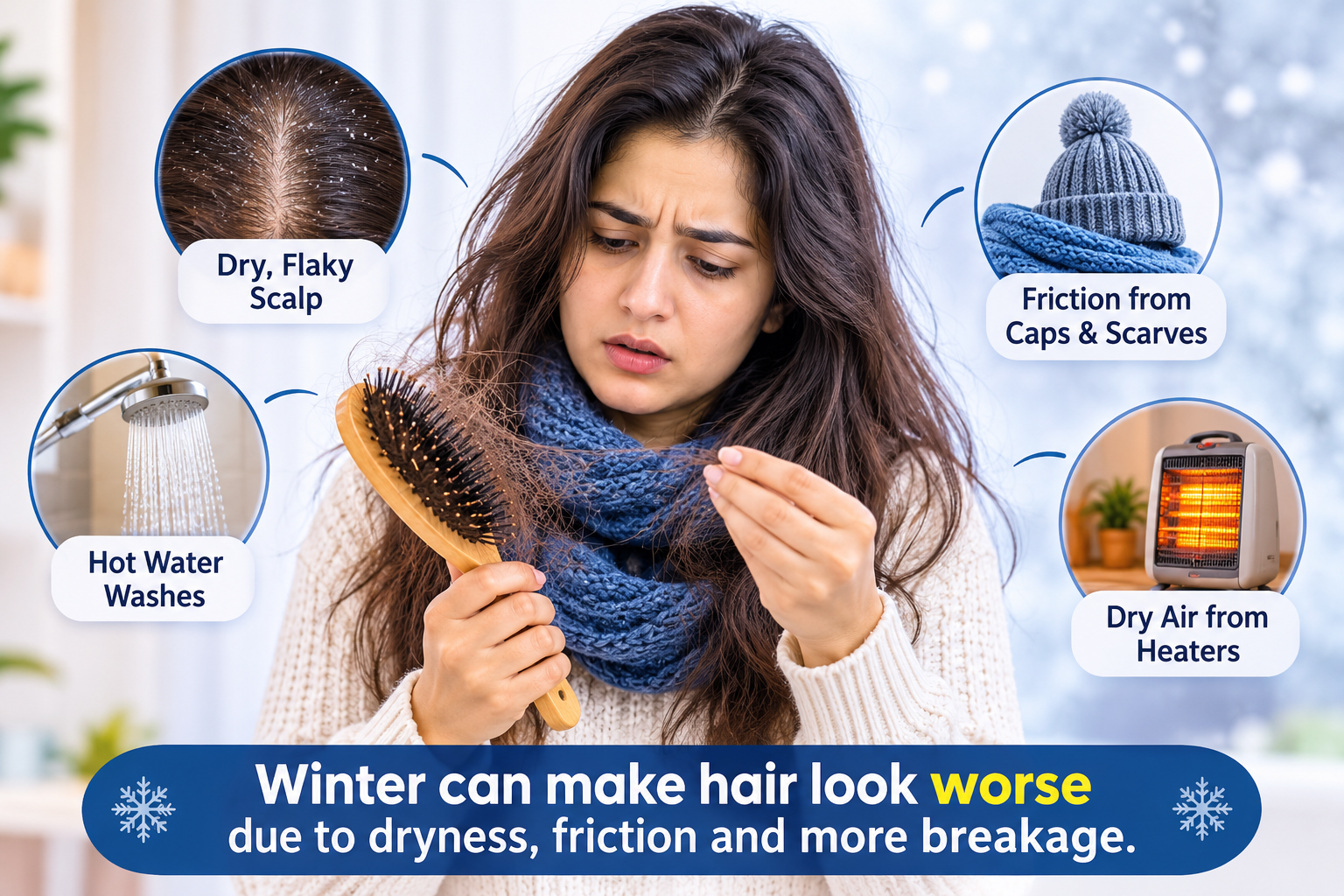
What winter does add is this:
- A dry, flaky scalp. More itching means more scratching, tugging and hair in your comb
- Hot water. Long hot washes dry out the scalp and make strands brittle
- Friction. Woollen caps, scarves and sweaters rub hair until it snaps
- Dry air. Heaters and blowers strip moisture from lengths and ends
Snapped hairs are breakage, not hair loss, and they grow back out. The fix is different, which is why telling them apart matters.
If Your Scalp Is Flaky
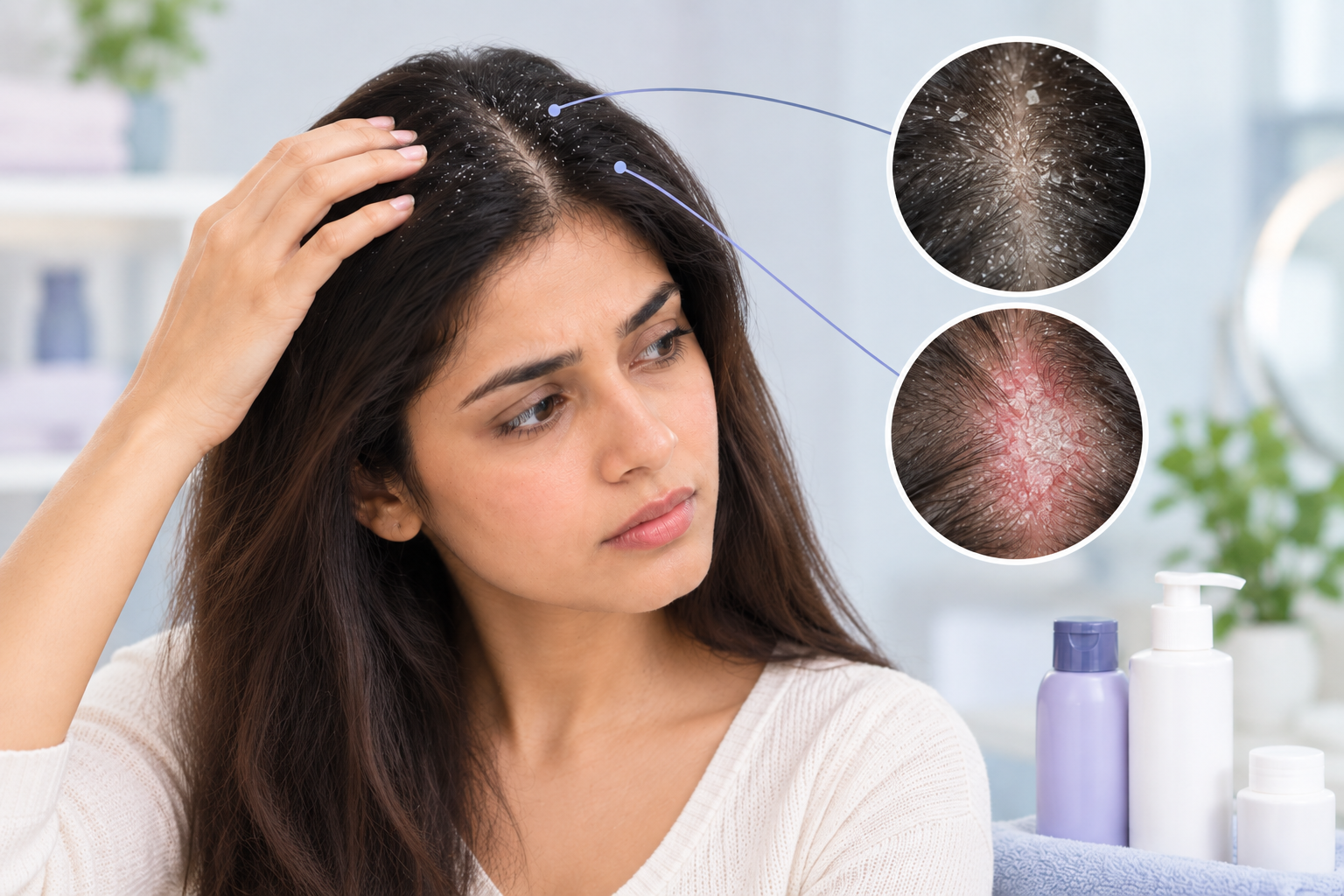
Winter dandruff is one of the most common reasons hair looks like it is thinning. Use a medicated anti-dandruff shampoo for the full time on the label, not just until the flakes disappear. If the flaking keeps returning, look for the best dandruff doctor in Indore you can reach, because stubborn flaking can be seborrheic dermatitis or psoriasis, and both need proper treatment. An inflamed scalp can also add to shedding, so treating it early protects your hair.
Shedding for more than 8 weeks? Stop guessing.
A scalp check tells seasonal shedding from real hair loss in one visit, so you know whether to wait or act.
A 6-Week Winter Plan
Nothing stops a seasonal shed overnight, but these steps protect the hair you have:
- Wash with lukewarm water and a mild shampoo, two to three times a week or as your scalp needs
- Treat flakes early instead of waiting for them to build up
- Use a wide-tooth comb, and avoid tight ponytails, buns and caps that pull
- Eat enough protein and iron, such as dal, rajma, eggs, paneer and spinach
- Get some daily sunlight, and ask your doctor about a vitamin D test
- Sleep well and manage stress, because both affect the hair cycle
- Skip crash diets, which can trigger a second wave of shedding
If shedding is clearly easing by week six to eight, it was seasonal, and you are done. If it is not, stop experimenting.
When Is It Real Hair Loss?
Get checked if you notice any of these:
- Shedding that has lasted more than three months
- A widening parting, thinning crown or receding hairline
- Bald patches or hair coming out in clumps
- An itchy, red, painful or very flaky scalp
- Tiredness, feeling cold, weight change or irregular periods
- A parent or sibling with early hair thinning
These can point to pattern hair loss, a thyroid problem, low iron, PCOS, patchy hair loss (alopecia areata) or a scalp infection. If two or more apply, do not wait for spring. Book hair fall treatment in Indore with a dermatologist who finds the cause first.
Where PRP Fits, and Where It Does Not
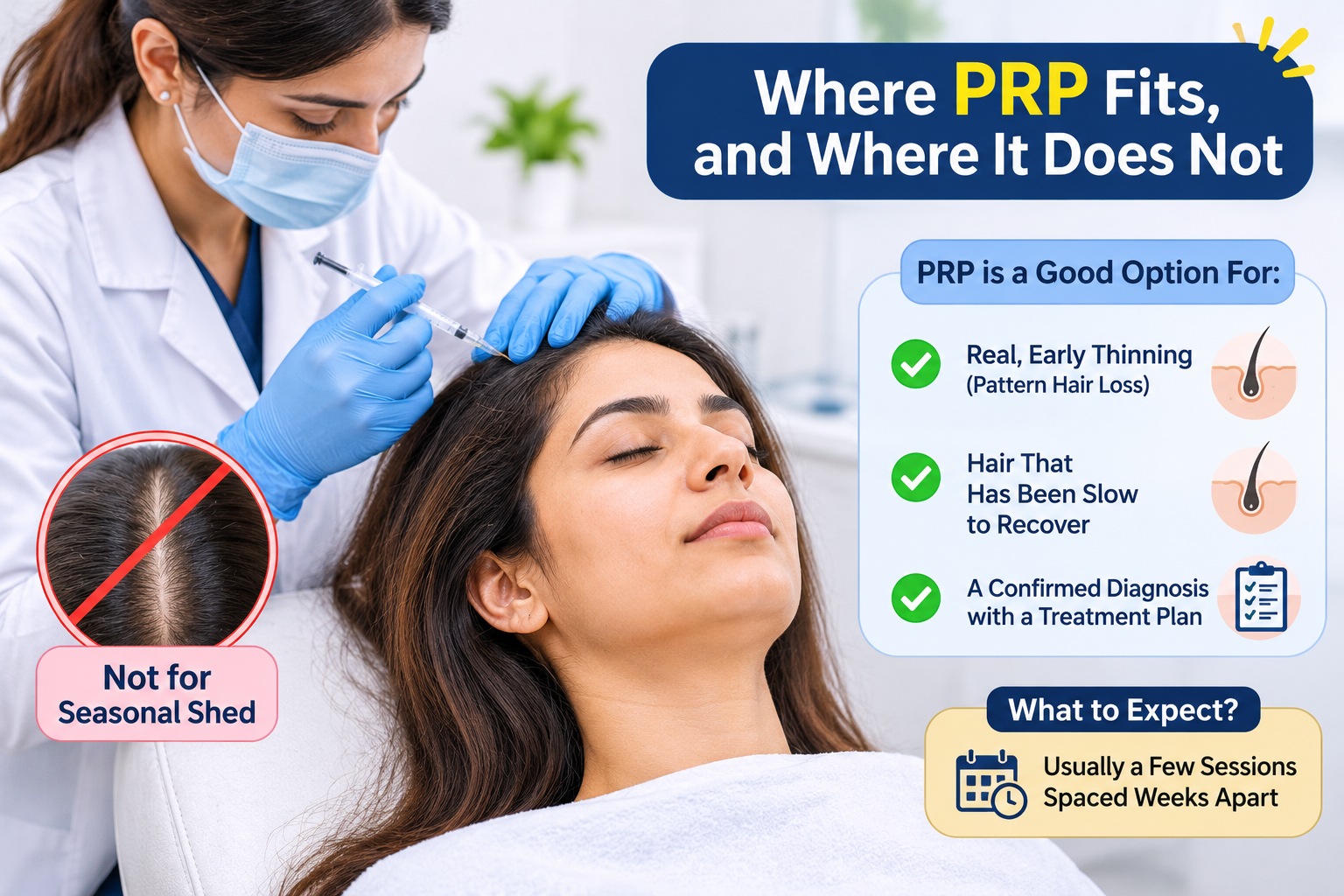
PRP does not stop a seasonal shed, and you do not need it for one. It is a treatment for real, early thinning, usually pattern hair loss or hair that has been slow to recover. If a doctor for PRP scalp treatment in Indore recommends it the moment you mention winter hair fall, ask what they found on your scalp first. When it is the right call, PRP works best with a confirmed diagnosis and a plan, usually a few sessions spaced weeks apart. Our guide to PRP hair treatment in Indore explains what to expect.
How We Help at Skinology
A good scalp check is more than a glance at your parting. It is what you should expect from the best dermatologist in Indore for hair: a diagnosis before any prescription. At Skinology, Dr. Ginni Chhabria, a dermatologist with 13+ years of experience, starts with your history: when the shedding began, what changed, your diet, stress, illnesses and family history. She then examines the scalp closely and orders blood tests only if they are needed.
For a step-by-step look at what each test shows, see our guide on what dermatologists do for hair loss tests.
You should leave knowing whether your hair needs patience or treatment, and why. Both clinics offer the same evaluation, so if you prefer a hair specialist in Indore Vijay Nagar, you do not have to cross the city.
Frequently Asked Questions
1. Is hair fall more in winter?
Not directly. Studies show shedding peaks in late summer and early autumn, and what you notice in winter is often the tail end of that. Winter still makes hair look worse through a dry scalp, dandruff and breakage.
2. How much hair fall is normal in winter?
Losing 50 to 100 hairs a day is normal. A few more for a few weeks is fine if it settles within 6 to 8 weeks. Steadily more over months is a reason for a check.
3. How do I know if my hair loss is seasonal?
Seasonal shedding settles within about 6 to 8 weeks and returns around the same time each year, and your parting and hairline look unchanged. Real hair loss keeps going, with a wider parting, thinner crown or finer, shorter hairs.
4. How long does seasonal hair shedding last?
Usually around 6 to 8 weeks. Shedding beyond three months is not a normal seasonal shed. Heavier shedding after illness or stress can run for several months and should be checked.
5. How can I stop hair fall in winter?
Wash with lukewarm water, treat dandruff early, protect hair from woollen friction, and get iron, vitamin D and B12 checked before buying supplements. If shedding is not easing in 6 to 8 weeks, see a dermatologist.
6. Does dandruff cause hair fall?
Dandruff rarely causes permanent hair loss on its own. But an itchy, inflamed scalp leads to more scratching and breakage, and severe seborrheic dermatitis can add to shedding. Treating it usually helps.
7. Is PRP good for winter hair fall?
PRP is not needed for a seasonal shed. It is used for real, early thinning such as pattern hair loss, once a doctor has confirmed the cause.
8. Where can I see a hair specialist in Vijay Nagar or Palasia?
Skinology runs clinics in both Vijay Nagar and Old Palasia, led by Dr. Ginni Chhabria, so you can choose whichever is closer to you.
Final Thoughts
Most winter hair fall is a temporary shed, made to look worse by a dry scalp and brittle hair. If it eases within about two months, you have your answer. If it does not, stop waiting for spring, because hair loss treatment in Indore works best when it starts early, while follicles are still easy to protect.
Book a consultation with Dr. Ginni Chhabria at Skinology and find out whether your hair needs patience or treatment.