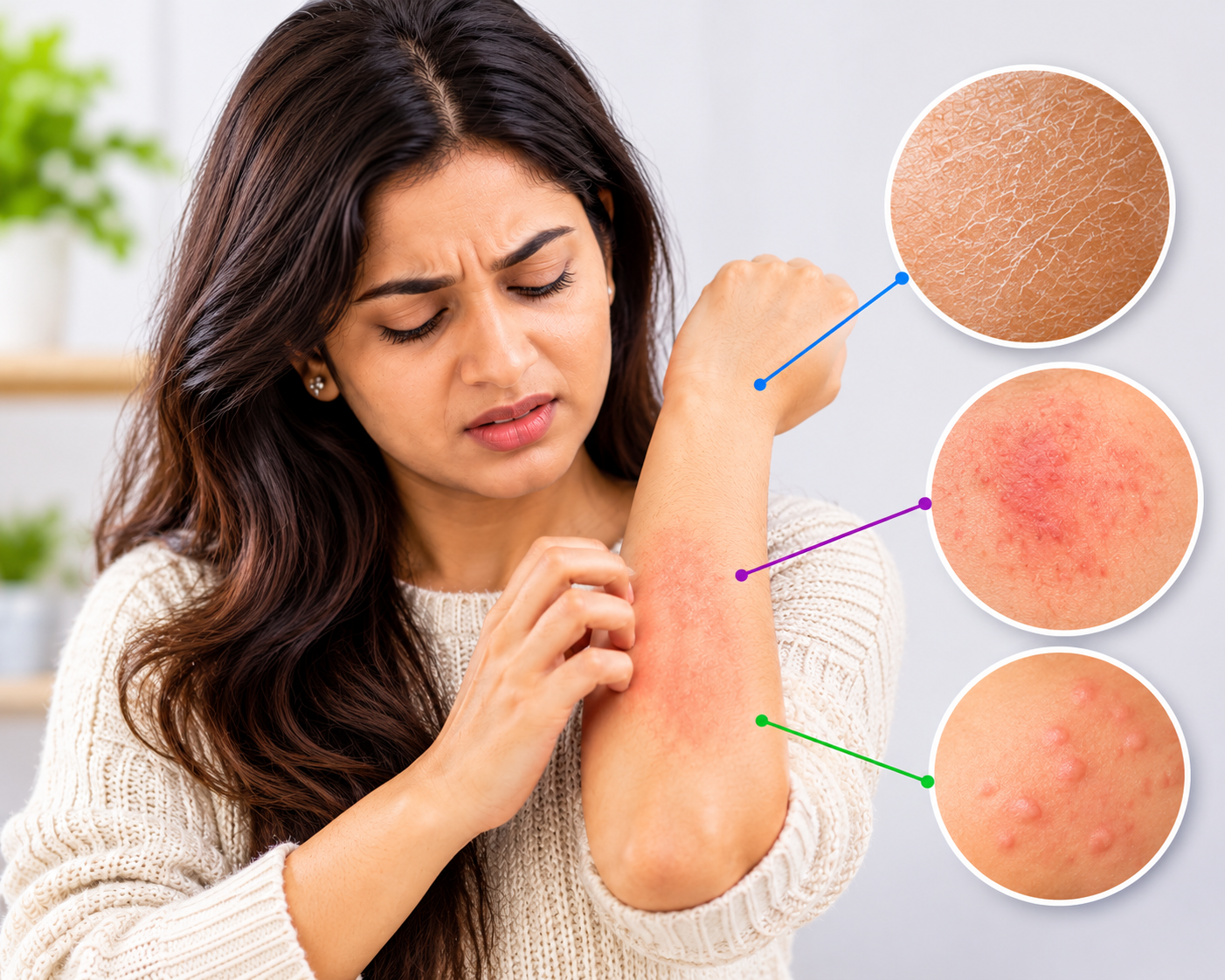
Most winter itching is plain dry skin, and it settles within about a week of gentle bathing and regular moisturising. If the itch comes with red, scaly or cracked patches, or wakes you at night, it is more likely eczema, and if it starts after contact with something specific, like a detergent, a woollen or a new cream, think allergy. When a week of good moisturising has not helped, a skin allergy doctor in Indore can usually tell you which one it is in a single visit.
Here is how to tell the three apart, why Indore’s winters make it worse, and when to stop experimenting.
Dry Skin, Eczema or Allergy: The Quick Comparison
| Dry skin | Eczema | Allergy | |
| Looks like | Rough, tight, flaky skin | Red or brownish scaly patches, cracks, sometimes oozing | Rash or hives after contact with something |
| Usual spots | Shins, arms, hands | Elbow and knee folds, neck, hands, shins | Wherever the trigger touched: neck, wrists, waist |
| Itch | Mild to moderate | Intense, worse at night | Sudden, often sharp |
| Moisturiser alone | Usually fixes it in a week | Helps, rarely clears it | Does not fix it. Removing the trigger does |
Not a perfect match? That is normal. Many people have dry skin and eczema together, because a weakened skin barrier is often where a flare begins.
Why Indore Winters Make It Worse
Indore’s winters are cool and dry, and the habits that come with them quietly strip your skin:
- Long, hot baths that wash away natural oils
- Room heaters and blowers that dry out both the air and your skin
- Woollens worn straight on bare skin, which rub and irritate
- Razais and sweaters pulled out of storage, carrying dust and mites
Stacked up over three months, these are enough to push a healthy skin barrier into itching.
Dry Skin: The Easy One

Dry skin, medically called xerosis, feels tight and rough, looks flaky, and itches mildly, mostly on the shins, arms and hands. There is no real rash, and it eases once you moisturise properly.
Eczema: When It Is More Than Dryness
Eczema is a weak skin barrier plus inflammation, so skin turns red, scaly and cracked, and the itch can be fierce at night. Older adults often get a cracked, dried-mud pattern on the shins and arms, called winter eczema. Younger people tend to get recurring patches on the elbow and knee folds, neck and hands, especially with a family history of asthma or allergies.
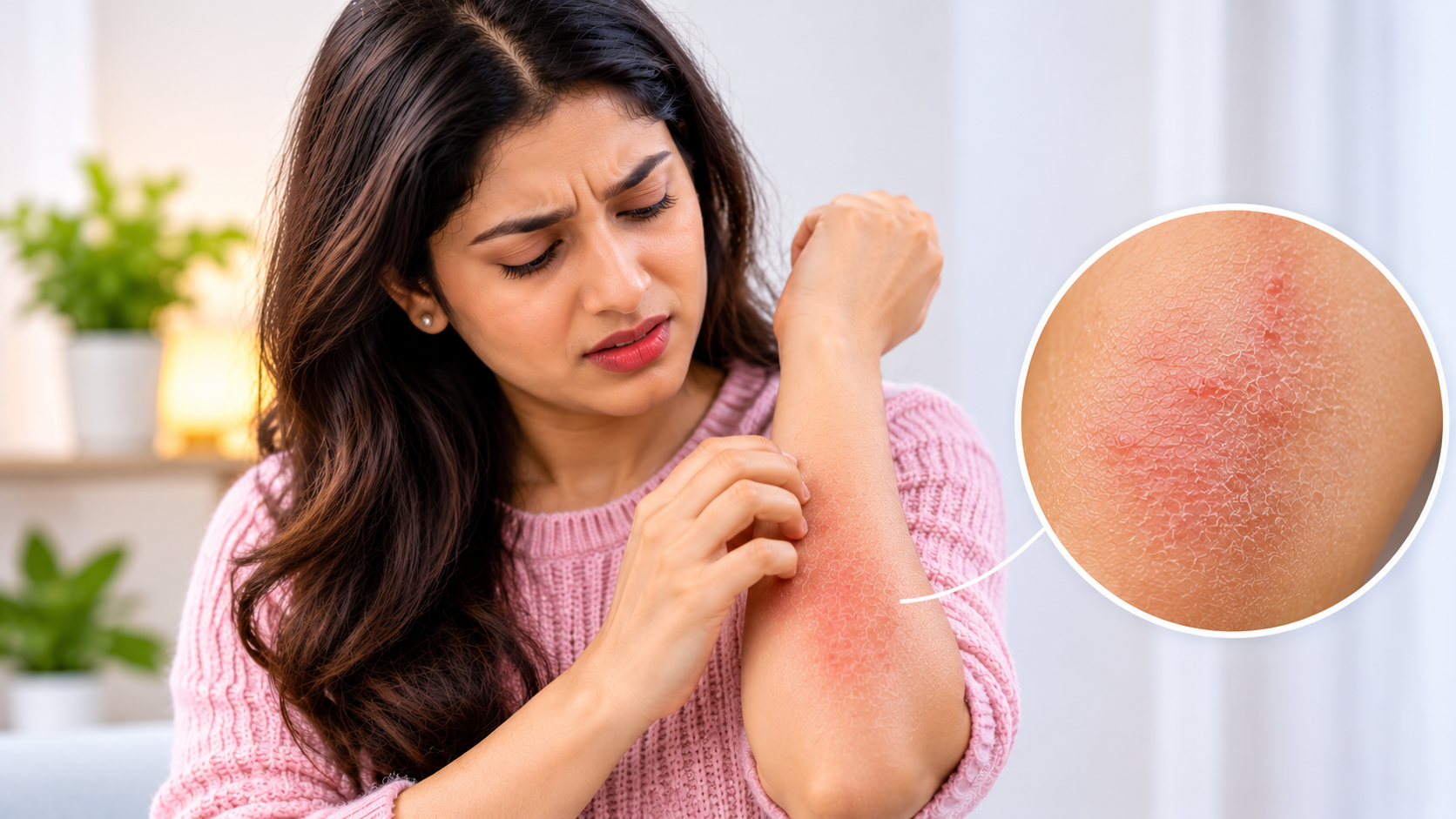
The catch is that moisturiser alone rarely clears it. Eczema flares and settles, so it needs a plan rather than another cream. If you are searching for eczema treatment in Vijay Nagar after months of switching products, that is usually the sign. A proper plan covers:
- Finding your triggers, so flares stop surprising you
- A moisturising routine you can actually keep up
- The right medicated cream for flare-ups, used for the right length of time
- A way to calm the night itch so you can sleep
Allergy: Itching With a Trigger

An allergic reaction usually has a cause you can trace. The rash tends to follow the area of contact, like the neck under a sweater collar or the wrist under a watch strap. Hives, raised itchy welts that fade within a day and then pop up somewhere else, point the same way.
Common winter triggers:
- Detergent or softener residue in blankets and sweaters
- Fragrance or preservatives in a new body lotion or oil
- Nickel in zips, buttons, jewellery and watch straps
- Dust and mites from stored razais and woollens
For the full breakdown of how different reactions look and are treated, see our guide to the main types of skin allergies.
Three look-alikes, one itch. Stop guessing which one it is.
A single skin check can tell dry skin, eczema, and allergy apart, so you start the right treatment this week, not in February.
A One-Week Reset to Try First
Before anything else, give your skin seven honest days:
- Bathe in lukewarm water for 5 to 10 minutes, not a hot soak
- Pat dry and moisturise while the skin is still damp
- Choose a thick, fragrance-free cream or ointment over a thin lotion
- Wear cotton under woollens and rinse blankets and sweaters well
- Keep heaters and blowers a few feet away from you
- Skip leftover creams from an old rash, since the wrong one can make a new rash harder to diagnose
If your skin is clearly calmer by day seven, it was dry skin, and you have your routine. If not, stop experimenting.
When to See a Doctor
Book a visit sooner if you notice:
- Itching that costs you sleep
- Cracked, bleeding, oozing, or crusted skin
- A rash that spreads or has not improved after a week of good care
- Itching all over with no visible rash that does not settle, which can point to an internal cause like thyroid or iron problems
- Itching that also affects people you live with, which can mean scabies
If scratching is costing you sleep, do not wait out the season. It is easy to end up typing itching doctor near me at midnight, and a visit within a few days beats a month of guessing.
How We Help at Skinology
At Skinology, Dr. Ginni Chhabria, a dermatologist with 13+ years of experience, starts with your history: what you use on your skin, when the itch began and what makes it worse. She then reads the pattern of the rash. If an allergy is suspected, patch testing can pinpoint the trigger so you are not left eliminating products for months.
You leave knowing which of the three it is and what to do about it. Both clinics offer the same evaluation, so if you want a skin allergy specialist in Vijay Nagar, you do not have to cross the city.
Frequently Asked Questions
1. Why does my skin itch more in winter?
Cold, dry air pulls moisture out of your skin, and hot baths, heaters and woollens add to it. The weakened skin barrier then turns itchy and reactive.
2. How do I know if winter itching is dry skin or eczema?
Dry skin is rough and flaky with mild itching, and it improves within about a week of regular moisturising. Eczema is red, scaly and intensely itchy, often worse at night, and keeps coming back. If moisturiser does not settle it, get it checked.
3. Can winter itching be an allergy?
Yes. If the itch or rash follows contact with something specific, such as detergent residue, a new lotion, nickel or dust from stored quilts, it may be an allergic reaction. The rash usually follows the area of contact, and patch testing can confirm the trigger.
4. Why does itching get worse at night?
Skin tends to lose more moisture at night, and with fewer distractions, you notice the itch more. Eczema is especially known for night itching. A thick moisturiser before bed and a cooler bedroom help, but itch that keeps you awake needs a check-up.
5. How can I stop winter itching quickly?
Take a lukewarm bath, pat dry, apply a thick fragrance-free moisturiser on damp skin and wear cotton next to the skin. If the itch is intense or lasts beyond a week, see a dermatologist instead of adding more products.
6. Which moisturiser is best for itchy winter skin?
A thick, fragrance-free cream or ointment works better than a thin lotion. Look for ceramides, glycerin, or petrolatum, and apply it to damp skin. If it stings or the itch worsens, stop using it, since the product may be the trigger.
7. Is itching without a rash serious?
Often it is just dry skin. But itching all over with no rash that does not settle can sometimes be linked to thyroid problems, iron deficiency, or liver or kidney issues. If it lasts beyond a couple of weeks, get a check-up.
8. Where can I see a dermatologist for itching in Vijay Nagar or Palasia?
Skinology runs clinics in both Vijay Nagar and Old Palasia, led by Dr. Ginni Chhabria, so you can choose whichever is closer to you.
The Bottom Line
Winter itching is usually dry skin, and a week of lukewarm baths and a thick moisturiser will show you quickly. If it is not settling, or it keeps coming back, stop adding products. See a skin specialist doctor in Indore who can tell you whether it is eczema, an allergy or something else, and give you a plan that lasts beyond February.
Book a consultation with Dr. Ginni Chhabria at Skinology and find out which one your skin is dealing with.