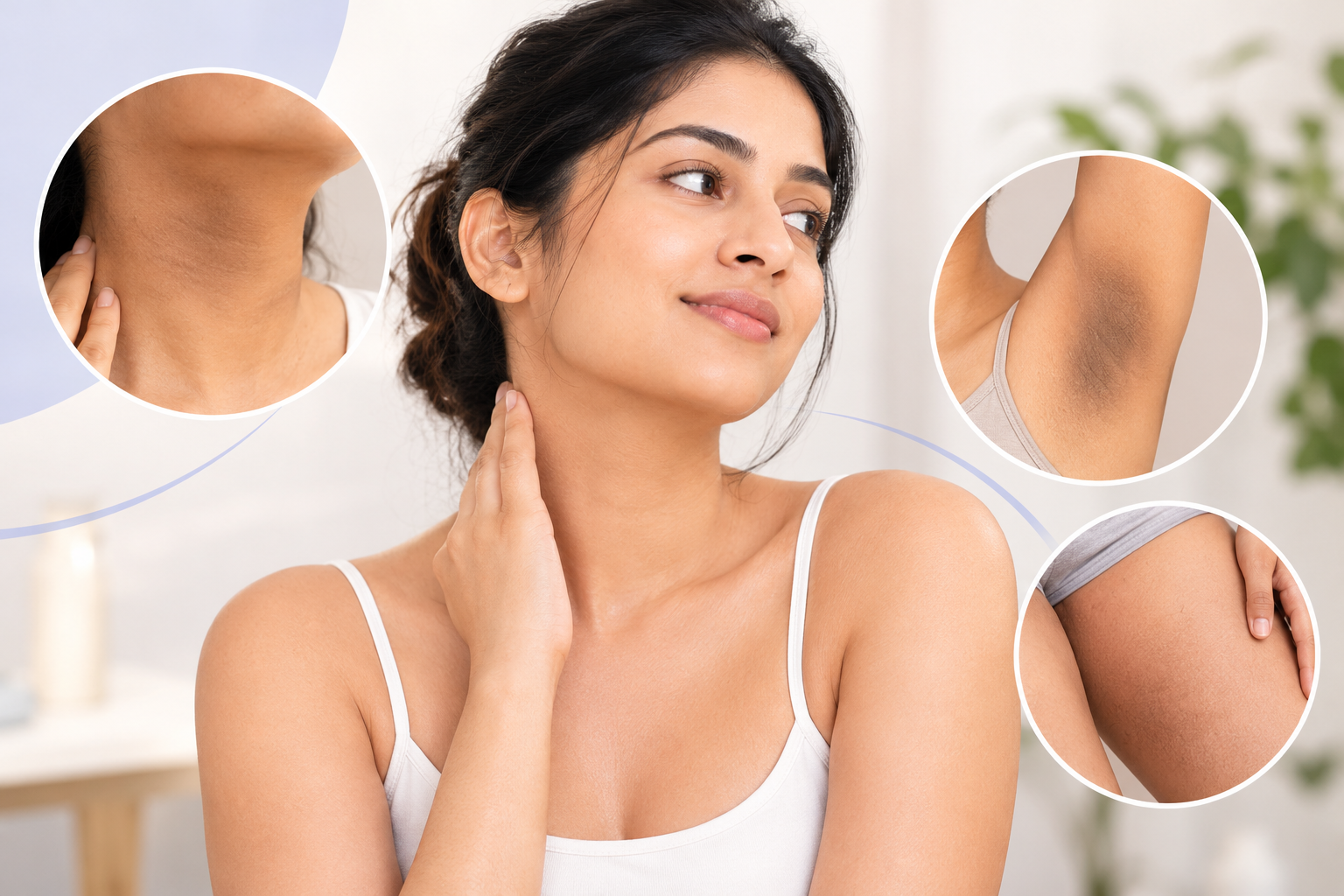
Dark patches on the neck, underarms and inner thighs usually come from friction, hair removal irritation, hormone or insulin changes, or a skin condition called acanthosis nigricans. Most improve when a dermatologist treats the cause first and then lightens the skin with peels, medical-grade creams or other skin-safe options. Visible change usually shows in 6 to 12 weeks, and thick, velvety patches that appear suddenly or spread should be checked for diabetes, PCOS or thyroid problems.
Before you reach for lemon or a whitening cream, read this. Here is how to find your cause, what works for each area, what to skip, and when a dark patch needs a blood test.
Why Do the Neck, Underarms and Inner Thighs Turn Dark?
These areas darken because skin folds trap sweat, rub together and heal slowly. It is rarely about hygiene, and scrubbing harder usually makes it worse. The common causes are:
- Friction and chafing: Tight clothes, thighs rubbing together and collars or necklaces darken skin over time.
- Hair removal irritation: Shaving, waxing and some deodorants inflame the underarms, which then darken as they heal.
- Acanthosis nigricans: Thick, velvety brown patches on the neck, underarms or groin, often linked to insulin resistance, PCOS or weight gain.
- Hormonal and medical causes: Thyroid problems, diabetes and some medicines can darken skin folds.
- Fungal or bacterial infection: Common in warm folds, it leaves brown or reddish patches that creams alone do not clear.
- Sun and tan: The back and sides of the neck get daily sun and tan easily.
If you have been searching for underarm lightening treatment, the first step is knowing which cause is behind your patch, because the fix is different for each.
Which One Do You Have? A Quick Guide
| Area | Most likely causes | What it looks like |
| Neck | Acanthosis nigricans, tan, friction | A thick, velvety, brown band that does not wash off |
| Underarms | Hair removal irritation, friction, deodorant | Grey-brown, sometimes rough skin, often with tiny dots from shaving |
| Inner thighs | Chafing, sweat, fungal infection, old marks | Brown patches where skin rubs, sometimes itchy or ring-shaped |
When Dark Patches Need a Check, Not Just a Cream
Thick, velvety dark patches on the neck, underarms or groin can be an early sign of insulin resistance, PCOS, diabetes or a thyroid problem. See a doctor if the darkening is new, spreads fast, feels thick or velvety, or comes with weight gain, irregular periods, tiredness or constant thirst.
A skin specialist doctor in Indore can examine the patch and tell you which tests to order, usually fasting sugar or HbA1c, insulin levels and thyroid tests. Treating the cause often does more than any cream.
Treatment Options for Dark Neck, Underarms and Inner Thighs
The right mix depends on the cause and the area:
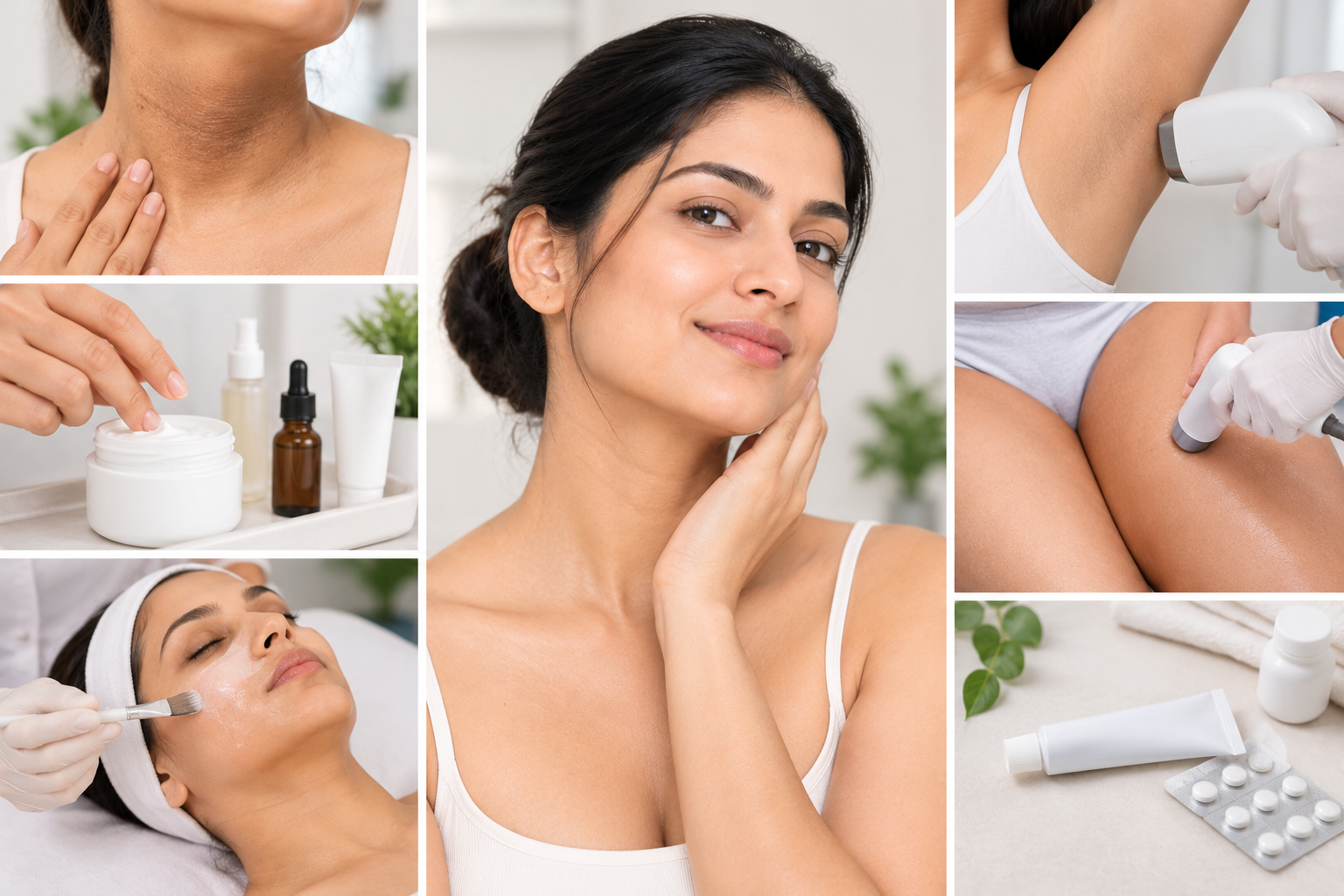
- Treat the cause: Control blood sugar and insulin, manage PCOS or thyroid problems, and stop the friction or irritation. In acanthosis nigricans, this is what makes lightening last.
- Prescription creams: Ingredients such as niacinamide, retinoids, azelaic acid or kojic acid smooth thick skin and lighten pigment. Hydroquinone is used only in short, supervised courses, because long use can irritate skin or cause a rare bluish-black discolouration. A dermatologist picks the cream for the area, because underarm and groin skin is sensitive.
- Gentle peels: A series of mild chemical peels can lift pigment and roughness, with little downtime.
- Professional body whitening treatment: Skin-safe procedures lighten patches back toward your natural tone. They do not change your natural skin colour.
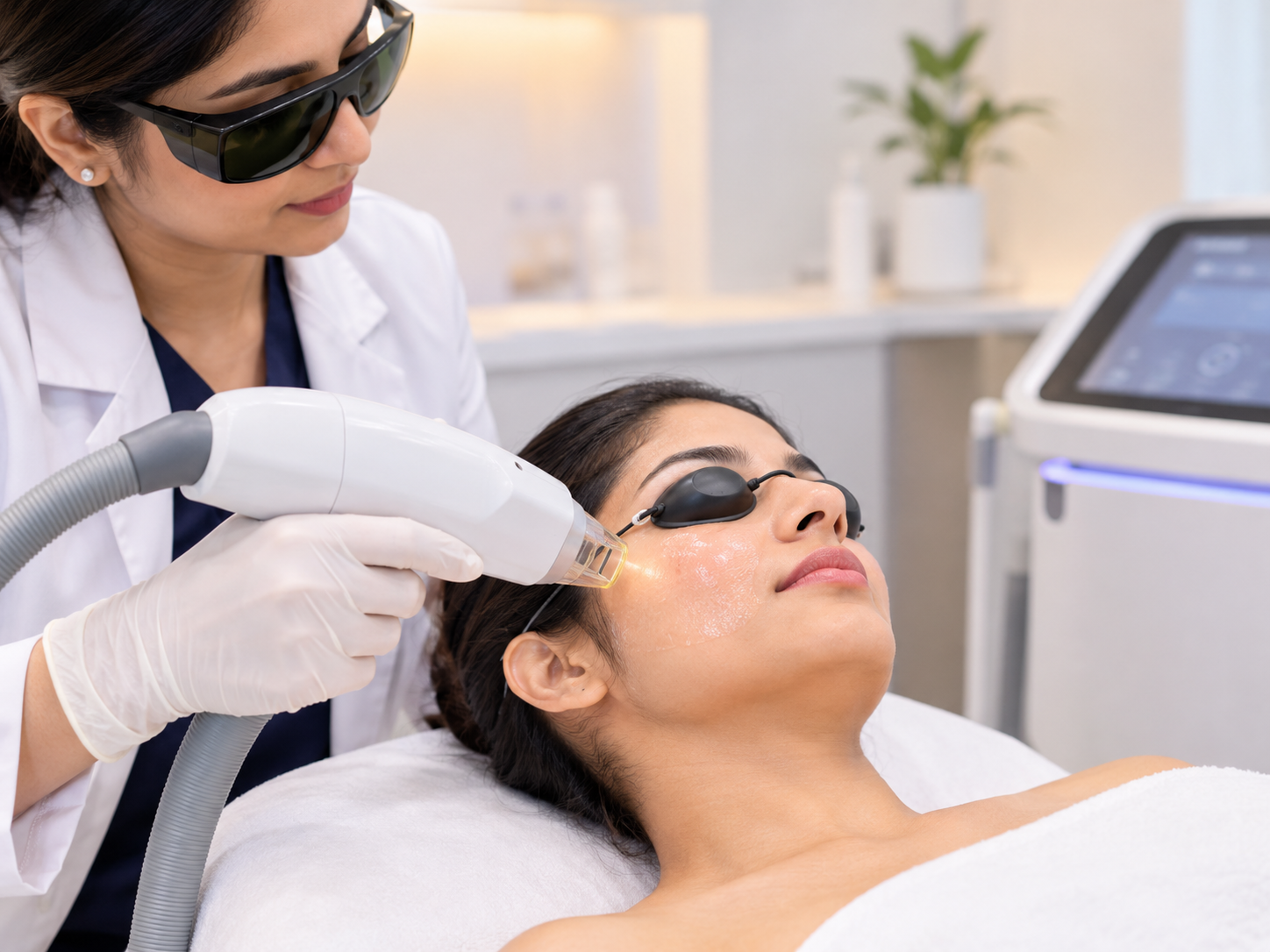
- Laser hair removal for underarms: Less shaving and waxing removes a common cause of irritation and darkening.
- Antifungal or antibiotic treatment: Needed when infection is behind the patch.
Lemon, Baking Soda, Potato: Do Home Remedies Work?
Searches for home fixes are huge, so here is the honest scorecard:
| Remedy | What it does | Verdict |
| Lemon juice | Acidic, and with sun it can burn or leave dark marks | Skip |
| Baking soda | Alkaline, upsets the skin’s balance and irritates folds | Skip |
| Potato or coffee scrub | Unproven, and scrubbing adds friction | Skip |
| Apple cider vinegar | Acidic, can burn sensitive skin | Skip |
| Aloe vera or oats | Soothing, but will not lighten patches | Harmless helper |
| Leftover steroid or “fairness” creams | Thin the skin and often darken it | Avoid |
For a wider look at fixing uneven tone, read our guide on how dermatologists treat uneven skin tone and dark spots.
Stop guessing. Start with the cause. One visit can tell you whether it is friction, irritation or a blood sugar signal, so you stop paying for creams that do not work.
How Long Do Results Take?
These are typical timelines, not guarantees:
- 2 to 4 weeks: Skin feels smoother and softer as roughness reduces.
- 6 to 12 weeks: Visible lightening begins, usually faster on underarms and inner thighs than on a thick neck.
- 3 to 6 months: Deeper or older patches keep fading with steady care.
- After that: Results last only while the cause stays controlled. Acanthosis nigricans can return if insulin resistance or weight gain returns.
How to Stop the Patches Coming Back
- Wear loose cotton clothes and use anti-chafing balm on the thighs
- Switch to gentler hair removal, or reduce hair growth with laser
- Stop scrubbing, and moisturise after bathing
- Use sunscreen on the back and sides of your neck
- Keep blood sugar, weight and hormones in check with your doctor
How We Plan Treatment
Looking for a dermatologist for skin brightening treatment in Indore who starts with the cause, not the cream? At Skinology in Indore, Dr. Ginni Chhabria, Owner and Medical Director, holds an MBBS, a postgraduate diploma in Dermatology (DDV) from Mumbai and a Fellowship in Lasers and Skin Surgery from Singapore, and is a member of the Indian Association of Dermatologists, Venereologists and Leprologists. We check your skin type and the likely cause, suggest tests when needed, and plan treatment with skin-safe methods suited to Indian skin and minimal downtime.
Dark Neck and Underarm FAQs
1. Can shaving or deodorant make underarms dark?
Yes. Repeated shaving, waxing and some deodorants irritate the skin, and the skin responds by making extra pigment. Gentler hair removal and a fragrance-free deodorant help, and laser hair removal can reduce the problem at its source.
2. Can a dark neck be a sign of diabetes or PCOS?
Yes. Thick, velvety dark patches on the neck can signal insulin resistance, PCOS, diabetes or a thyroid problem. A doctor can order simple blood tests to check.
3. Will a dark neck go away?
Often, it improves a lot, especially when you treat the cause. Acanthosis nigricans can return if insulin resistance or weight gain returns, so long-term control matters.
4. How long does underarm lightening take?
Most people see a visible change in 6 to 12 weeks, depending on the cause and how long the darkness has been there. Gentler hair removal helps results last.
5. Are lemon or baking soda safe for dark underarms?
No. They can burn and irritate sensitive skin and often leave darker marks. See a dermatologist for a safe plan.
6. Is body whitening treatment safe, and will it change my skin colour?
When a dermatologist chooses the method for your skin type, it is safe. It lightens dark patches toward your natural tone without changing your natural skin colour.
7. Where can I find the best skin doctor in Indore for dark patches?
If you are looking for the best skin doctor in Indore for pigmentation, you can consult Dr. Ginni Chhabria at our Vijay Nagar clinic near Bombay Hospital or our Old Palasia clinic behind Rafael Tower.
Final Thoughts
Dark neck, underarms and inner thighs are common and treatable. Find the cause, stop the irritation, and give treatment weeks, not days.
Ready to clear dark patches for good? Book a consultation with Dr. Ginni Chhabria at Skinology for a clear diagnosis and a plan built around your cause.