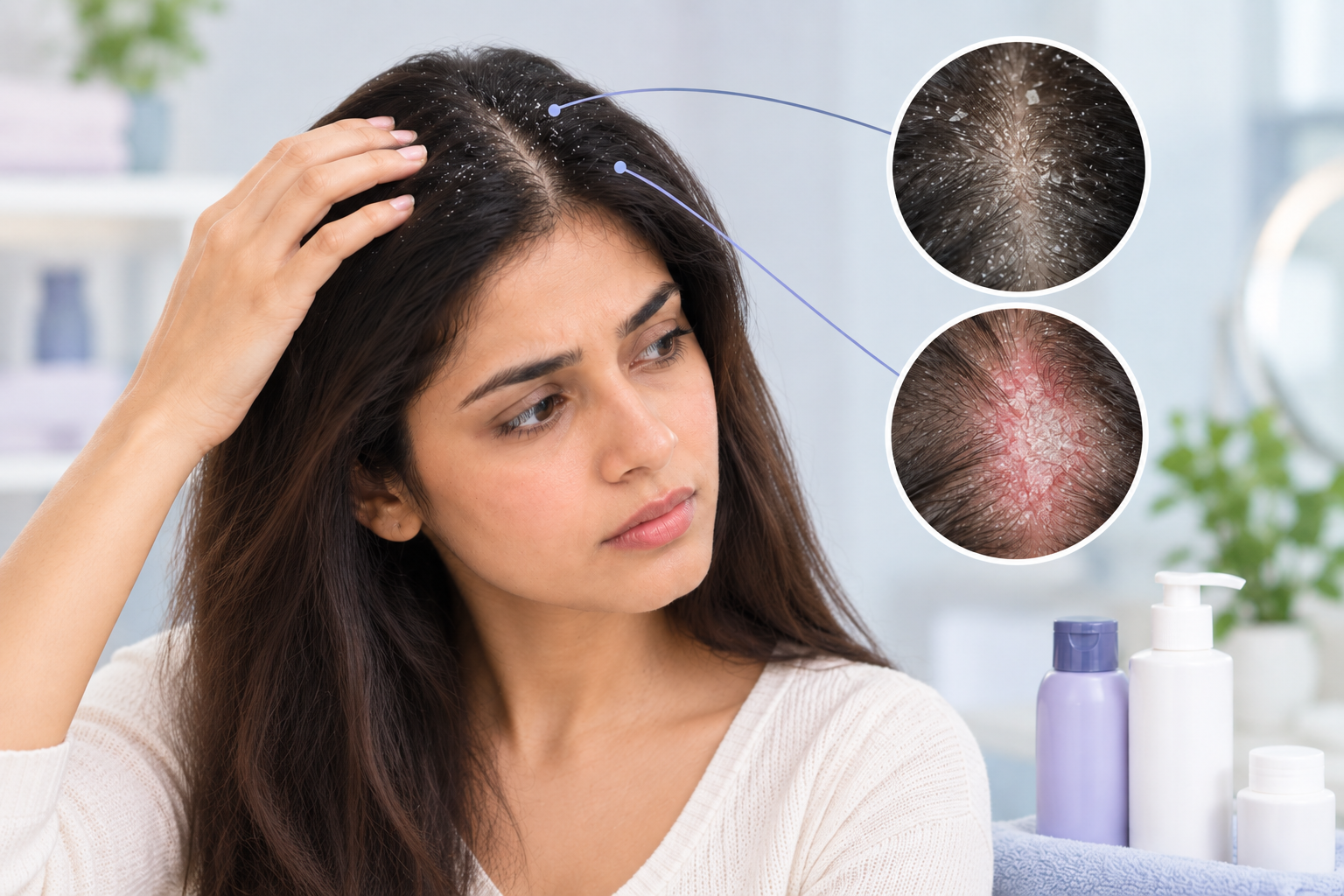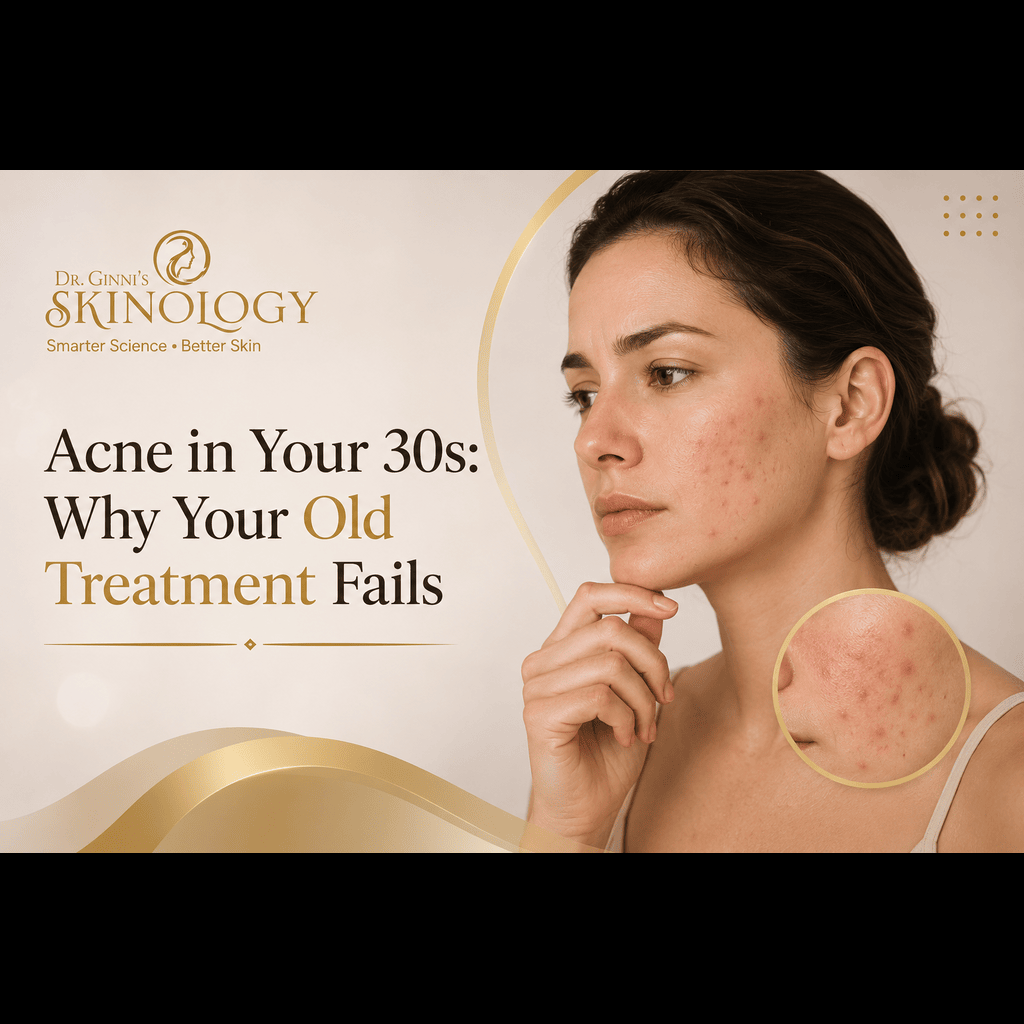
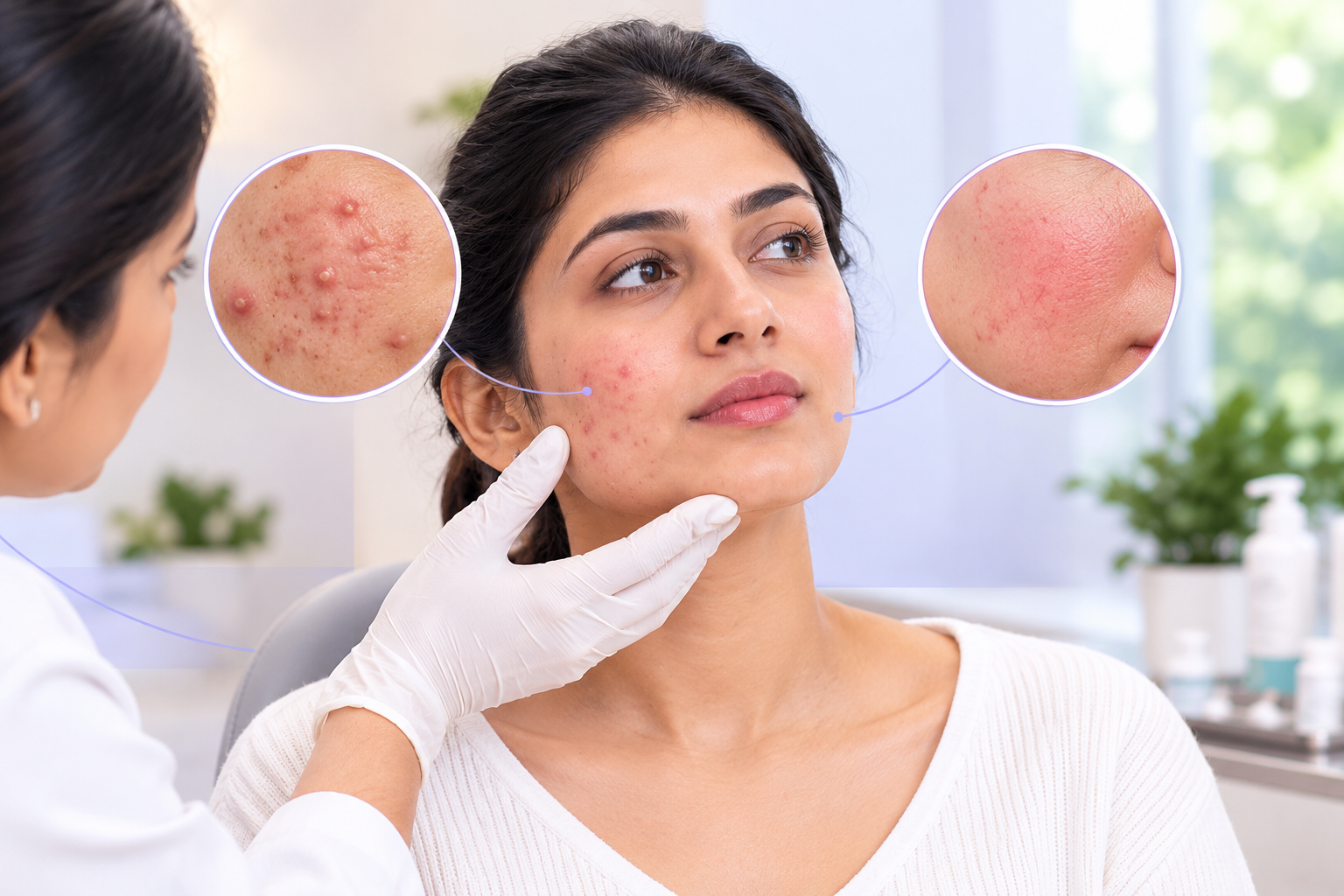
If your breakouts flare up with redness, heat, or spicy food and don’t respond to acne products, you might be dealing with rosacea, not acne. Rosacea causes small red bumps and visible redness across the cheeks and nose, and it’s often mistaken for adult acne because the two can look nearly identical at a glance. The difference matters a lot, because acne treatments can actually make rosacea worse instead of better.
This confusion is more common than most people expect, especially past the age of 30. Someone spends months on benzoyl peroxide or salicylic acid, sees no real improvement, and assumes their skin is just “difficult.” In reality, they may be treating the wrong condition entirely, and it’s exactly the kind of mix-up a trained skin care specialist in Indore is equipped to catch within one proper examination, rather than another round of trial and error.
Why These Two Get Confused So Often
Acne and rosacea share some surface-level symptoms, small red bumps, occasional pus-filled spots, and skin that looks inflamed. That overlap is exactly why so many people self-treat the wrong one for months.
But the underlying cause is completely different. Acne starts with clogged pores, excess oil, and bacteria. Rosacea is a chronic inflammatory condition tied to blood vessel reactivity, and triggers like heat, sun, alcohol, or spicy food can set it off in minutes, not days.
A few signs that point toward rosacea instead of acne:
- Redness that flushes suddenly, especially after heat or certain foods
- Visible tiny blood vessels across the nose or cheeks
- Breakouts with no blackheads or whiteheads
- Skin that stings or burns rather than just looking inflamed
- Symptoms appearing for the first time after age 30
Rosacea vs Acne: A Side-by-Side Look
| Feature | Acne | Rosacea |
| Root cause | Clogged pores, oil, bacteria | Blood vessel reactivity, inflammation |
| Blackheads/whiteheads | Common | Rarely present |
| Redness | Localized to the breakout | Spreads across cheeks and nose |
| Flushing | Not typical | Common, often trigger-based |
| Common age of onset | Teens to early 20s | Usually 30 and above |
| Response to acne products | Usually improves | Often worsens irritation |
Notice that last row. It’s the biggest clue that something’s off, and also the most damaging part of the mix-up.
Not sure which one you’re actually dealing with? A proper skin exam clears it up fast.
Why Treating Rosacea Like Acne Backfires
This is the part that actually costs people time and money. Standard acne treatments, benzoyl peroxide, harsh scrubs, and strong exfoliating acids, target oil and bacteria. On rosacea-prone skin, those same ingredients strip the skin barrier and increase redness rather than calming it.
That’s why someone using the best acne treatment in Vijay Nagar for six months with rosacea sees their skin get worse, not better. The product isn’t ineffective, it’s simply solving the wrong problem. This is also why a proper diagnosis matters more than picking the “strongest” product on the shelf.
What Actually Helps Each Condition
Treatment paths split significantly once the correct diagnosis is in place:
For acne:
- Salicylic acid or benzoyl peroxide to clear pores and reduce bacteria
- Retinoids to regulate oil production and cell turnover
- Chemical peels for stubborn or scarring-prone breakouts
For rosacea:
- Gentle, barrier-supporting skincare instead of harsh actives
- Topical anti-inflammatory treatments to calm redness
- Trigger management, sun protection, heat avoidance, dietary awareness
- In persistent cases, laser treatment for pimples near Palasia to target visible blood vessels and reduce redness directly at the source
If breakouts, redness, and stubborn marks have been overlapping for a while, it’s worth ruling out whether old inflammation is the real reason spots keep resurfacing in the same spots, something we cover in more detail in our guide on why pimples keep coming back on the same spot.
Redness and breakouts that just won’t settle down?
When Laser Treatment Makes Sense
Not every rosacea case needs laser, but for visible blood vessels, persistent flushing, or redness that skincare alone can’t touch, it’s often the most effective option available. A dermatologist for laser acne treatment can also determine whether laser suits active acne scarring versus rosacea-related redness, since the settings and approach differ for each.
This is exactly where self-treatment tends to fall short. Lasering active acne the wrong way can trigger more inflammation, while the right laser settings for rosacea can meaningfully calm chronic redness within a few sessions.
Getting an Accurate Diagnosis Locally
If you’ve been treating what you assumed was stubborn acne for months with no real change, that’s usually the signal to get an actual diagnosis rather than switching products again. A dermatologist in Old Palasia, Indore or a specialist closer to Vijay Nagar can examine your skin under proper lighting and magnification, something that’s genuinely hard to self-assess in a bathroom mirror.
At Skinology, this starts with identifying whether redness, bumps, and breakouts are coming from clogged pores or from an inflammatory, vascular cause, since the entire treatment plan depends on getting that right from day one.
Frequently Asked Questions
1. How can I tell if I have rosacea or acne?
Rosacea typically causes redness, flushing, and small bumps without blackheads, often triggered by heat, sun, or certain foods. Acne usually includes blackheads, whiteheads, and localized breakouts without the sudden flushing pattern. A dermatologist exam is the most reliable way to confirm which one you have.
2. Can rosacea be mistaken for adult acne?
Yes, this is extremely common, especially in people over 30 experiencing breakouts for the first time. Both conditions cause red bumps, which is why so many people try acne treatments on rosacea without realizing it’s the wrong approach.
3. Why do acne products make my skin worse instead of better?
If acne treatments are increasing redness, stinging, or irritation rather than clearing your skin, rosacea is a likely explanation. Rosacea-prone skin reacts poorly to the harsh actives that typically help acne, such as benzoyl peroxide and strong exfoliants.
4. Does laser treatment help rosacea?
Yes, laser treatment is commonly used to reduce visible blood vessels and persistent redness associated with rosacea, especially when topical treatments aren’t enough on their own.
5. What triggers rosacea flare-ups?
Common triggers include heat, sun exposure, spicy food, alcohol, and stress. Identifying and managing personal triggers is often as important as any topical treatment.
6. Is rosacea permanent?
Rosacea is a chronic condition that can be effectively managed long-term with the right skincare and treatment plan, but it isn’t something that disappears on its own the way a typical breakout might.
The Bottom Line
If your skin has been red, bump-covered, and unresponsive to every acne product you’ve tried, the issue might not be your skincare routine at all, it might be the diagnosis. Acne and rosacea need genuinely different approaches, and getting that distinction right is what actually clears things up.
If months of trial and error haven’t worked, it’s time for an answer instead of another product swap. Book a consultation with Dr. Ginni Chhabria at Skinology to find out what’s really causing your breakouts.