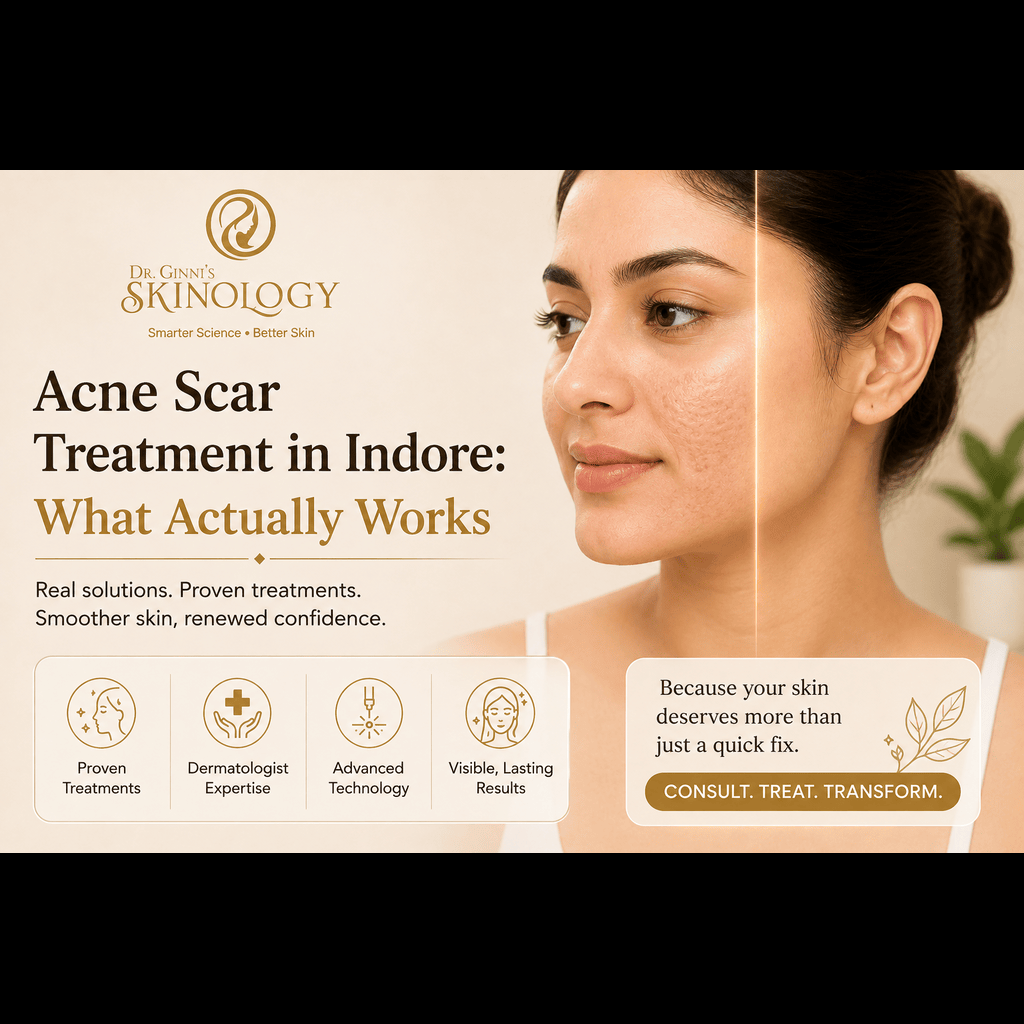

If you’re tired of counting days after every new cream, here’s the honest answer: proper acne treatment in Indore starts showing visible results in active breakouts within 4 to 6 weeks, while marks and scars usually take another 3 to 6 months to fade fully. The exact timeline shifts depending on whether your acne is mild, hormonal, or cystic, and whether you’re treating fresh breakouts or the pigmentation left behind by old ones. If you only remember one thing from this article, let it be this: the right diagnosis moves you forward faster than any product ever will.
Here’s the part most people don’t realize until they’ve already spent months and money on the wrong routine: acne isn’t one condition; it’s a handful of different problems that happen to look similar on the surface. A teenager’s oily forehead breakouts and a 30-something’s jawline cysts can both be called “acne,” yet they respond to almost opposite treatments. This guide breaks down what actually happens during a proper consultation, which treatment fits which type of acne, and how long you can realistically expect to wait before your skin starts cooperating.
What Happens During Your First Visit?
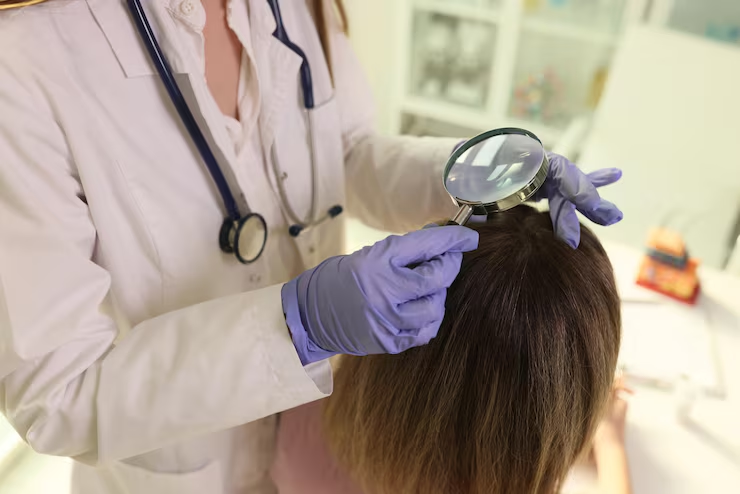
A proper consultation isn’t just a five-minute glance at your face. Here’s what a thorough evaluation typically involves:
- Skin history review – past products used, duration of breakouts, and family history of acne
- Hormonal check – questions about cycles, stress, and any signs pointing to PCOS or thyroid imbalance
- Visual grading – identifying whether acne is mild (occasional whiteheads), moderate (inflamed papules), or severe (cystic, nodular)
- Lifestyle factors – diet, sleep, and skincare habits that could be feeding the problem
This step matters because two people with the same breakouts can need completely different plans. Someone with hormonal acne along the jawline needs a different approach than someone with oily, forehead-heavy breakouts from their teenage years.
Treatment Options: What Actually Works
There’s no single fix for acne. A good acne care clinic in Indore usually builds a plan around severity rather than applying the same protocol to everyone.
| Treatment | Best For | What It Does |
| Topical retinoids | Mild to moderate acne | Speeds up cell turnover, prevents clogged pores |
| Oral medication | Moderate to severe, hormonal acne | Controls inflammation and oil production from within |
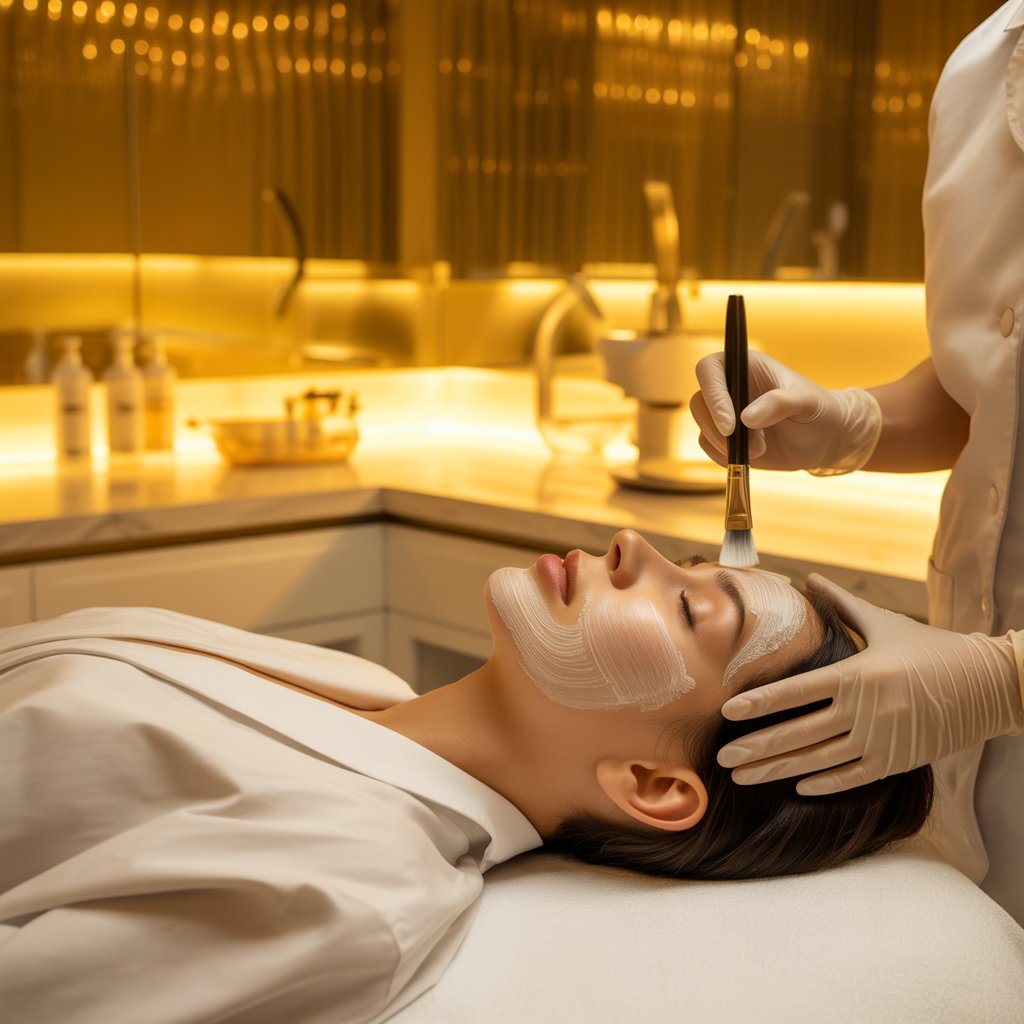
| Chemical peels | Surface congestion, mild pigmentation | Clears clogged pores, evens tone |
| Laser/light therapy | Active, inflamed breakouts | Targets acne-causing bacteria directly |
| Extraction & drainage | Cystic or nodular acne | Reduces painful, deep-seated lesions safely |
A few points worth keeping in mind while choosing a path:
- Over-the-counter products usually work only for the mildest cases
- Cystic acne almost always needs a clinical approach, not home remedies
- Combining two or more treatments often speeds up results compared to relying on one alone
- Stopping treatment the moment skin looks better is the most common reason acne returns
If your breakouts keep resurfacing in the exact same spots despite trying multiple products, it’s worth reading why pimples keep coming back on the same spot, since pore-level causes often explain what generic treatment misses.
Five treatments, one skin, and no way to guess which one is yours? That’s exactly what a proper diagnosis is for. Skip the trial and error and start with the plan built for your actual acne.
How Long Before You See Results?
This is usually the first question people ask, and understandably so. Nobody wants to commit to a routine without knowing what to expect.
- Weeks 1–2: Skin may look slightly worse before it improves, especially with retinoids or peels, as congestion works its way out
- Weeks 4–6: Reduction in new breakouts becomes noticeable; existing ones start calming down
- Months 2–3: Inflammation and active acne are largely under control for most moderate cases
- Months 3–6: Post-acne marks and pigmentation begin fading, though this varies by skin type
Cystic or hormonal acne tends to sit at the longer end of this range because the underlying trigger, not just the visible breakout, needs to be addressed. This is also why acne in your 30s often behaves differently and needs its own approach rather than the routine that worked a decade earlier.
Why the Right Clinic Makes a Difference
Choosing the best acne treatment doctor in Indore isn’t just about picking the nearest clinic. It comes down to whether the dermatologist actually investigates the cause before prescribing anything.
At Skinology, every acne case starts with an evaluation of hormonal history, skin type, and lifestyle triggers before any treatment is suggested. Dr. Ginni Chhabria’s approach focuses on treating the root cause rather than only calming the surface, which is often why patients who’ve tried multiple products elsewhere start seeing consistent change here.
For those searching for a skin specialist in Indore Vijay Nagar, having a dermatologist who reassesses progress every few weeks matters more than the treatment name itself. Acne protocols often need small adjustments along the way, and a clinic that tracks this closely tends to deliver faster, more stable results.
Already tried the products everyone recommends, with nothing to show for it? That usually means the actual cause was never treated in the first place. Let’s find it and fix it properly.
Preventing Acne From Coming Back
Treatment clears active breakouts, but a few habits help maintain results long after your last session:
- Avoid switching skincare products frequently once a routine is working
- Stick to non-comedogenic, dermatologist-recommended products
- Manage stress, since cortisol spikes are a known acne trigger
- Follow up with your dermatologist even after skin looks clear, to catch early signs of recurrence
Frequently Asked Questions
1. How long does acne treatment take to show results in Indore?
Most people see a visible reduction in active breakouts within 4 to 6 weeks, while full improvement, including faded marks, can take 3 to 6 months depending on acne severity.
2. Is acne treatment painful?
Most treatments, including topical routines and chemical peels, involve mild sensations at most. Laser therapy and extractions may cause brief, tolerable discomfort, which your dermatologist will explain beforehand.
3. Can acne come back after treatment?
Yes, if the underlying trigger (hormonal, lifestyle, or product-related) isn’t addressed. This is why ongoing follow-up matters even after skin clears.
4. What’s the difference between treating acne and treating acne scars?
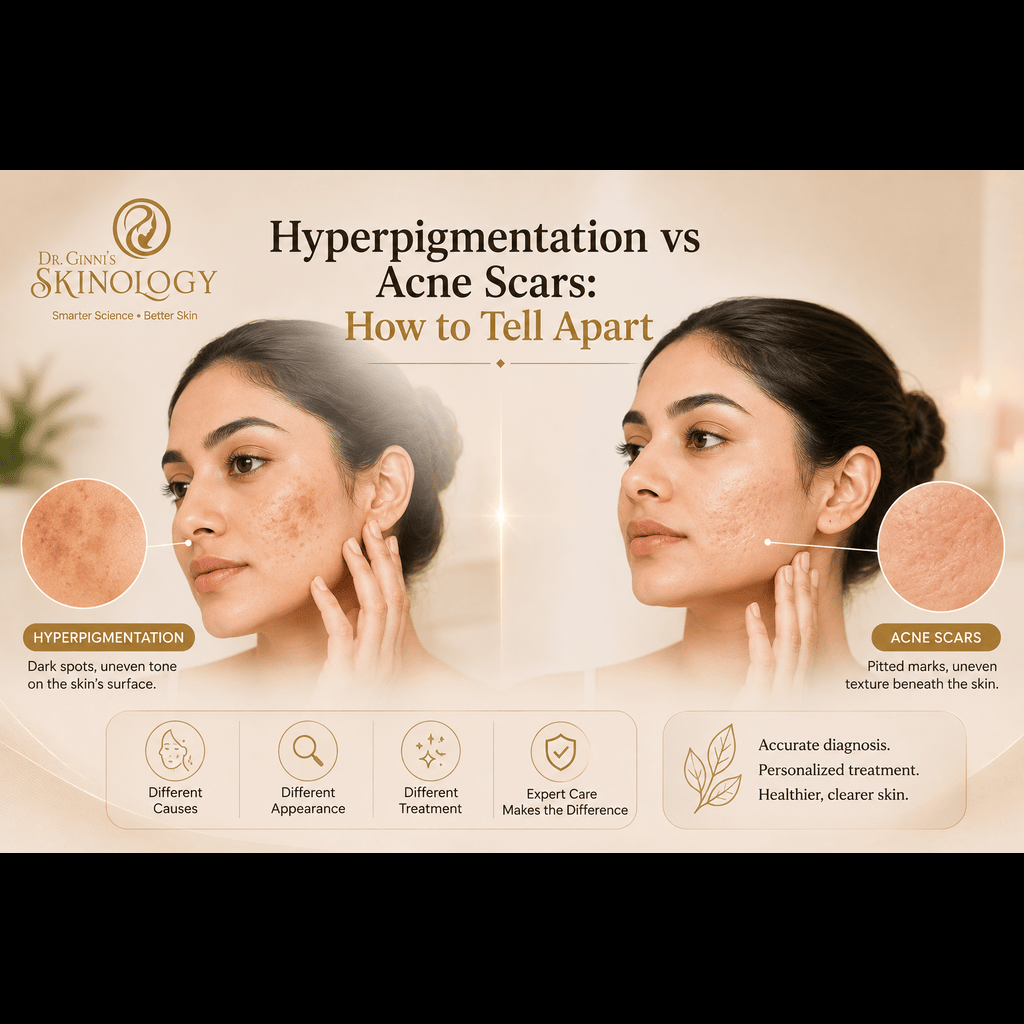
Active acne treatment focuses on reducing inflammation and breakouts, while scar treatment (like laser resurfacing) addresses the texture and marks left behind afterward. They’re often sequenced rather than done together.
5. Should I see a dermatologist for mild acne or just use over-the-counter products?
Mild, occasional acne can sometimes respond to over-the-counter products, but if breakouts persist beyond 6-8 weeks or worsen, a dermatologist consultation prevents it from progressing to a harder-to-treat stage.
6. Is in-clinic acne treatment safe for Indian skin types?
Yes. Treatments like peels and laser therapy, when calibrated correctly for skin tone, are safe and commonly used for Indian skin without significant risk of pigmentation issues.
Ready to Start Your Acne Treatment Plan?
Guessing your way through acne wastes time and, often, money. A proper evaluation tells you exactly what your skin needs and how long it’ll realistically take to clear.
Book a consultation with Dr. Ginni Chhabria at Skinology and get a treatment plan built around your actual skin, not a one-size-fits-all routine. Schedule your visit today and take the first step toward clearer, healthier skin.