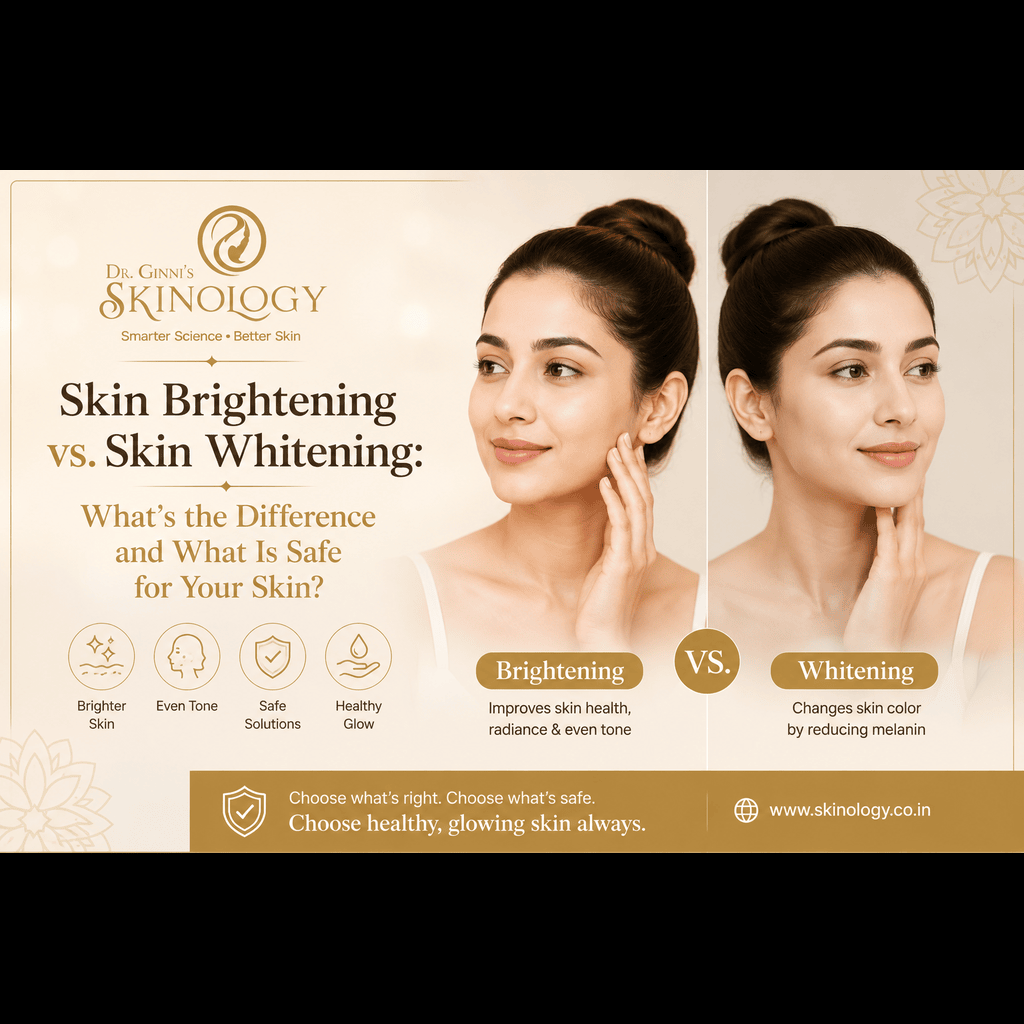
Skin brightening improves your skin’s natural tone and evens out dullness or pigmentation, while skin whitening tries to permanently lighten your actual skin color, and only one of these is considered medically safe for long-term use. Brightening treatments work with your skin, whitening treatments often work against it. If you’ve been confused by these two terms being used interchangeably on product labels, here’s the actual difference, explained simply.
Why This Confusion Even Exists
You’ve probably seen both words on the same shelf, sometimes even on the same product. That’s not an accident. Brands often use “brightening” and “whitening” as marketing terms rather than medical ones, which makes it genuinely hard to know what you’re actually applying to your skin.
Here’s the simple version. Brightening is about health. Whitening is about altering your natural pigment. Once you understand that one difference, the rest of this becomes a lot easier to follow. Keep reading, because knowing which one you actually need could save you from months of using the wrong product.
What Skin Brightening Actually Does
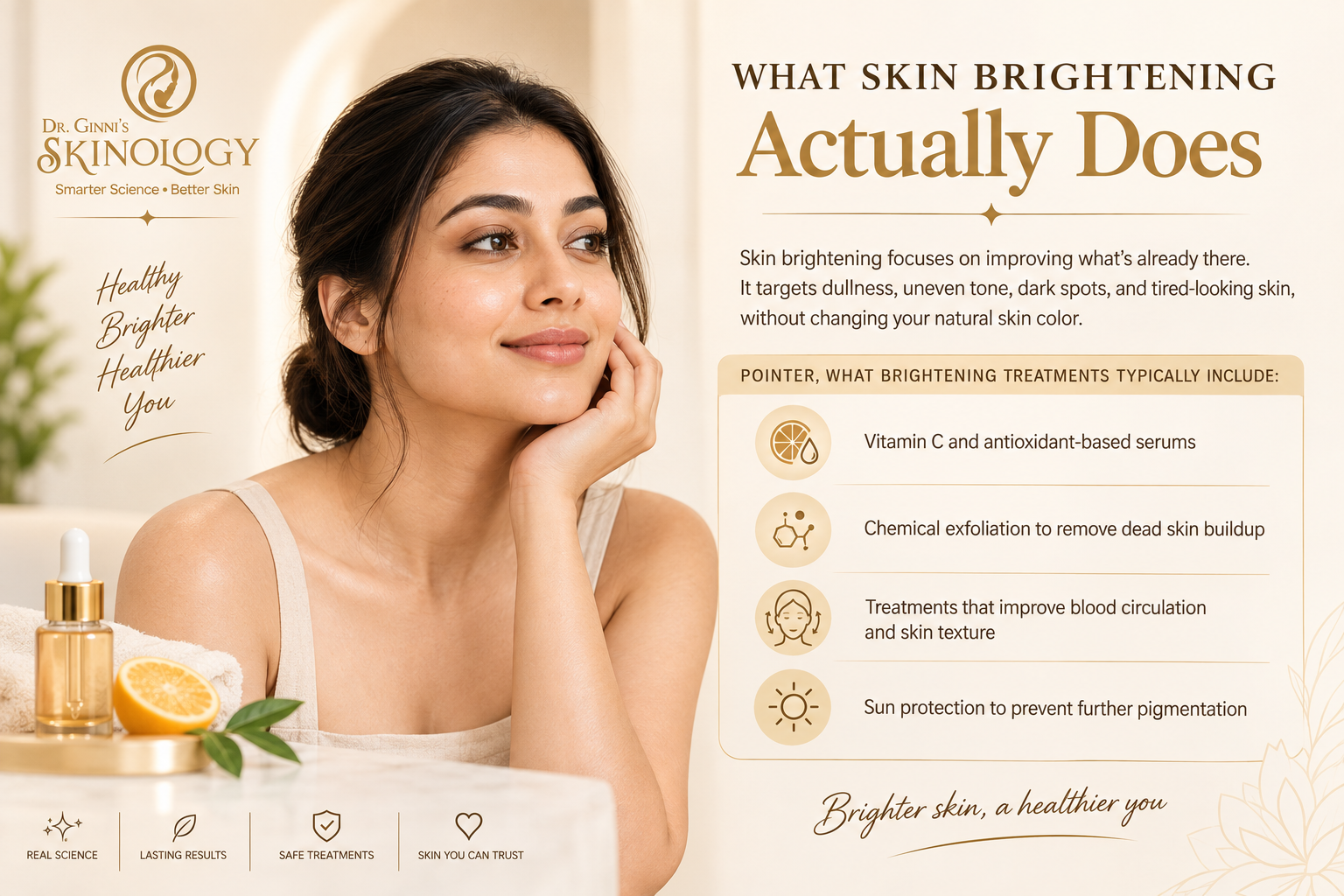
Skin brightening focuses on improving what’s already there. It targets dullness, uneven tone, dark spots, and tired-looking skin, without changing your natural skin color.
Pointer, what brightening treatments typically include:
- Vitamin C and antioxidant-based serums
- Chemical exfoliation to remove dead skin buildup
- Treatments that improve blood circulation and skin texture
- Sun protection to prevent further pigmentation
Brightening gives your skin a healthy glow. It doesn’t try to make you several shades lighter than your natural tone. That distinction matters more than most people realize.
What Skin Whitening Actually Does
Skin whitening works differently, and this is where things get riskier. Whitening products aim to reduce melanin production aggressively, sometimes using ingredients that aren’t regulated or dermatologist-approved.
Some whitening creams contain high concentrations of hydroquinone, steroids, or even mercury, especially unregulated over-the-counter products. These ingredients can thin your skin, cause irritation, and in some cases, lead to long-term damage that’s harder to reverse than the original concern you were trying to fix.
This is exactly why so many people end up asking a dermatologist for skin brightening treatment in Indore instead, once they realize whitening isn’t the safe shortcut it’s marketed as.
So Which One Is Actually Safe?

Brightening, done correctly, is safe for regular use. Whitening, especially unsupervised or unregulated whitening, carries real risk.
That said, “safe” doesn’t mean “one size fits all.” Your skin type, your existing concerns, and your medical history all affect what’s actually right for you. This is where a proper consultation makes the difference between a treatment that works and one that backfires.
Quick pointer, signs a product might be doing more harm than good:
- Your skin burns, stings, or feels unusually thin after use
- You notice sudden, patchy lightening instead of even tone
- The product doesn’t list its full ingredients clearly
- Results seem too fast to be realistic
If you notice any of these, that’s a strong signal it’s time to stop and speak to a professional instead of continuing on your own.
Not sure whether your current routine is helping or quietly hurting your skin? That’s exactly what a proper consultation is for. Get in touch with Skinology and find out what your skin actually needs.
How a Dermatologist Approaches This Differently
A dermatologist doesn’t guess. Your skin gets assessed for tone, sensitivity, and the actual cause of dullness or pigmentation before any treatment is recommended. That’s a very different approach from picking a cream off a shelf and hoping for the best.
If you’re looking for the best skin doctor for skin brightening in Vijay Nagar, what you should actually be evaluating is whether they take the time to understand your skin before suggesting a treatment, not just how quickly they promise results.
At Skinology’s Palasia clinic, every skin glow treatment by skin specialist in Palasia starts the same way, with a real assessment, not a one-size-fits-all product pushed on every patient who walks in. That’s the difference between a treatment plan and a guess.
What Actually Works for Brightening, Safely
If you’re looking for real, lasting improvement, here’s what tends to work without the risks associated with whitening:
- Professional chemical peels that gently remove dull, dead skin layers
- Vitamin C-based treatments to support natural collagen and glow
- Medical-grade facials targeting pigmentation and dullness directly
- Consistent sun protection, since sun exposure is one of the biggest causes of uneven tone in the first place
If sun exposure is part of what’s causing your dullness or tanning, our guide on how to remove sun tan safely is worth reading alongside this one, since tan and pigmentation are closely connected.
Any skin specialist in Indore Palasia worth consulting should be able to walk you through these options clearly, without pushing you toward something aggressive just because it promises faster results.
Frequently Asked Questions
1. Is skin brightening the same as skin lightening?
No. Skin brightening improves tone and dullness without altering your natural skin color, while skin lightening or whitening tries to reduce melanin and change your actual pigment, which carries more risk.
2. Are whitening creams safe to use long-term?
Not always. Many over-the-counter whitening products contain unregulated ingredients like high-dose hydroquinone or steroids, which can cause skin thinning and irritation with prolonged use.
3. How long does it take to see results from a brightening treatment?
Most brightening treatments show gradual improvement over several weeks, since they work with your skin’s natural renewal process rather than forcing rapid change.
4. Can I do skin brightening treatments at home safely?
Some basic steps, like using sunscreen and vitamin C, are safe at home. But treatments like peels or medical-grade facials should be done under professional supervision to avoid irritation or uneven results.
5. Is skin brightening suitable for all skin types?
Most brightening treatments can be adjusted for different skin types, but the right approach depends on your specific skin concern, which is why a proper consultation matters before starting any treatment.
Final Thoughts

Brightening and whitening might sound similar, but they work in completely different ways, and only one of them is genuinely safe for regular, long-term use. If your goal is healthy, even-toned skin without the risks that come with aggressive whitening, brightening is the path worth taking.
Ready to find out what your skin actually needs? Book a consultation with Skinology today and get a treatment plan built around your skin, not a guess from a shelf.