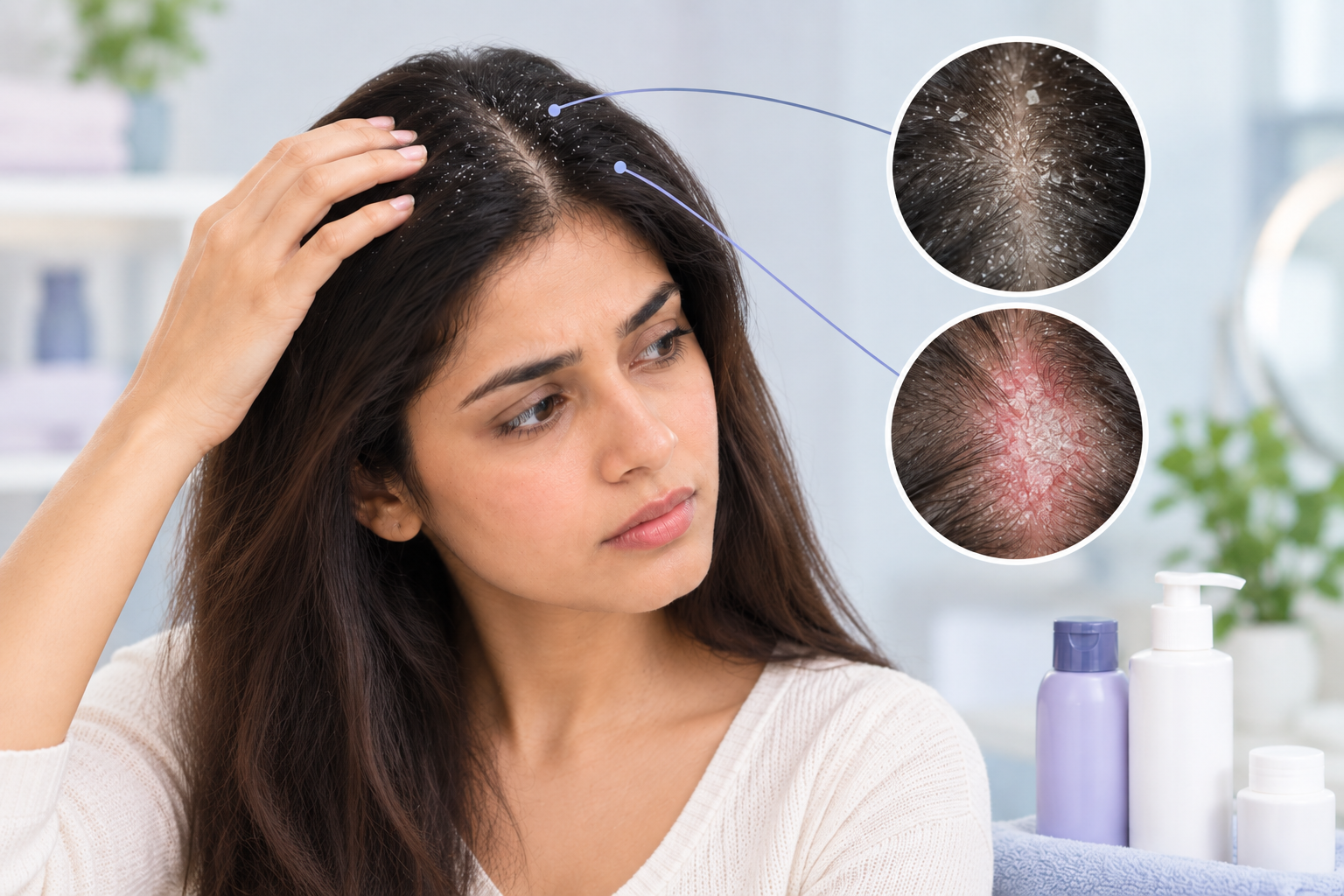

The fastest way to cure dandruff is a medicated anti-fungal shampoo, containing ketoconazole or zinc pyrithione, used consistently alongside proper scalp hygiene. Most people notice visibly fewer flakes within 1 to 2 weeks. For dandruff that keeps returning despite this, clinical scalp treatments from a dermatologist for hair treatment in Indore speed things up considerably and address the root cause rather than just the symptoms.
Dandruff isn’t just dry skin flaking off, and treating it like that is exactly why so many shampoos stop working after a few uses. It’s usually driven by a yeast-like fungus called Malassezia, oil imbalance on the scalp, or an underlying condition like seborrheic dermatitis. Get the cause right, and the flakes clear up far faster.
What’s Actually Causing Your Dandruff?
Before jumping to a cure, it helps to know what you’re dealing with:
- Oily scalp from excess sebum production
- Malassezia overgrowth, a fungus naturally present on most scalps
- Product buildup from heavy styling gels or infrequent washing
- Underlying skin conditions like eczema or psoriasis
- Stress and hormonal shifts, which can trigger flare-ups
Knowing which of these applies to you changes the entire treatment approach, which is why a proper scalp evaluation matters more than switching shampoos repeatedly.
The Fastest Route: Step by Step
1. Start with a medicated shampoo Look for ketoconazole, zinc pyrithione, selenium sulfide, or salicylic acid on the label. Leave it on for 5 minutes before rinsing, and use it twice a week rather than daily, since overuse can dry out the scalp further.
2. Add gentle scalp exfoliation A mild scalp scrub clears buildup and dead skin sitting under the flakes, which lets active shampoo ingredients actually reach the scalp instead of sitting on top of debris.
3. Consider clinical treatment for stubborn cases When over-the-counter products plateau, in-clinic options work faster:
- Ozone therapy to eliminate fungal and bacterial overgrowth
- Laser scalp rejuvenation to improve circulation and follicle health
- Medicated steam therapy to open pores and clear toxins
If flakes keep coming back no matter what you try, it might be time for a proper scalp diagnosis.
Home Remedies Worth Trying Alongside Treatment
These won’t replace medical care, but they support it well:
- Tea tree oil mixed into coconut oil for its natural antifungal effect
- Apple cider vinegar rinse to help rebalance scalp pH
- Aloe vera gel to calm itching and reduce flaking
- Curd and lemon mask as a gentle natural exfoliator
If your dandruff is mild and recent, these can genuinely help. For anything persistent, pair them with professional care instead of relying on them alone.
When Should You See a Specialist?
Book an appointment if:
- Flakes persist despite consistent medicated shampoo use
- Your scalp feels itchy, red, or visibly inflamed
- You’re noticing hair thinning alongside the flaking
Persistent dandruff can actually weaken hair follicles over time, which is one of the more overlooked links between scalp health and hair fall treatment in Indore. Catching it early through a proper dermatology visit prevents that overlap from becoming a bigger problem.
Keeping Dandruff From Coming Back
A treatment plan only works long-term if daily habits support it:
- Wash with a mild, sulfate-free shampoo regularly, not just when flakes appear
- Cut back on heavy gels, sprays, and daily oiling
- Clean combs and pillow covers often, since they hold onto fungal spores
- Eat a diet with enough zinc, omega-3s, and vitamin B for scalp health
- Manage stress, since flare-ups often track closely with stress spikes
Want a scalp routine built specifically for your hair type instead of generic advice?
Why the Right Clinic Changes the Outcome
Not every scalp responds the same way to the same shampoo, which is exactly why working with a dermatologist in Indore who evaluates your scalp type first tends to get results faster than trial-and-error at home.
At Skinology, dandruff care starts with identifying whether the trigger is fungal, hormonal, or product-related before recommending treatment, rather than applying one protocol to every patient. This also connects closely to broader scalp and hair regrowth treatment in Indore, since untreated dandruff and hair thinning often show up together.
If you’re in the Vijay Nagar area and searching for a hair specialist in Indore Vijay Nagar, having a dermatologist who tracks scalp progress across visits, rather than a one-time fix, makes a real difference for chronic cases.
Weather plays a bigger role in flare-ups than most people realize too. If your dandruff seems to worsen at certain times of year, our guide on why dandruff gets worse in summer breaks down the seasonal triggers and how to manage them.
Frequently Asked Questions
1. Can dandruff be cured permanently?
With consistent treatment and scalp maintenance, dandruff can be kept under long-term control, though it can resurface if triggers like stress or product buildup return.
2. How long does it take for dandruff to go away?
Mild dandruff often improves within 1 to 2 weeks with medicated shampoo. Severe or chronic cases may need 3 to 4 clinical sessions for lasting results.
3. Is dandruff linked to hair loss?
Yes. Persistent flaking and scalp inflammation can weaken hair roots over time, making early treatment worthwhile if you’re also noticing thinning.
4. Are home remedies enough to cure dandruff?
They help with mild, early-stage dandruff, but combining them with dermatologist-approved treatment gives faster and more reliable results for anything persistent.
5. What’s the fastest way to cure dandruff naturally?
Tea tree oil and aloe vera can reduce mild flaking, but for stubborn or recurring dandruff, a proper scalp evaluation gets you there faster than natural remedies alone.
Ready to Get Rid of Dandruff for Good?
Flakes and scalp itching don’t have to be a recurring frustration. The fastest results come from treating the actual cause, not just masking the symptoms with another shampoo swap.
Book your scalp consultation with Dr. Ginni Chhabria at Skinology and get a treatment plan built around what’s actually causing your dandruff. Contact us on WhatsApp today and take the first step toward a genuinely healthy scalp.