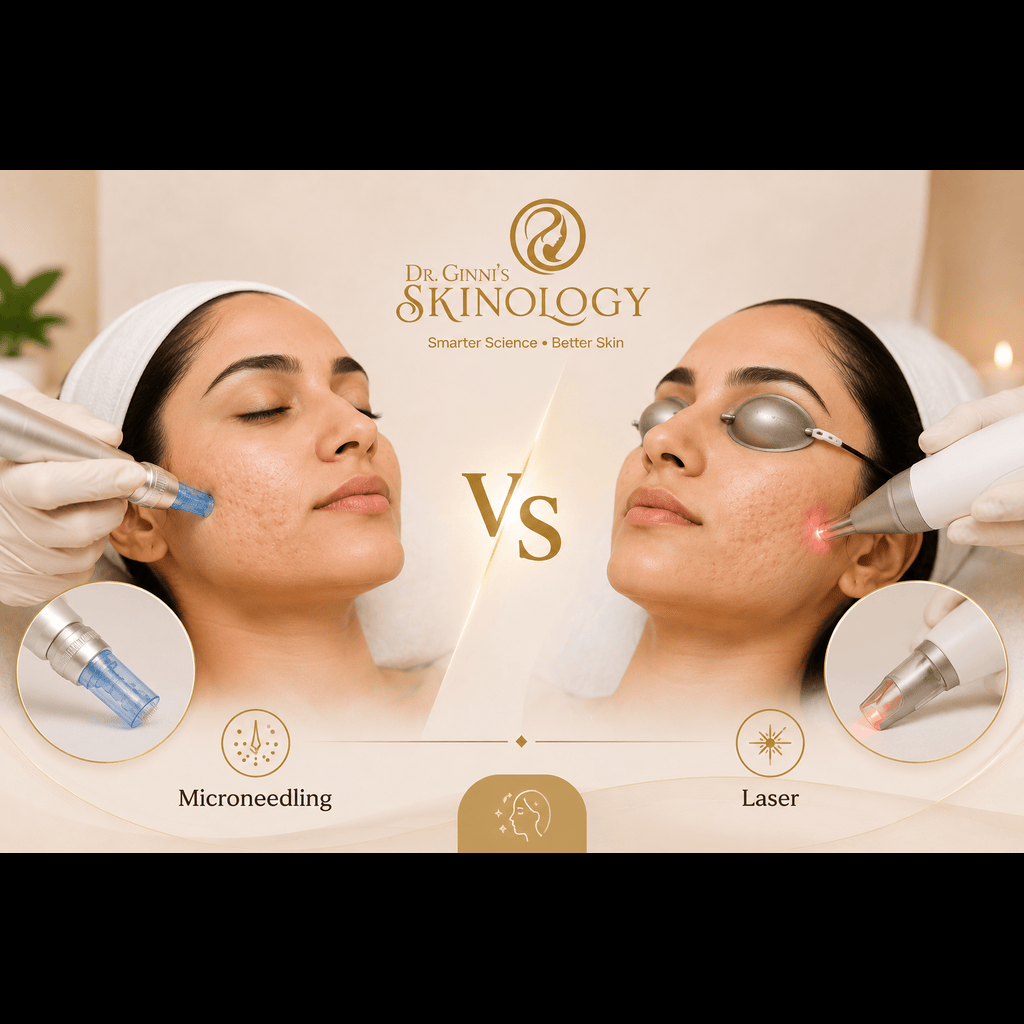
Microneedling vs laser for acne scars comes down to scar depth and skin tone. Microneedling suits shallow, rolling scars and darker skin tones with lower pigmentation risk, while laser resurfacing works faster on boxcar scars and uneven texture but needs more careful calibration for melanin-rich skin. Neither is universally “better,” the right choice depends on what you are treating.
How Does Each Treatment Actually Work?
Microneedling uses fine needles to create controlled micro-injuries in the skin, prompting the body to produce new collagen as it heals. The needles are extremely fine, typically less than a millimeter deep, and the device passes over the skin in a controlled, even pattern.
Laser resurfacing uses focused light energy, most commonly fractional CO2, to remove damaged surface layers and stimulate deeper collagen renewal simultaneously. The laser essentially vaporizes thin columns of tissue while leaving surrounding skin intact, which speeds healing compared to older, fully ablative laser techniques.
Both aim for the same outcome, better collagen structure, but they get there through different mechanisms, which is why they suit different scar types and different skin sensitivities.
Which Treatment Suits Which Scar Type?
| Factor | Microneedling | Laser Resurfacing |
| Best for | Rolling scars, texture | Boxcar scars, deeper texture |
| Downtime | 1 to 2 days redness | 5 to 7 days peeling |
| Darker skin tones | Lower pigmentation risk | Needs careful settings |
| Sessions needed | 4 to 6 | 3 to 5 |
| Speed of visible results | Gradual | Faster per session |
| Typical cost per session | Generally lower | Generally higher |
Quick pointers to help you decide:
- If your scars are shallow and skin is sensitive, microneedling is the gentler starting point
- If scars are deeper with textural unevenness, laser typically delivers faster change
- If you have darker skin, ask specifically about laser settings calibrated for your skin tone
- If you want minimal downtime around work or events, microneedling recovers faster
- If budget is a primary concern, microneedling is usually the more affordable entry point
What Does Recovery Actually Look Like for Each?
Recovery expectations often surprise people more than the procedure itself. Microneedling typically leaves skin looking mildly flushed, similar to sunburn, for around a day or two, after which normal activities and makeup can generally resume.
Laser resurfacing involves a longer, more visible recovery. Expect redness and peeling for roughly five to seven days, with new skin appearing pink and sensitive underneath as it heals. Sun protection during this window is critical, since freshly resurfaced skin is significantly more vulnerable to pigmentation from UV exposure.
Can They Be Combined Instead of Choosing One?
Often, yes, and this is where results tend to improve the most. A common approach layers microneedling sessions between laser treatments, or adds PRP into either protocol for extra collagen support. Rather than treating this as an either-or decision, many dermatologists build a sequence using both, based on how the scars respond over the first few sessions.
This staged approach also allows adjustment along the way. If early laser sessions show good progress on boxcar scars but rolling scars in another area respond slowly, microneedling can be added specifically for that region rather than committing to one blanket protocol for the entire face.
For a broader look at how these treatments fit into a complete scar-reduction plan, see our full guide to acne scar treatment.
What Determines the Right Choice for You?
Skin tone, scar depth, and downtime tolerance are the three real deciding factors, not personal preference for one technology over another. Anyone researching top skin specialist in Indore options should expect a proper skin evaluation before either treatment is recommended, since the wrong choice for your scar type wastes both time and money.
A dermatologist assessing your skin will typically look at scar depth under good lighting, sometimes with magnification, and ask about your skin’s history with sun exposure and pigmentation before recommending a starting point. That assessment matters more than which treatment happens to be trending at the time.
Skinology’s dermatologists assess scar depth and skin tone first, then recommend microneedling, laser, or a combination protocol accordingly, rather than defaulting to whichever equipment the clinic happens to promote.
Common Myths Worth Clearing Up First
A few assumptions tend to steer people toward the wrong choice before they even get a proper consultation:
- “Laser is always the stronger, better option.” Laser is more intense, but intensity is not the same as suitability, and the wrong intensity for shallow scars can be unnecessary.
- “Microneedling is just a mild version of laser.” They work through different mechanisms entirely, one mechanical, one light-based, rather than one being a weaker version of the other.
- “More sessions always mean better results.” Beyond a certain point, additional sessions without adequate healing time between them can irritate skin rather than improve it further.
- “Home microneedling devices work the same way.” Clinical-depth needles reach the dermis in a controlled way that most consumer devices are not designed or licensed to do safely.
What Should You Ask Before Booking Either Treatment?
Going in with the right questions saves both time and disappointment later. Before committing to a protocol, it is worth asking:
- How many sessions are realistically needed for my specific scar type
- What downtime should I plan around work or social commitments
- What sun protection routine is required during recovery
- Whether combining treatments would produce better results than one alone
FAQs
1. Is microneedling or laser more painful?
Both use numbing cream beforehand. Laser tends to cause more post-treatment sensitivity during the healing window.
2. Which is cheaper, microneedling or laser?
Microneedling is generally more affordable per session, though laser may need fewer total sessions depending on scar severity.
3. Can I combine microneedling and laser in the same treatment plan?
Yes, many effective protocols alternate between the two or layer PRP alongside either option.
4. Is laser safe for Indian or darker skin tones?
Yes, with correctly calibrated settings and an experienced provider. Incorrect settings raise the risk of post-treatment pigmentation.
5. How soon can I go back to work after either treatment?
Microneedling generally allows a return within a day or two, while laser resurfacing usually needs closer to a week depending on intensity.
6. Do results from microneedling or laser look different long term?
Long term, both aim for the same collagen-driven improvement, though laser tends to show faster initial change while microneedling builds more gradually.
Conclusion
There is no single winner between microneedling and laser, only the right fit for your specific scars. Getting that assessment right from the start saves you sessions, money, and unnecessary downtime. Book a skin consultation in Indore with Skinology to find out which approach, or combination, is right for you.
Book your scar assessment with Skinology and skip the guesswork.